
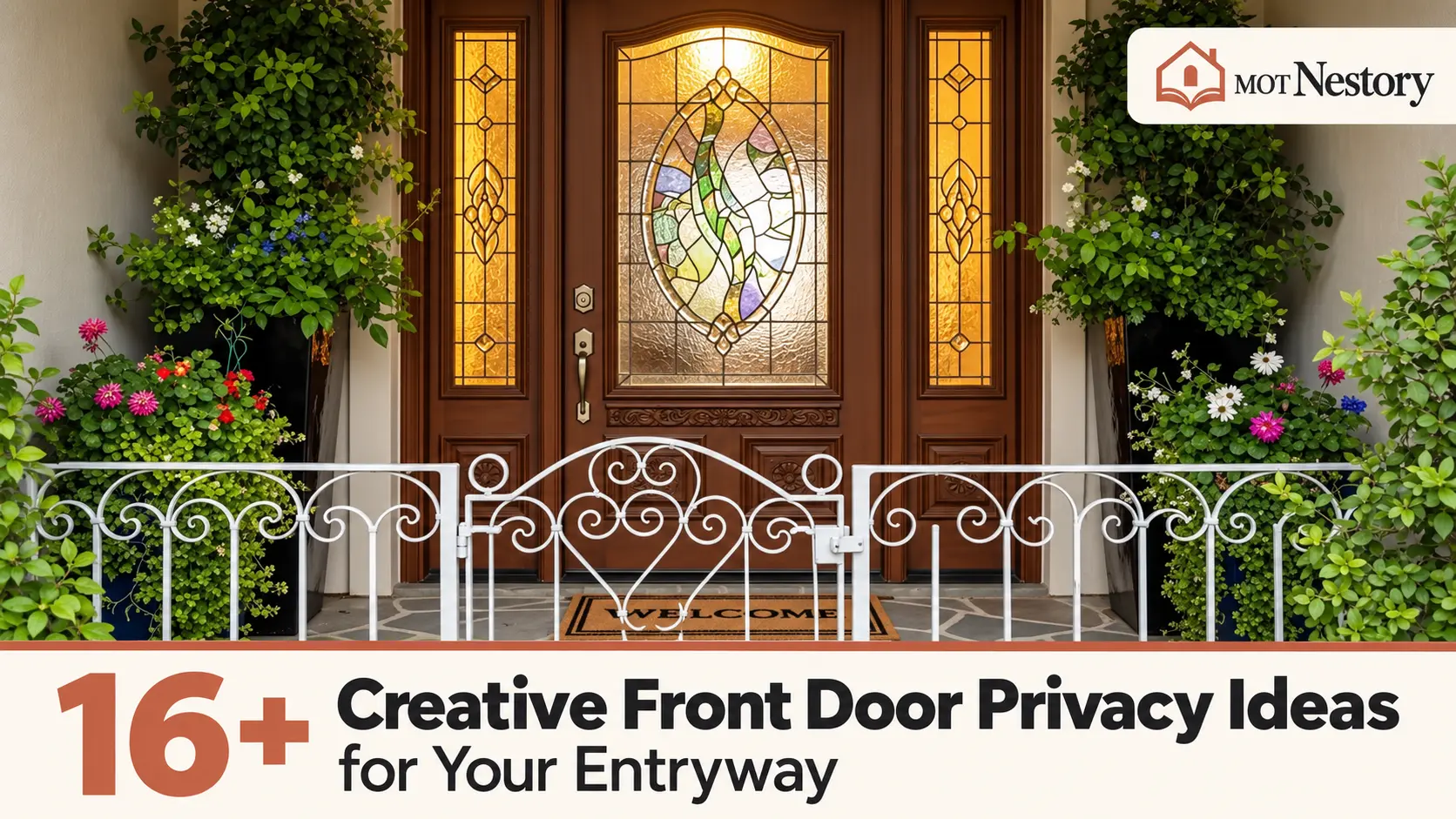
Your front door creates the first impression of your home, but it also plays an important role in maintaining privacy. Finding the right balance between openness, natural light, style, and seclusion can make your entryway feel both welcoming and comfortable.
From textured glass and decorative films to privacy screens, plants, curtains, and layered solutions, there are plenty of ways to limit unwanted views without sacrificing your home’s appearance. Whether you want a simple temporary update or a more permanent change, these front door privacy ideas offer practical inspiration for different styles and needs.
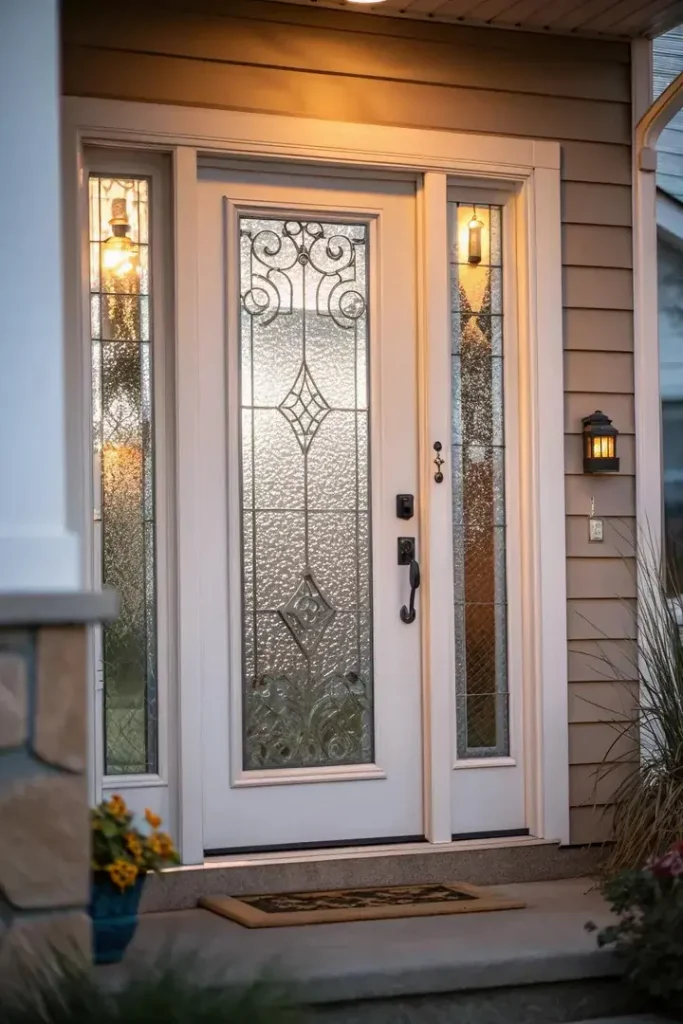
1. Use Textured Glass Inserts
Textured glass is an attractive way to add privacy while still allowing natural light into your entryway. Its patterned surface diffuses visibility, making it harder to see directly through the glass while maintaining a bright and open feel.
Different textures and patterns can also introduce an artistic element to the door. This makes textured glass particularly useful for homes that receive plenty of sunlight, as it can soften strong rays without making the entrance feel dark.
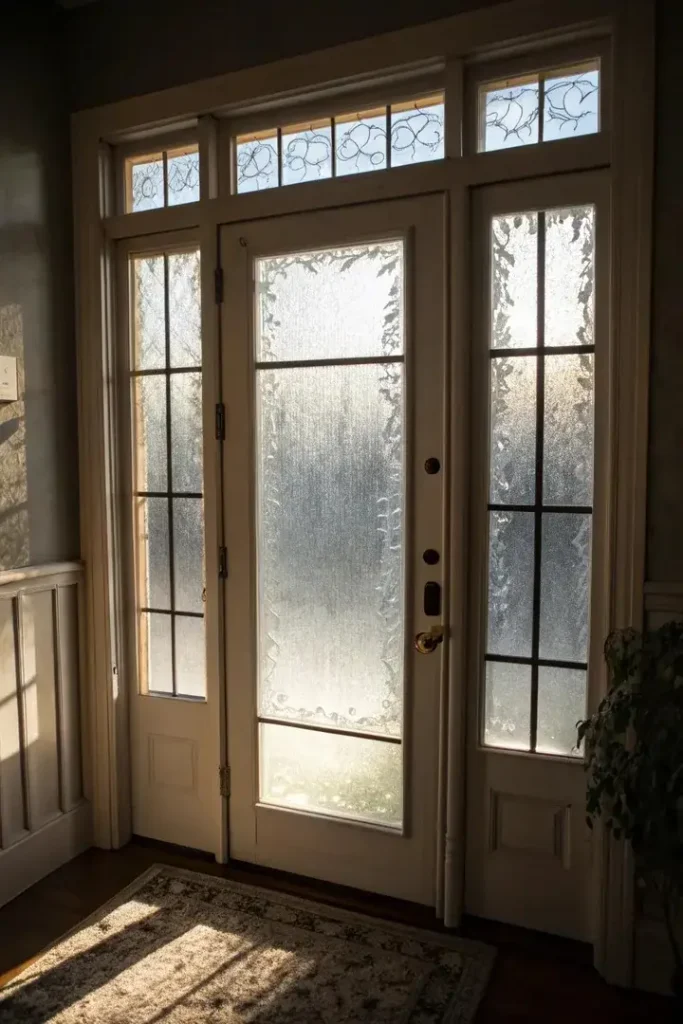
2. Choose Frosted Glass Panels
Frosted glass provides another stylish option when privacy is a priority. Its opaque surface reduces visibility while allowing diffused light to pass through, creating a softer atmosphere around the entrance.
When choosing frosted glass, consider how much privacy you need. Different levels of opacity can affect both visibility and the amount of light entering the space. The simple, modern appearance of frosted glass also works well with contemporary interiors.
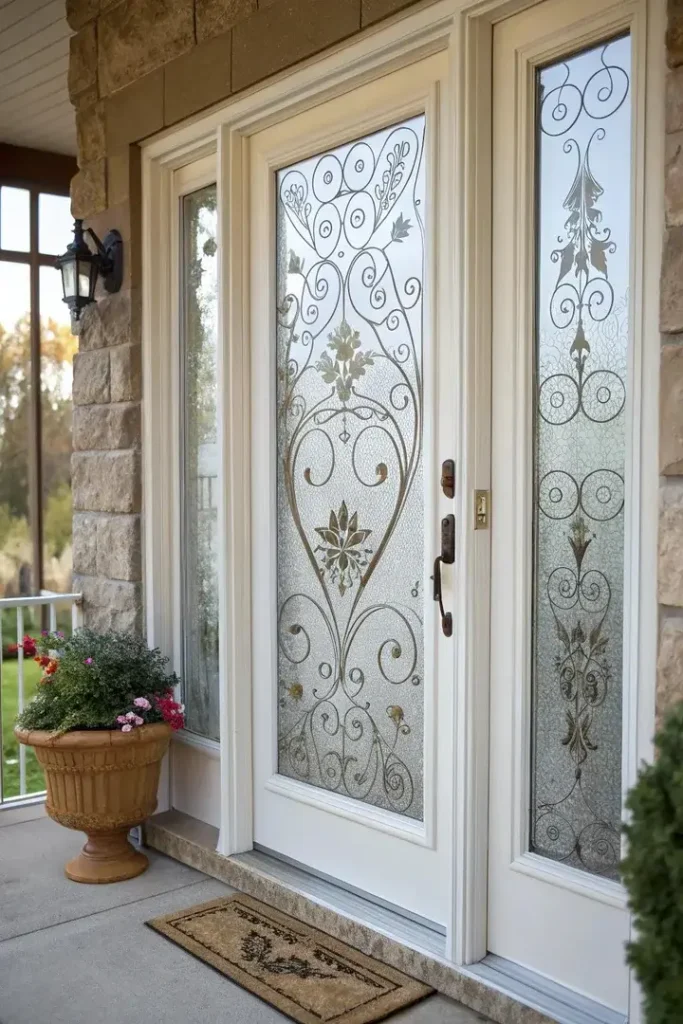
3. Apply Decorative Window Film
Decorative window film can give your front door glass the appearance of etched or patterned glass without requiring a permanent replacement. Available in a variety of designs, films can become both a privacy feature and a decorative detail.
This option can be especially useful for renters or homeowners who want an easy update. Many films can be applied and removed without permanently changing the glass, making it a flexible way to refresh your entryway.
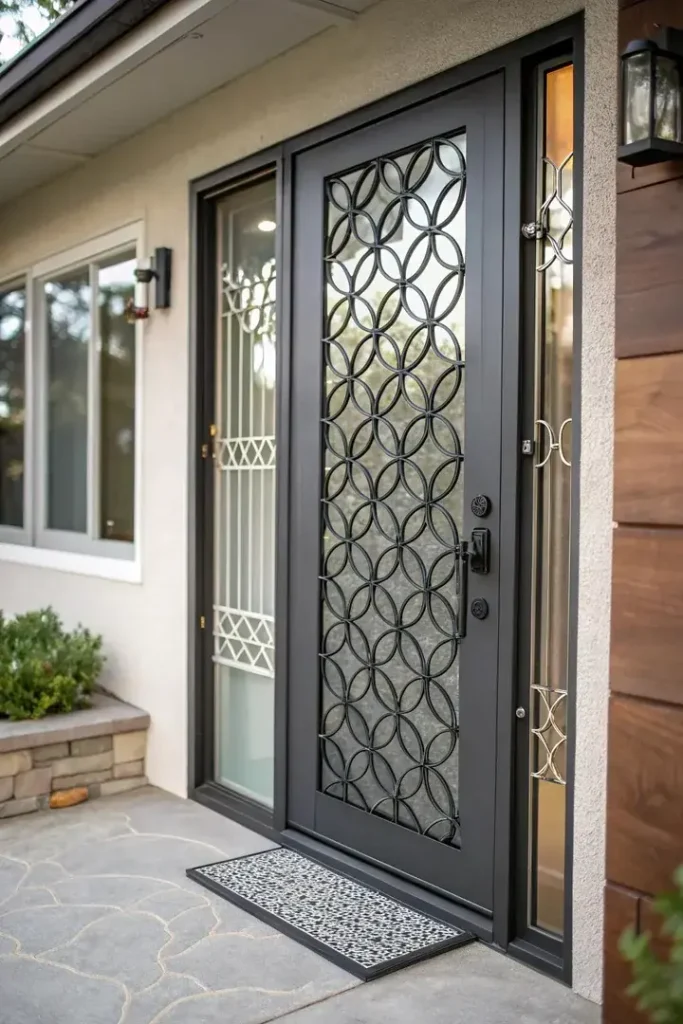
4. Install Decorative Privacy Grilles
Privacy grilles combine practical screening with architectural detail. A well-designed grille can reduce direct visibility while becoming an eye-catching feature around the entrance.
Patterns, materials, and finishes can be selected to complement the home’s exterior. Instead of treating privacy as something that needs to be hidden, a decorative grille can make it part of the overall design.
5. Personalize the Glass With Paint
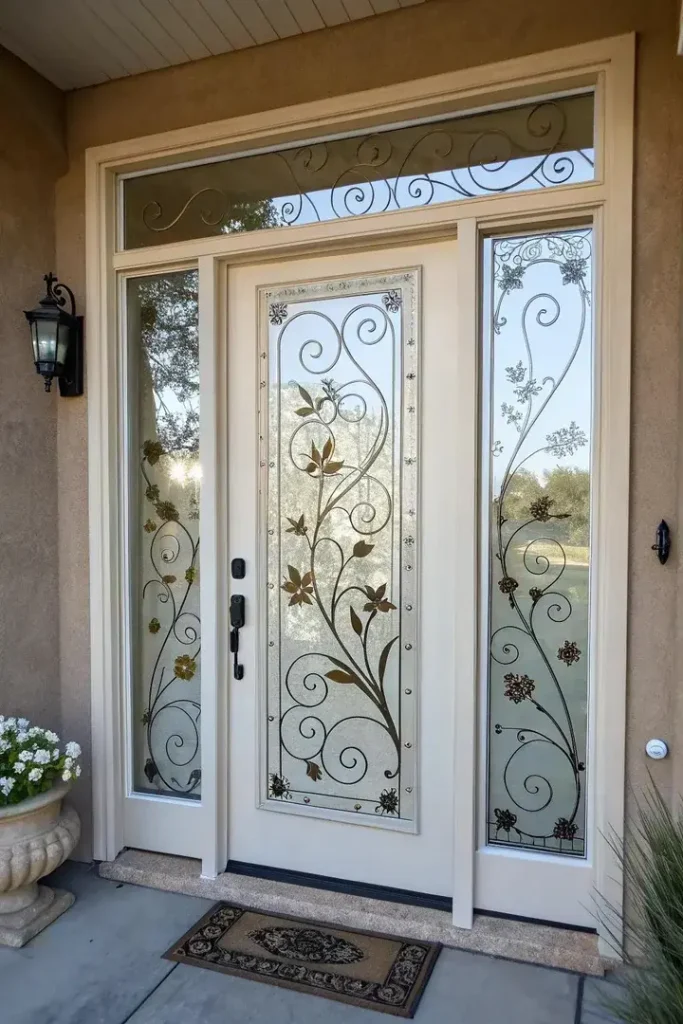
Glass paint allows you to turn a plain glass panel into a customized privacy feature. You can use different colors, patterns, and finishes to create a design that works with the rest of your home’s decor.
For a more subtle approach, a frosted finish can reduce visibility while maintaining a clean appearance. More decorative designs can also be used when you want the door glass to become a visual focal point.
6. Combine Privacy With Entryway Decor
Privacy features do not have to look separate from your entryway design. Tall plants positioned around the entrance can create a natural visual barrier while adding greenery and character.
This approach works particularly well when you want to soften the appearance of a privacy solution. Plants can help block direct views while keeping the entrance feeling warm and inviting.
7. Use Before-and-After Transformations for Inspiration
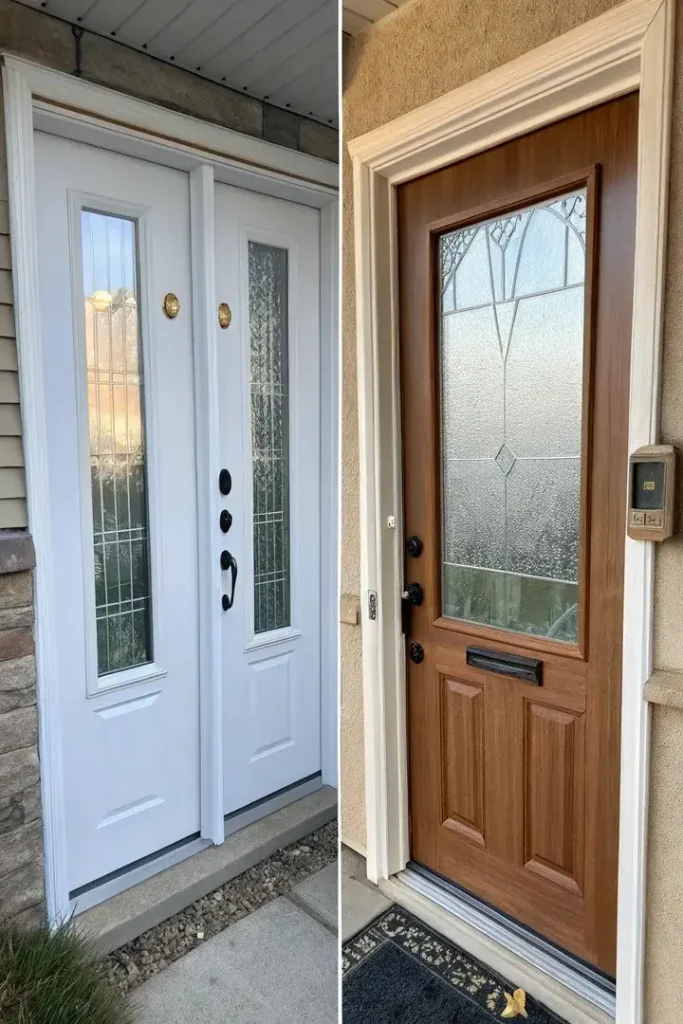
Before-and-after examples can help you understand how relatively small privacy changes can affect an entryway. Comparing the original space with the updated version makes it easier to see how different screens, coverings, glass treatments, or decorative additions change both privacy and appearance.
These transformations can also help you identify which details might work in your own entrance before committing to a larger update.
8. Add an Outdoor Privacy Screen
Outdoor privacy screens can create a stronger visual barrier around your front entrance while adding architectural interest. Depending on the design, screens can be made from materials such as wood or metal, or incorporated with living plants.
Beyond blocking unwanted views, an outdoor screen can help define the entrance and create a more secluded area around the home. The design can be tailored to complement the property’s existing exterior style.
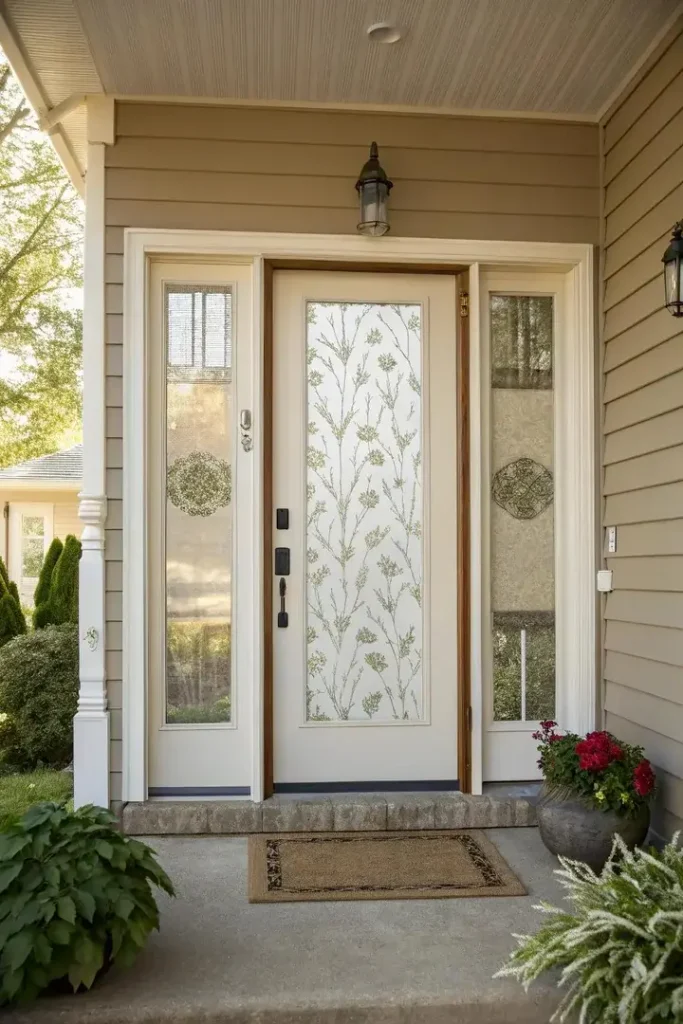
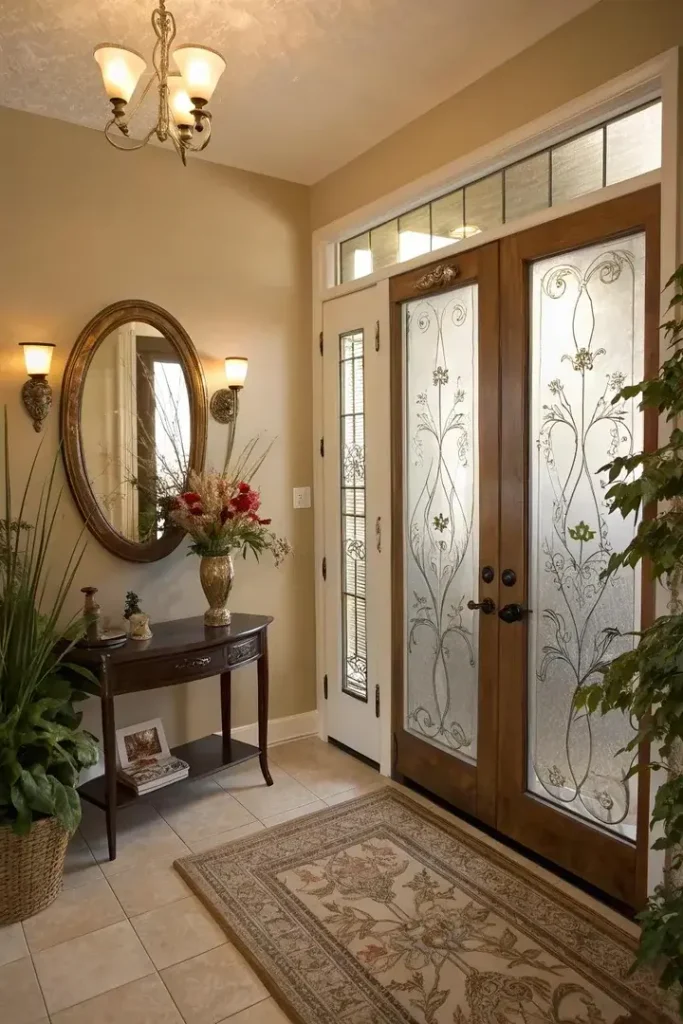
9. Consider Stained Glass
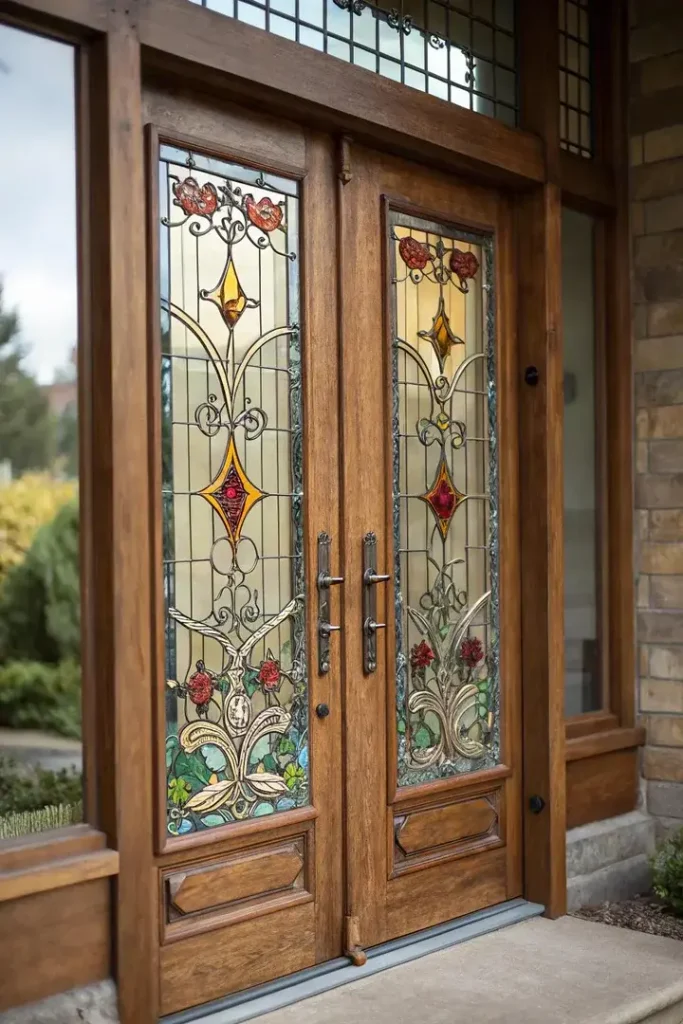
Stained glass can combine privacy with decorative impact. Its colors and intricate patterns can make it difficult to see clearly through a front door while turning the glass itself into an artistic feature.
Because stained glass can be highly personalized, the design can reflect individual preferences or complement the architectural character of the home. It is especially useful when you want privacy to become a prominent part of the entrance’s visual design.
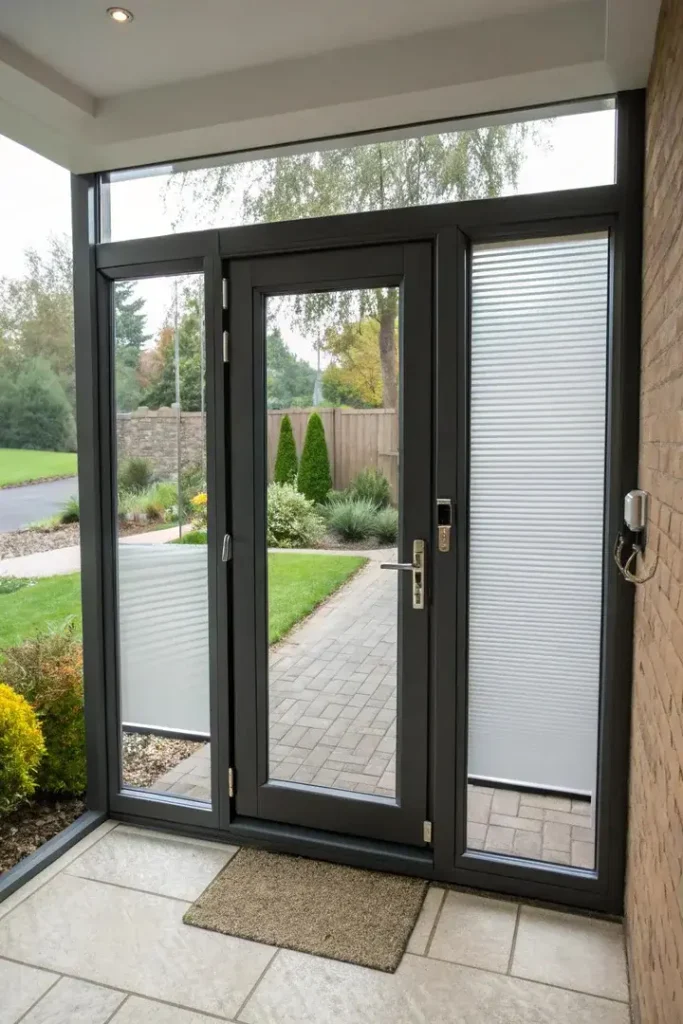
10. Layer Multiple Privacy Solutions
Using more than one privacy treatment can give you greater control over visibility and natural light. For example, window film can be combined with curtains to create different levels of coverage throughout the day.
Sheer curtains can soften incoming light while preserving some visibility, while more opaque treatments can provide stronger privacy when needed. Layering allows the entryway to adapt to changing light and privacy requirements.
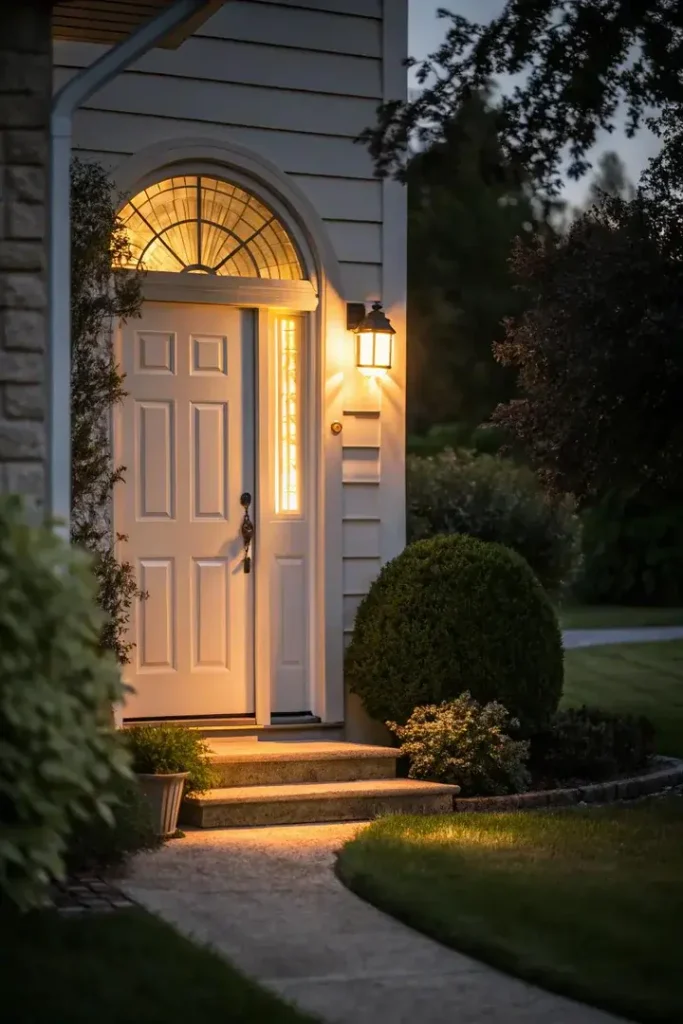
11. Use Strategic Outdoor Lighting
Outdoor lighting can influence how visible the interior of your home is after dark. Carefully positioned lighting can create reflective effects on glass surfaces, helping reduce views into the entryway while also improving the appearance of the exterior.
Thoughtful lighting placement can therefore serve two purposes: enhancing the atmosphere around the front door and contributing to a greater sense of privacy.
12. Try a DIY Privacy Project
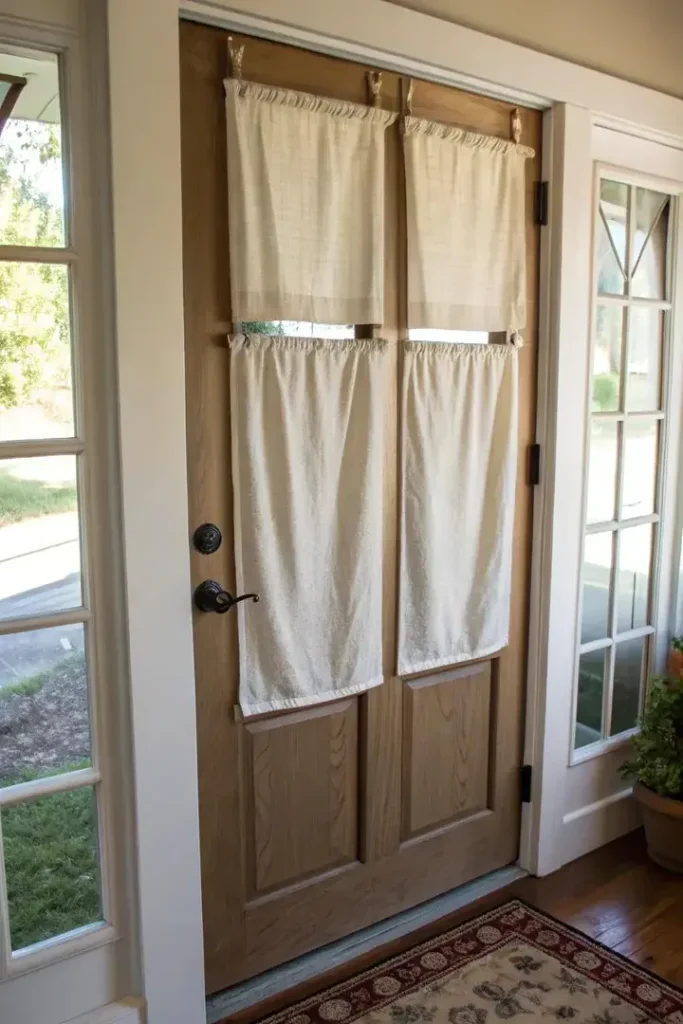
A DIY privacy treatment can be an affordable way to personalize your front door or nearby windows. Fabric, lace, and other materials can be used to create custom coverings that reduce visibility while adding texture and personality.
The benefit of a DIY approach is the freedom to choose patterns, materials, and finishes that match your home’s existing style. It can also be a simple project when you want to experiment before making a permanent change.
13. Replace the Door With a Privacy-Enhanced Design
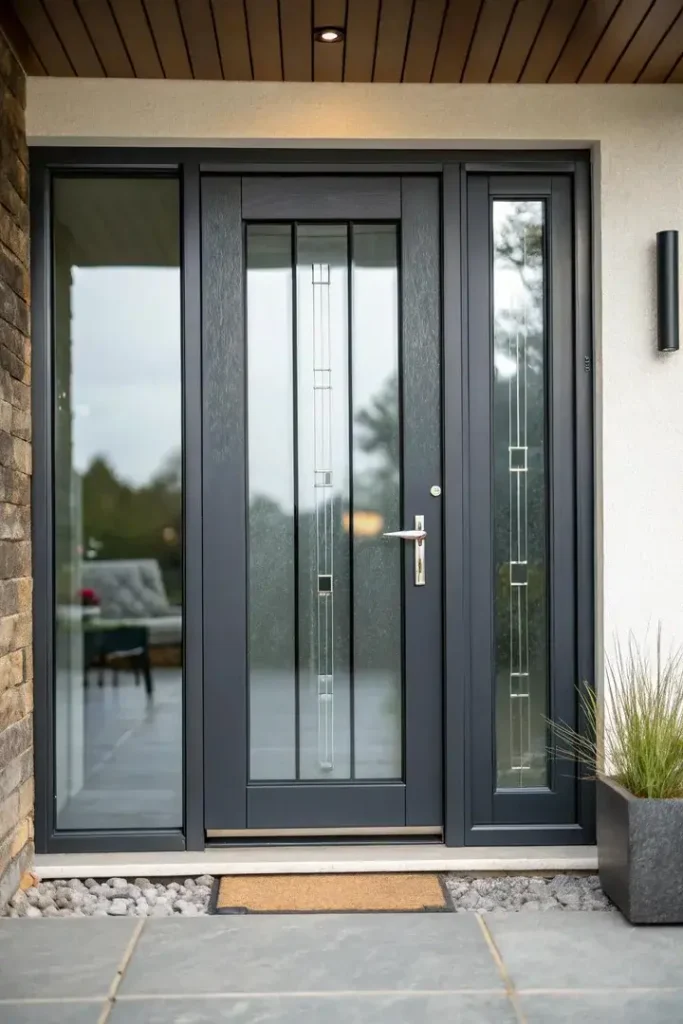
If you are planning a larger entryway upgrade, replacing the existing door with one designed for privacy can provide a cleaner long-term solution.
Doors with built-in features such as frosted or textured glass can reduce the need for additional films or coverings. This creates a more integrated appearance while combining privacy with the overall design of the door.
14. Choose Tinted Glass
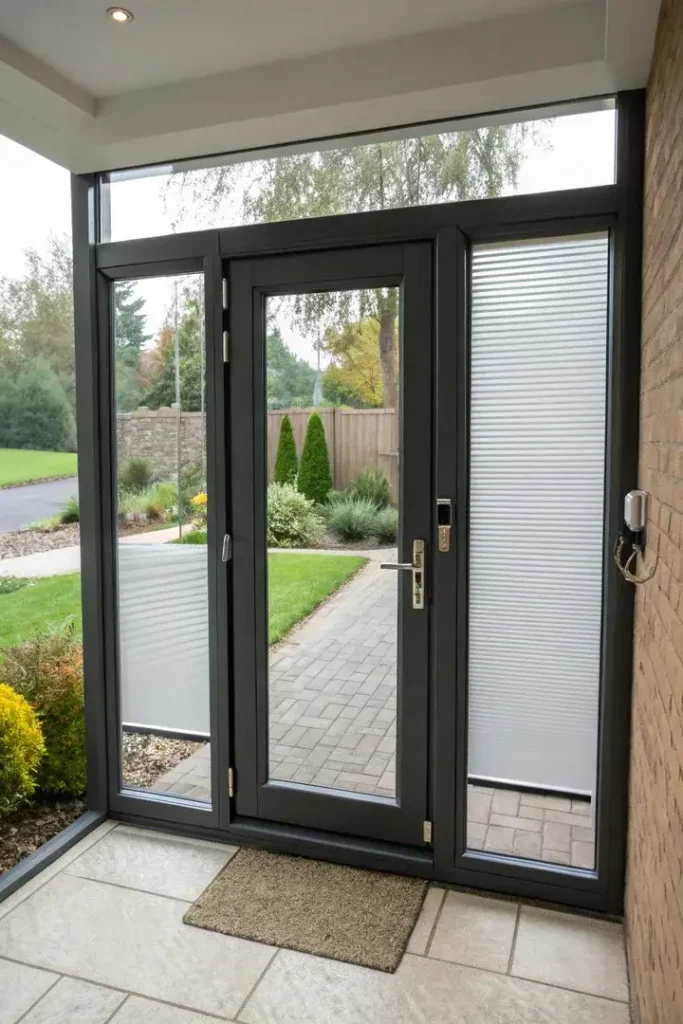
Tinted glass can reduce visibility without completely blocking natural light. This makes it a useful option when you want to maintain brightness while making it more difficult for people outside to see inside.
Different levels of tint can create different effects, so the choice can be tailored to the amount of privacy and light control you want. Its streamlined appearance also works well with modern entryway designs.
15. Install Curtains Designed for Door Windows
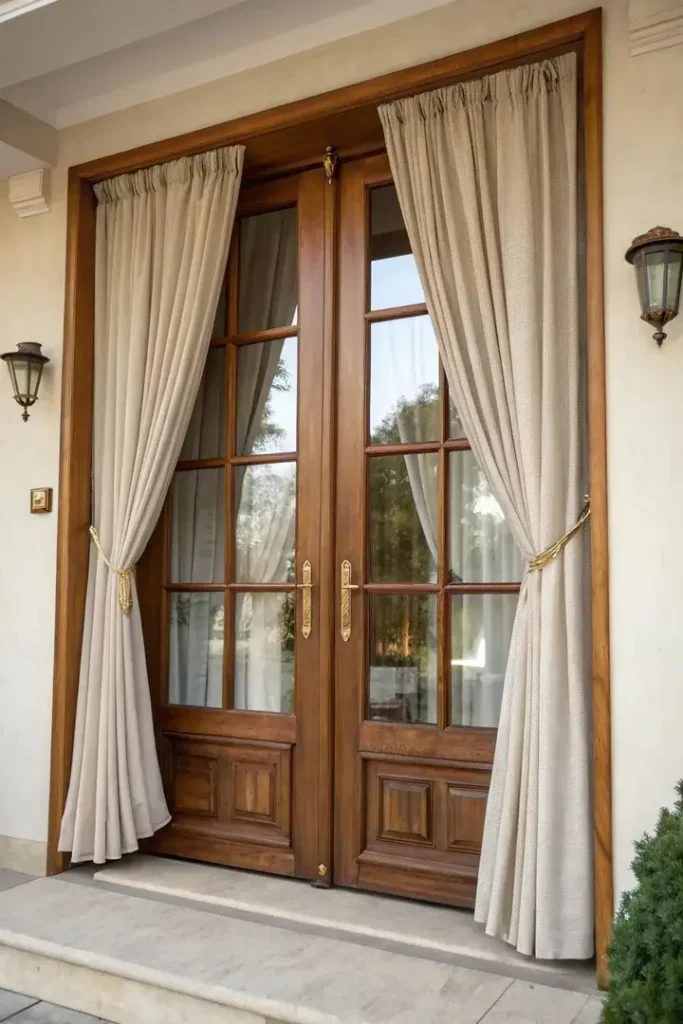
Curtains can provide flexible control over both light and privacy. They can be opened when you want more natural light or closed when you need greater seclusion.
This approach can work particularly well for doors with large glass panels or patio-style entrances. Choosing a fabric and style that complements the surrounding decor can make the covering feel like an intentional part of the room rather than an afterthought.
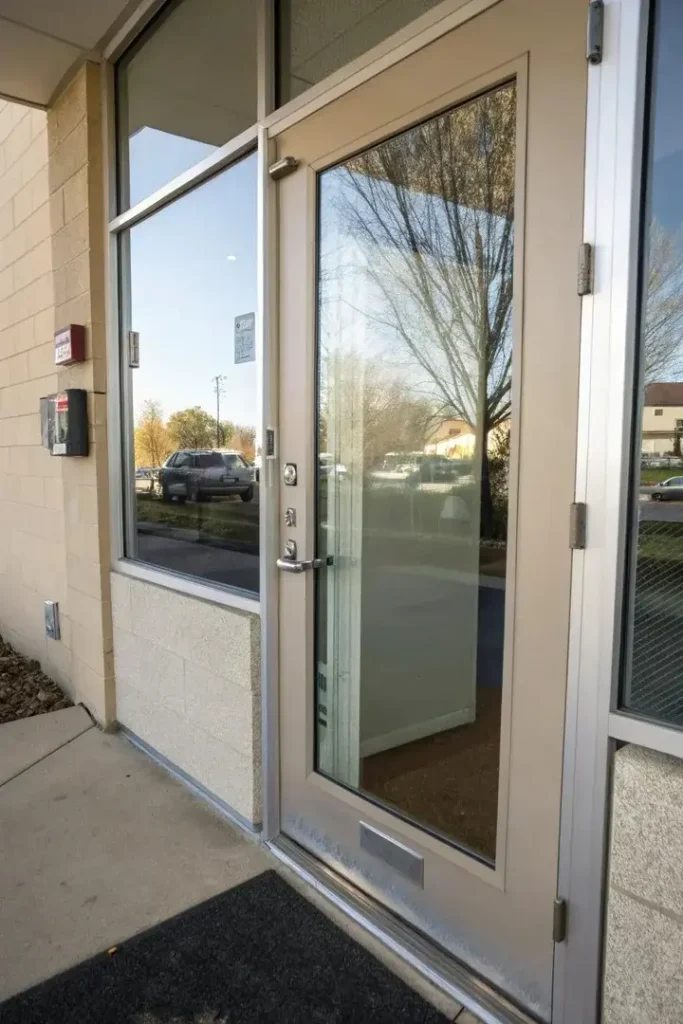
16. Use One-Way Mirror Film
One-way mirror film can provide privacy while allowing people inside to maintain a view toward the outside during appropriate lighting conditions. This can be particularly useful for homes located on busy streets or in areas where nearby properties make privacy more difficult.
The mirrored appearance creates a contemporary look while reducing visibility from the exterior. As with other glass treatments, its effectiveness depends on lighting conditions, so it can be considered as part of a broader privacy strategy.
How to Choose the Right Front Door Privacy Idea
The best approach depends on how your entryway is designed and what type of privacy you need. If natural light is important, textured, frosted, or tinted glass can help maintain brightness while reducing visibility.
For renters or anyone looking for a reversible update, decorative window film can provide flexibility. If you want a stronger architectural statement, privacy grilles or outdoor screens can combine screening with visual interest.
Plants and curtains offer another flexible option, while replacing the door can provide a more integrated solution for a major renovation. You can also combine several methods when one treatment does not provide enough coverage.
Final Thoughts
Creating privacy at your front door does not mean sacrificing style. From textured and frosted glass to decorative films, stained glass, curtains, plants, screens, and strategic lighting, there are many ways to make an entrance feel more private while keeping it attractive.
The right combination depends on your home’s design, the amount of natural light you want, and the level of privacy you need. With thoughtful planning, your front door can remain a welcoming feature while giving you greater control over what can be seen from outside.