
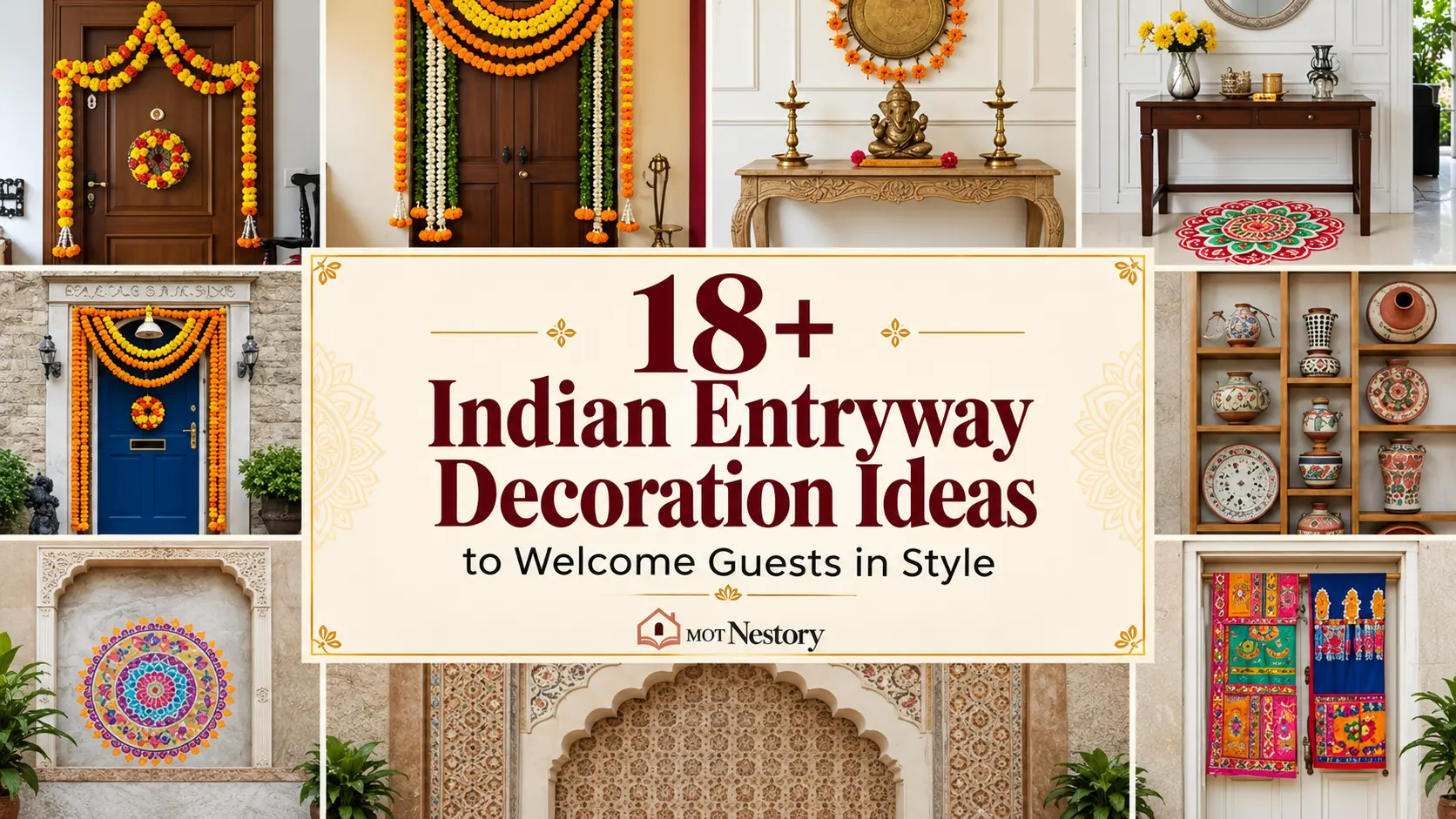
Your entryway is the first part of your home that guests see, so it deserves more attention than a simple doorway and doormat. In Indian homes, the entrance can become a beautiful expression of culture, personality, and hospitality by combining traditional craftsmanship with practical, modern design.
From carved wooden doors and colorful rangoli to statement rugs, cultural artifacts, plants, and decorative lighting, there are plenty of ways to create an entrance that feels warm and inviting. Whether you prefer a traditional Indian aesthetic or a contemporary look with cultural accents, these ideas can help you create an entryway that makes a memorable first impression.
1. Welcome with a Traditional Wooden Door
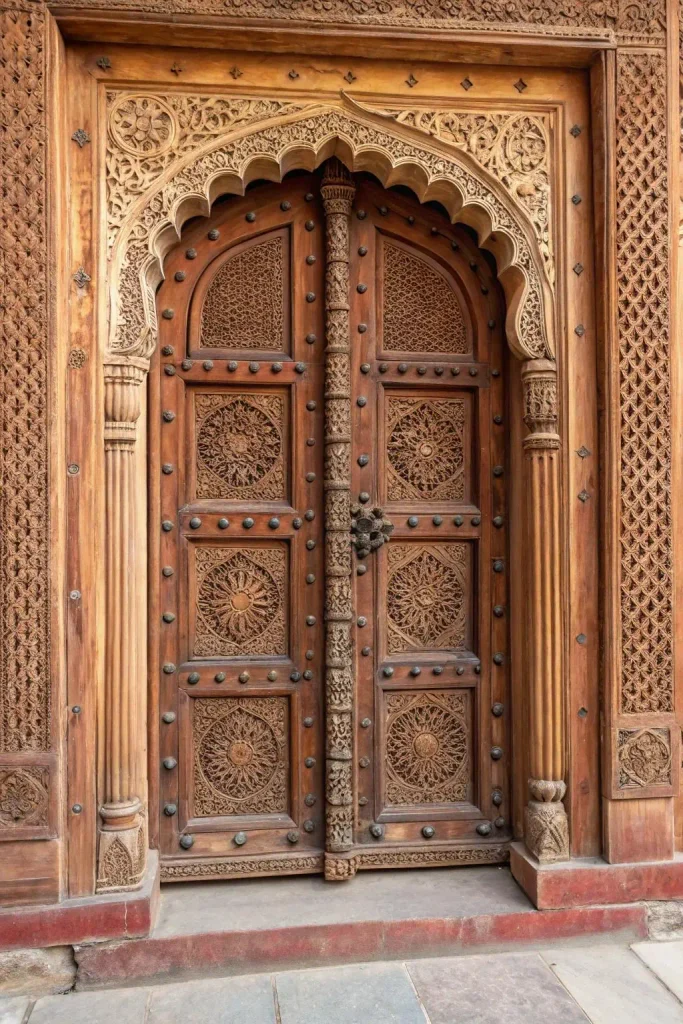
A beautifully carved wooden door can instantly give your entrance warmth, character, and a strong sense of tradition. Choose a solid wood door featuring intricate carvings, geometric patterns, or Rajasthani-inspired motifs.
The natural grain of the wood adds texture, while detailed craftsmanship creates a striking focal point. Carved wooden panels can also be incorporated around the doorway to make the entire entrance feel more cohesive.
For a timeless look, pair the door with simple hardware and warm lighting that highlights the carving after sunset.
2. Embrace Vibrant Rangoli Patterns
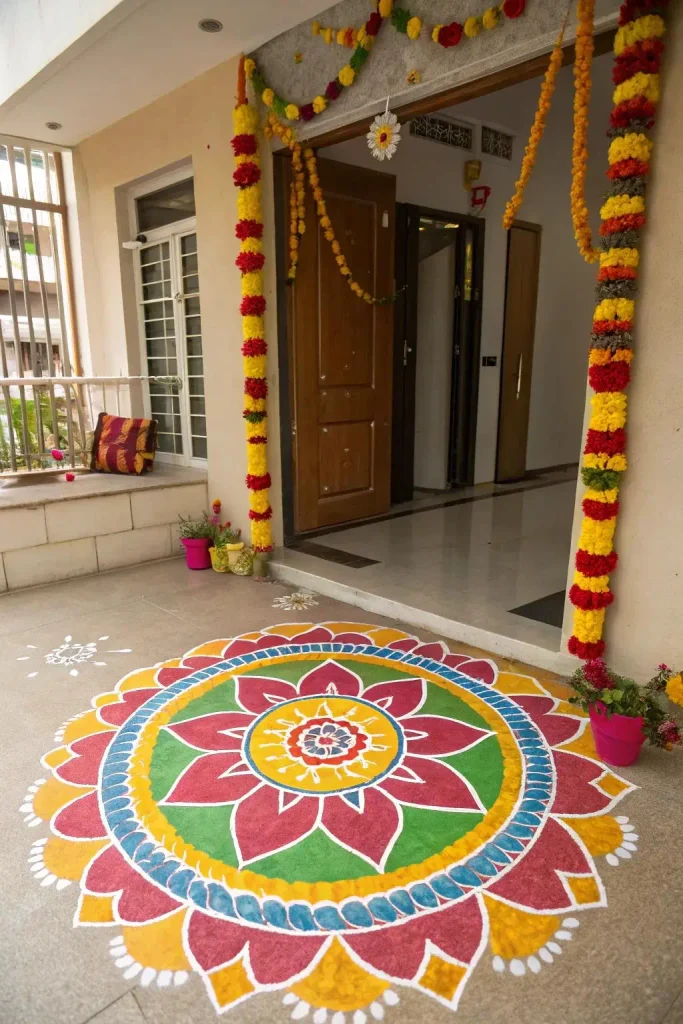
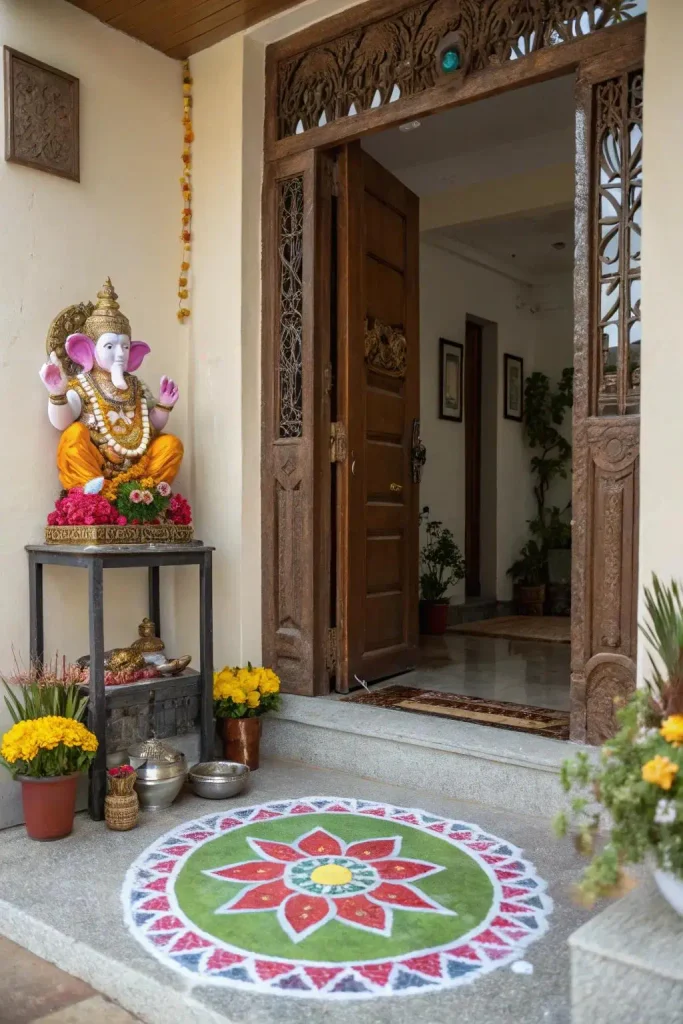
Rangoli is one of the most recognizable ways to add color and personality to an Indian entrance. A carefully designed rangoli can instantly make the area outside your door feel festive and welcoming.
Use traditional colors such as yellow, red, green, and white to create geometric, floral, or symmetrical patterns. You can keep the design simple for everyday decoration or create more elaborate patterns for festivals and special occasions.
Rangoli also gives you an easy opportunity to refresh your entryway regularly without making permanent changes.
3. Illuminate with Ambient Lighting
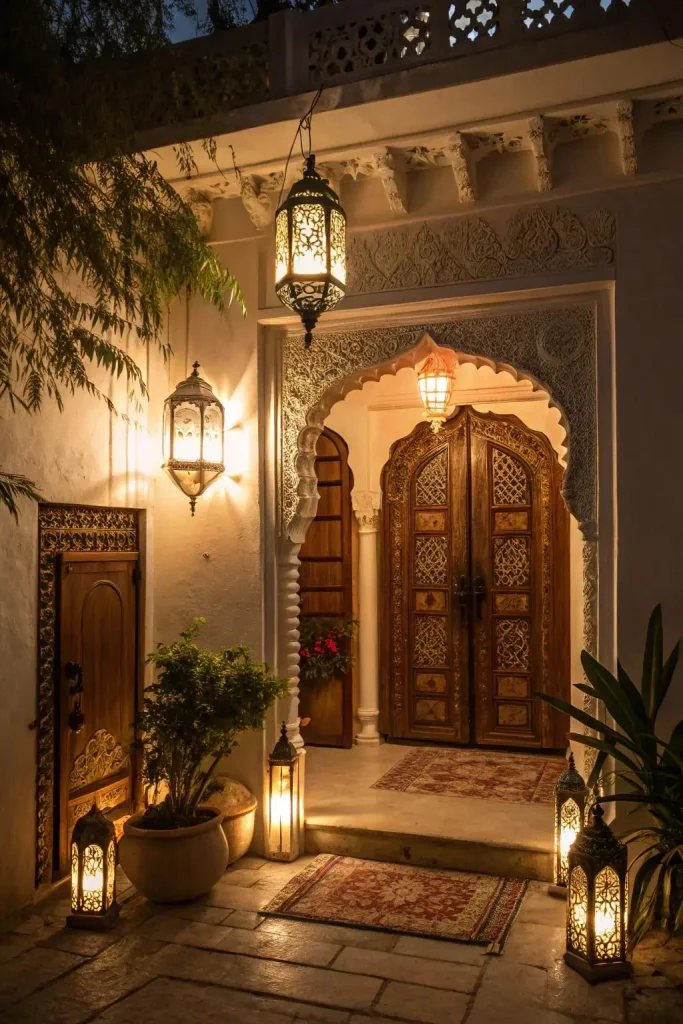
Good lighting can completely change the atmosphere of an entrance. Instead of relying only on bright overhead lights, introduce warm ambient lighting to create a softer and more welcoming effect.
Moroccan-style lanterns, decorative wall lights, hanging fixtures, or traditional lamps can add visual interest while providing useful illumination. Choose designs with patterned surfaces if you want interesting shadows and texture across the entrance.
Warm lighting works particularly well with wooden doors, traditional textiles, and earthy colors.
4. Add a Spiritual Touch with Statues
Decorative statues can bring cultural meaning and a sense of serenity to your entrance. A Ganesha statue is a traditional choice for many Indian homes and can serve as a meaningful focal point near the doorway.
You can place a statue on a decorative pedestal or a small console, depending on the available space. If you prefer a more minimalist arrangement, choose one carefully selected piece rather than filling the entrance with multiple decorations.
The goal is to create a peaceful, intentional display that complements the rest of your entryway.
5. Incorporate Natural Elements
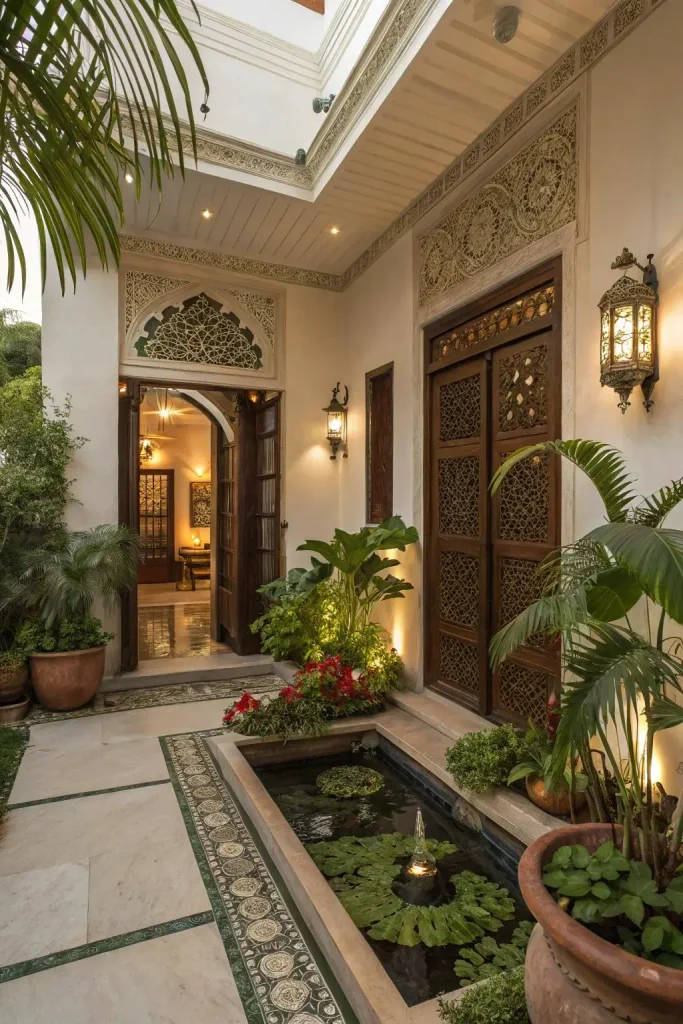
Plants and natural materials can make an entryway feel fresher and more welcoming. Choose greenery that suits the amount of natural light available near your entrance.
Snake plants, pothos, and peace lilies can work well in areas with limited light. Use attractive planters that complement the colors and materials already present in the space.
If you have enough room, a small water feature can also introduce movement and a soothing sound. Combining greenery with natural stone, wood, or clay creates a relaxed atmosphere.
6. Showcase Traditional Textiles
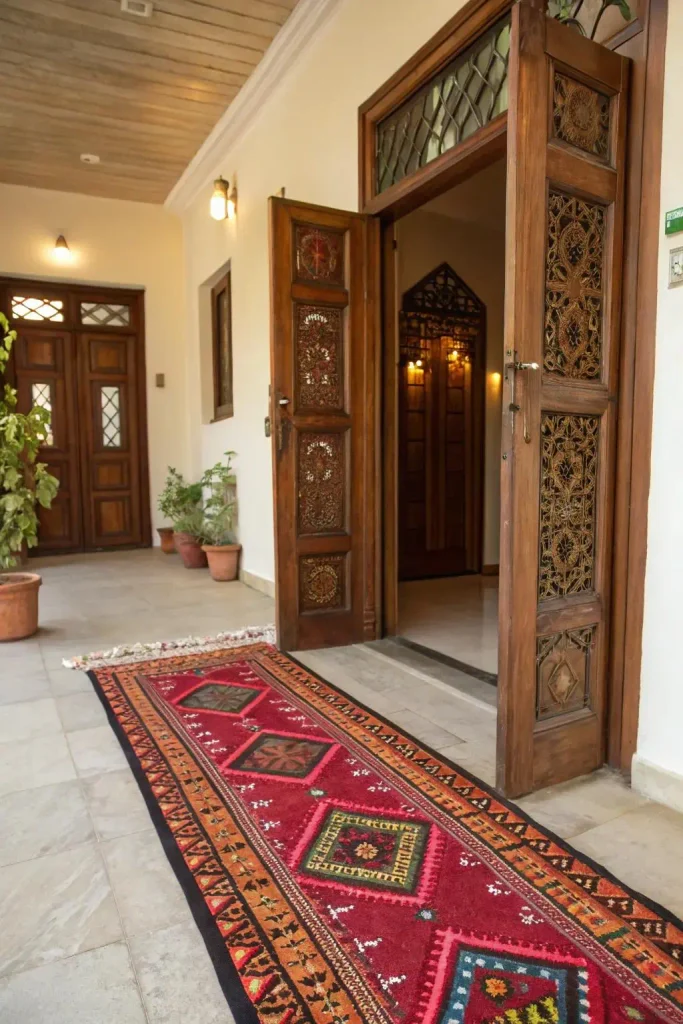
Traditional Indian textiles are an easy way to introduce color, pattern, and texture into an entryway. A handwoven dhurrie or decorative runner can add warmth while also helping define the entrance area.
Look for textiles featuring traditional motifs, rich colors, or intricate weaving. A long runner can work particularly well in a hallway-style entrance, while a smaller rug can define a compact doorway.
Choose durable materials that can handle regular foot traffic, especially if the entrance receives frequent use.
7. Create Mirror Magic
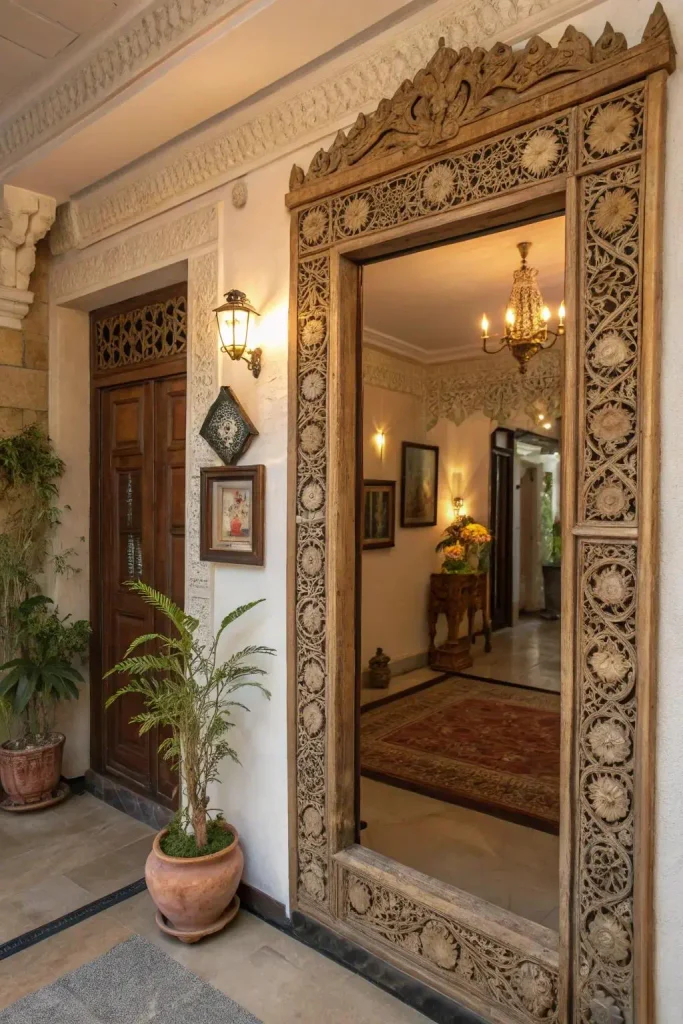
A statement mirror can make an entryway feel brighter and more spacious while also serving a practical purpose.
For an Indian-inspired look, choose a mirror with an ornate carved frame or decorative metal detailing. Position it where it can reflect natural or artificial light without creating unwanted glare.
A mirror above a console table creates a classic entryway arrangement. Add a small vase, lamp, or decorative object underneath to complete the display without making the area feel crowded.
8. Display Artistic Wall Hangings
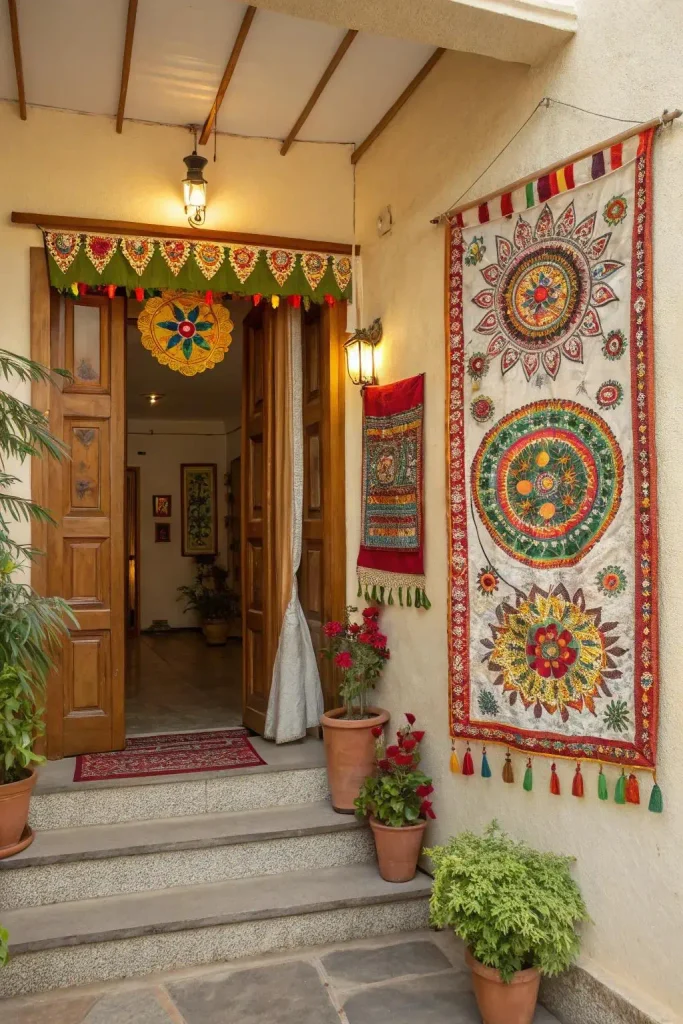
Wall hangings can introduce cultural character without requiring major changes to the architecture of your entrance.
Consider an embroidered Indian tapestry, woven textile, traditional artwork, or handcrafted decorative piece. Look for colors and patterns that complement your existing entryway rather than competing with them.
A large wall hanging can act as the main focal point, while several smaller pieces can be arranged together to create a gallery-style display.
9. Opt for Decorative Bells
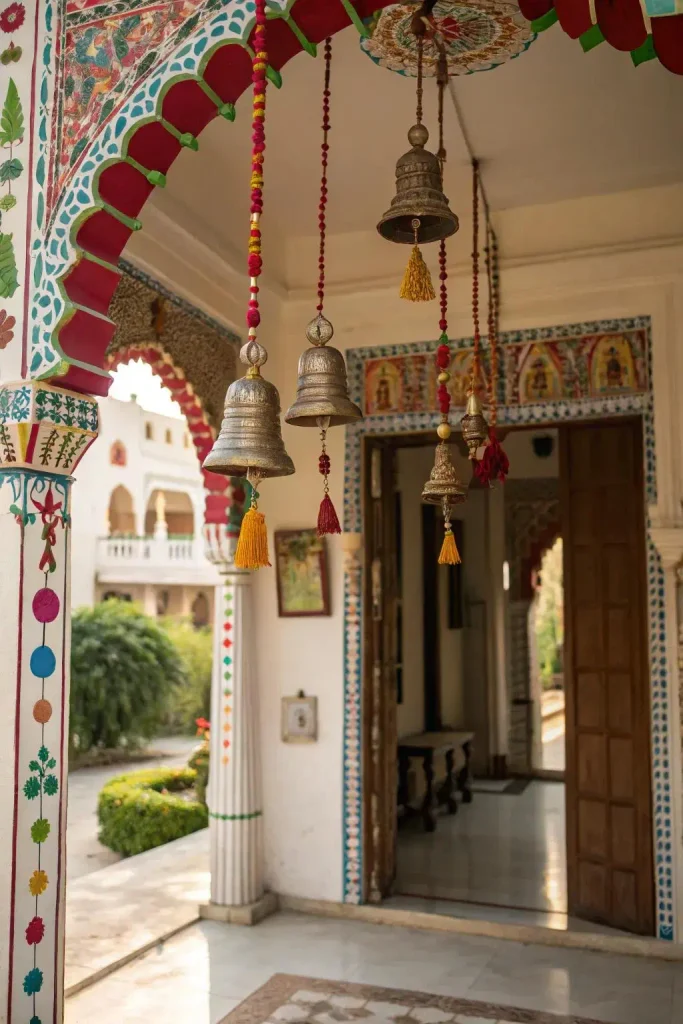
Decorative bells can add both visual interest and sound to your entrance. Hang them beside or above the doorway where they can move naturally as the door opens.
Traditional metal bells with detailed craftsmanship can complement an Indian-style entrance particularly well. For a more contemporary look, choose a simple design with a clean finish.
Because bells can become a focal point on their own, keep the surrounding decoration relatively simple so the entrance does not feel overcrowded.
10. Set the Mood with Fragrant Flowers
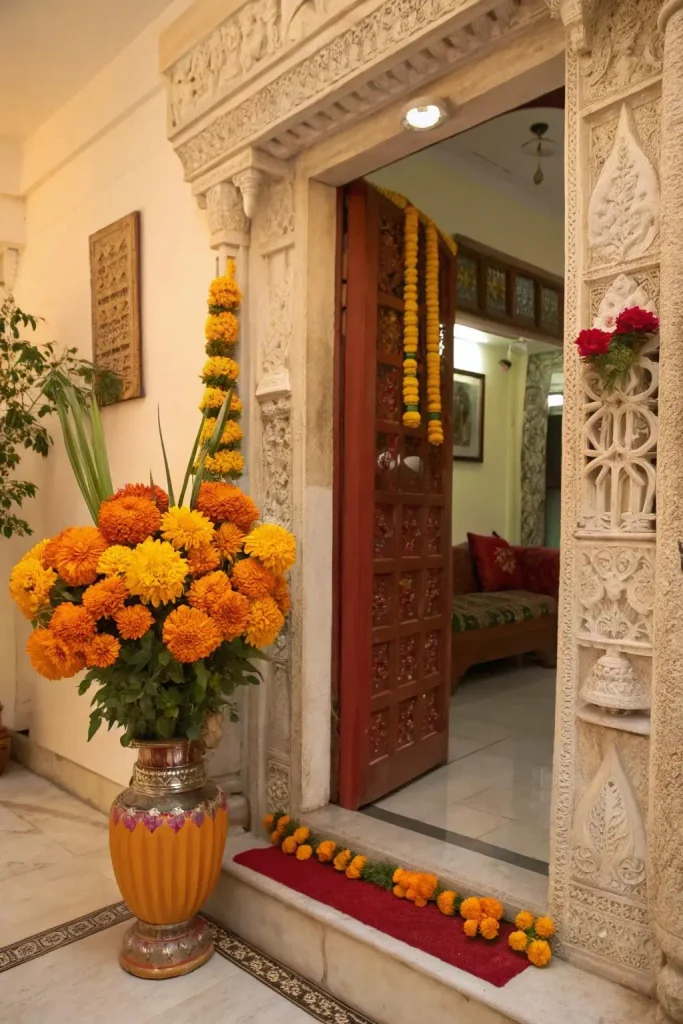
Fresh flowers can instantly make an entrance feel colorful, lively, and welcoming. Marigolds and jasmine are particularly suitable for an Indian-inspired setting because of their vibrant appearance and distinctive fragrance.
Place fresh flowers in a traditional vase or arrange them as a garland around the entrance. For a longer-lasting option, use potted flowering plants where conditions allow.
Flowers are also easy to change according to the season, festival, or occasion, making them a flexible decorating choice.
11. Mix Modern and Traditional Elements
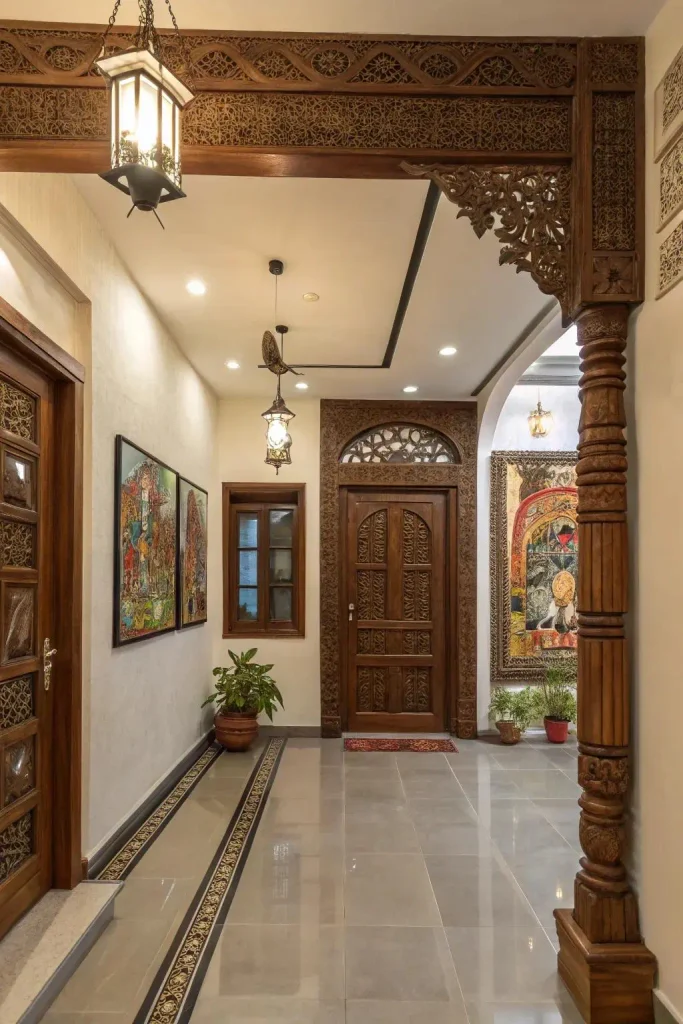
You do not have to choose between a traditional Indian entrance and a modern one. Combining both styles can create a balanced and personalized look.
For example, pair a sleek console table with traditional brass lanterns, handcrafted objects, or colorful textiles. A contemporary mirror can sit comfortably alongside traditional decorative pieces when the colors and proportions work together.
The key is to create contrast without making the space feel disconnected. Use a consistent color palette to help modern and traditional elements work as one design.
12. Install a Wall Niche Display
Wall niches provide a dedicated place to showcase decorative objects without taking up valuable floor space.
Use a niche to display ceramic vases, small sculptures, handcrafted pieces, or family keepsakes. Lighting inside or around the niche can further emphasize the objects and turn the display into a focal point.
When planning a niche, consider its position carefully. A location that naturally catches the eye as guests enter can make the display more effective.
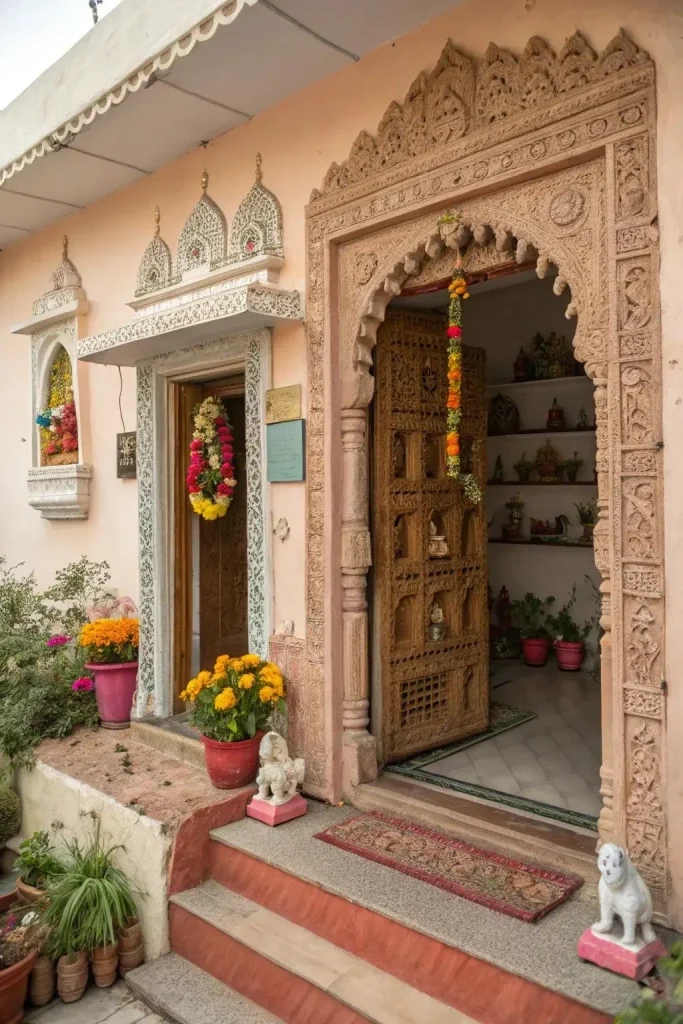
13. Enhance the Entrance with a Statement Rug
A statement rug can define the entryway while introducing color, texture, and personality.
For an Indian-inspired interior, consider a runner or rug featuring traditional motifs and rich colors. The right design can connect the doorway with the hallway and create a visual transition into the rest of the home.
Choose a rug that is appropriately sized for the space and practical enough for regular foot traffic. If the entrance is narrow, a runner can provide visual impact without making the area feel cramped.
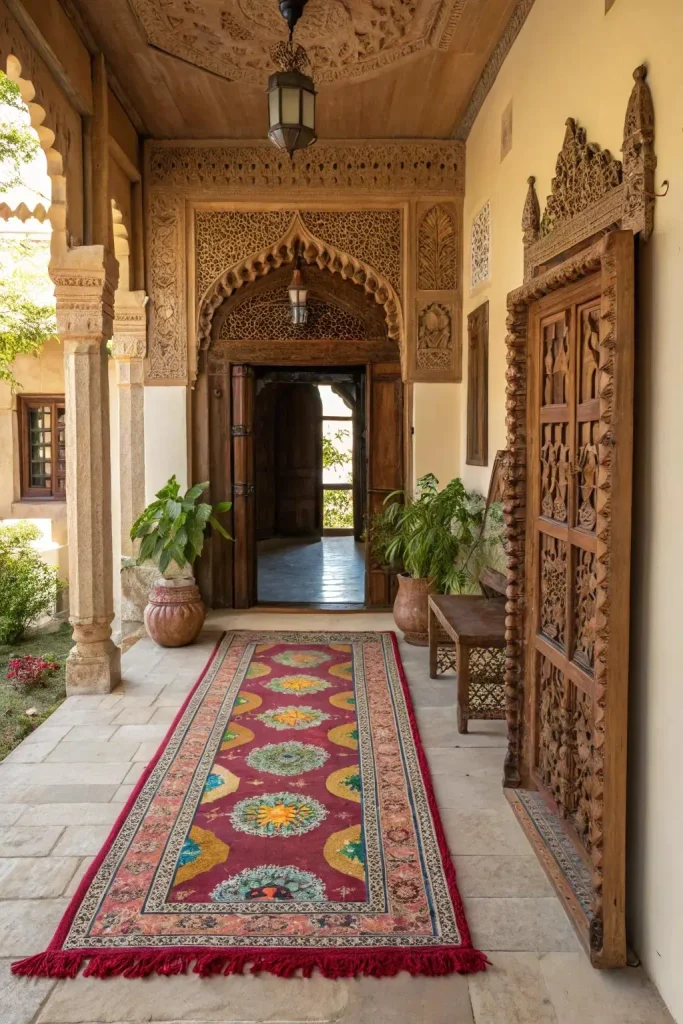
14. Create Personalized Nameplates
A personalized nameplate gives your entrance an individual identity. Instead of using a generic sign, choose a design that reflects your home’s character.
Wooden nameplates can create a warm, rustic appearance, while metal designs can provide a more contemporary finish. You can also incorporate decorative patterns, initials, family names, or meaningful symbols.
Keep the lettering easy to read and position the nameplate where it is clearly visible without overwhelming the rest of the doorway.
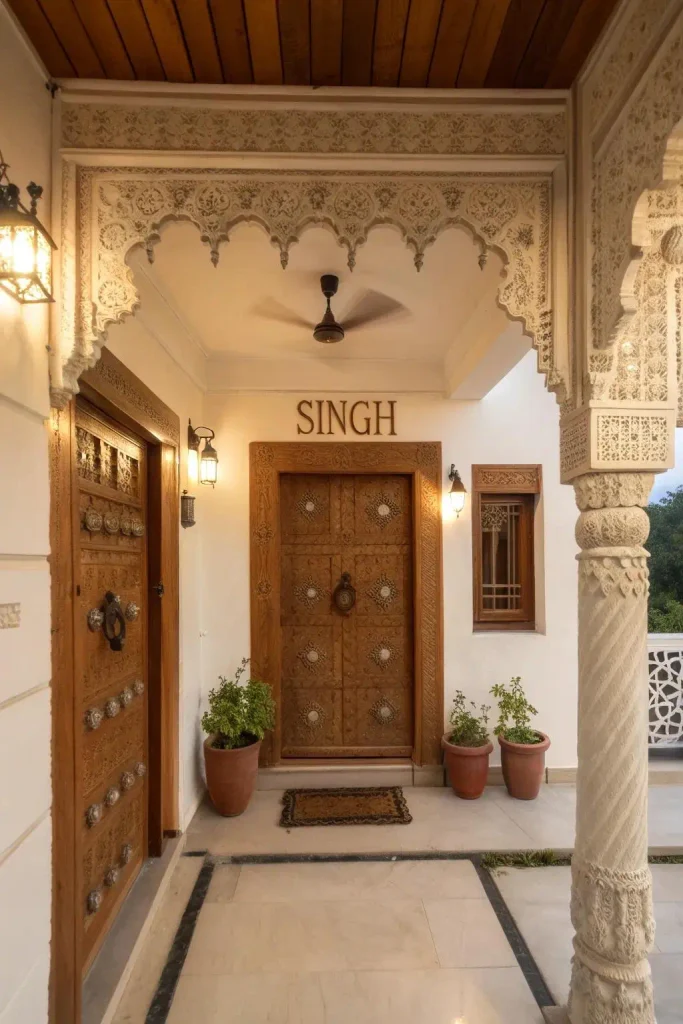
15. Use Reflective Surfaces
Reflective materials can help brighten an entryway and create the impression of additional space. Mirrors are the most obvious choice, but glossy ceramics, metallic accents, and polished decorative objects can also reflect light.
Combine a statement mirror with suitable entrance lighting to create a brighter atmosphere. In smaller entryways, reflective surfaces can be particularly useful because they add visual depth without requiring additional floor space.
Avoid using too many reflective elements at once. One or two carefully chosen pieces are usually enough to make an impact.
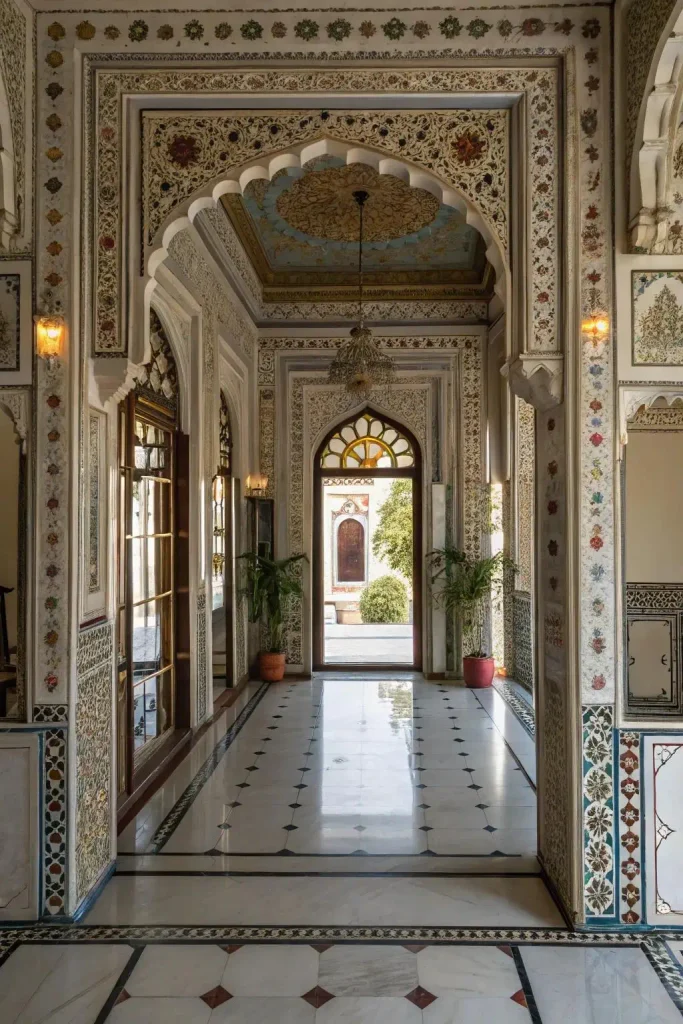
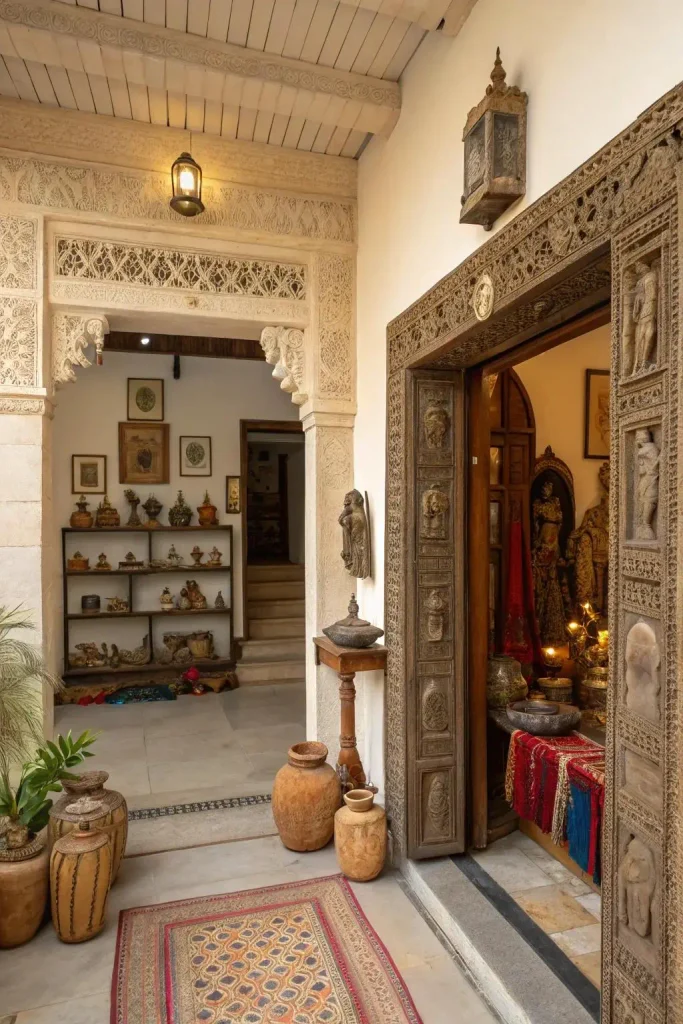
16. Incorporate Cultural Artifacts
Cultural artifacts can give your entrance a sense of history and personality. Handcrafted pottery, traditional masks, carved objects, and other decorative pieces can introduce Indian artistry into the space.
Choose pieces that have visual or personal meaning rather than adding decorations simply to fill empty areas. A few thoughtfully selected artifacts can have more impact than a crowded collection.
Earthy colors, natural materials, and handcrafted textures can also work beautifully with wooden doors, traditional rugs, and warm lighting.
17. Add a Bench for Practicality
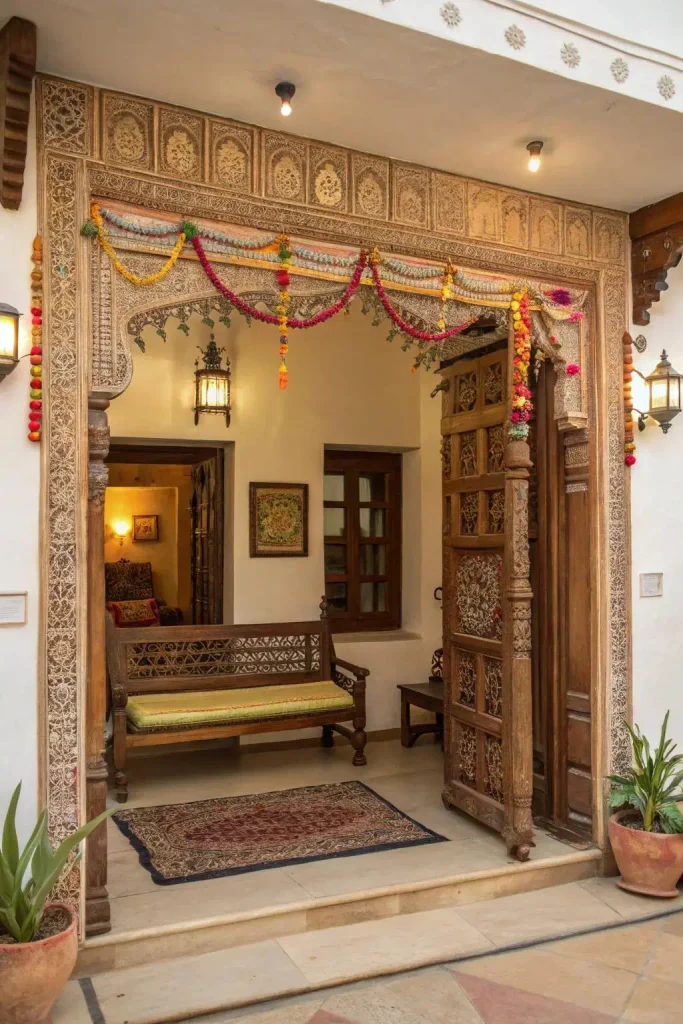
A bench can make your entryway both more attractive and more functional. Guests can use it to sit while removing shoes, while the surface can provide a convenient place for bags or other items.
A carved wooden bench works particularly well with a traditional Indian aesthetic. Choose natural wood tones and detailed craftsmanship if you want the bench to become a decorative focal point.
For smaller entrances, select a compact bench with a simple profile so that it provides useful seating without obstructing the walkway.
18. Finish with Artistic Floor Tiles
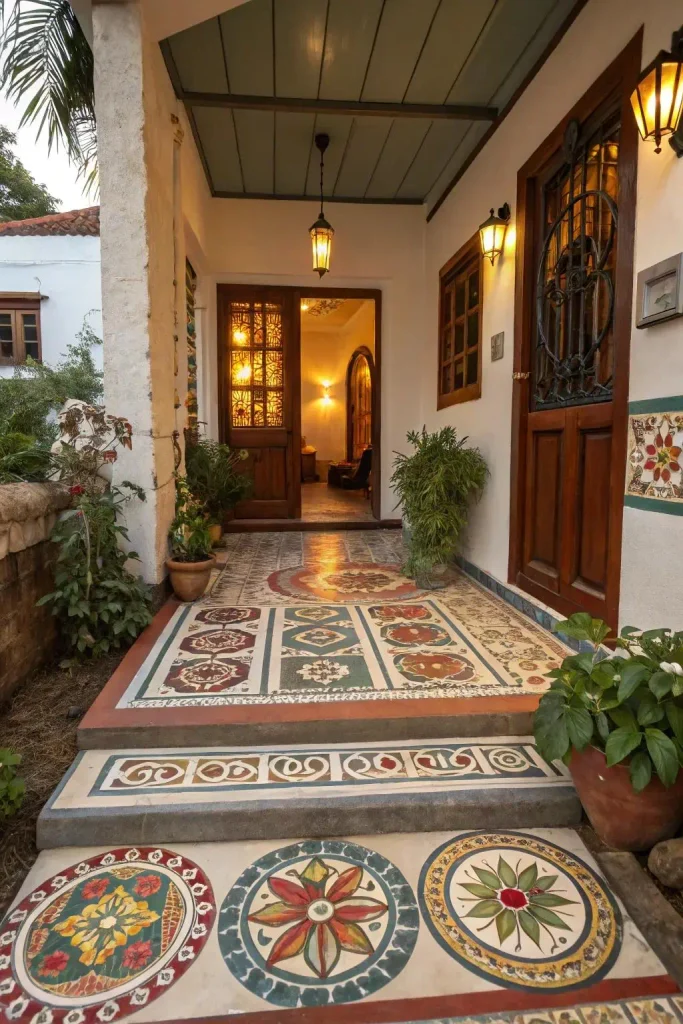
The floor can become an important part of your entryway design rather than simply a practical surface.
Patterned ceramic or decorative tiles can introduce color and visual interest from the moment guests walk through the door. Choose motifs that complement your home’s existing colors and architectural style.
If you already have decorative elements such as a carved door, colorful textiles, or patterned walls, select floor tiles that coordinate with those features rather than competing with them.
Conclusion
A well-designed Indian entryway can combine tradition, personality, and everyday practicality. From carved wooden doors and colorful rangoli to traditional textiles, decorative lighting, plants, mirrors, and handcrafted artifacts, even small details can make a noticeable difference.
You can choose a fully traditional aesthetic or combine Indian craftsmanship with contemporary furniture and finishes. The most successful entryways are those that feel connected to the rest of the home while reflecting the personality of the people who live there.
Start with one or two elements that you genuinely love, then build around them with complementary colors, textures, lighting, and accessories. With the right combination, your entrance can become a warm and memorable introduction to your home.