
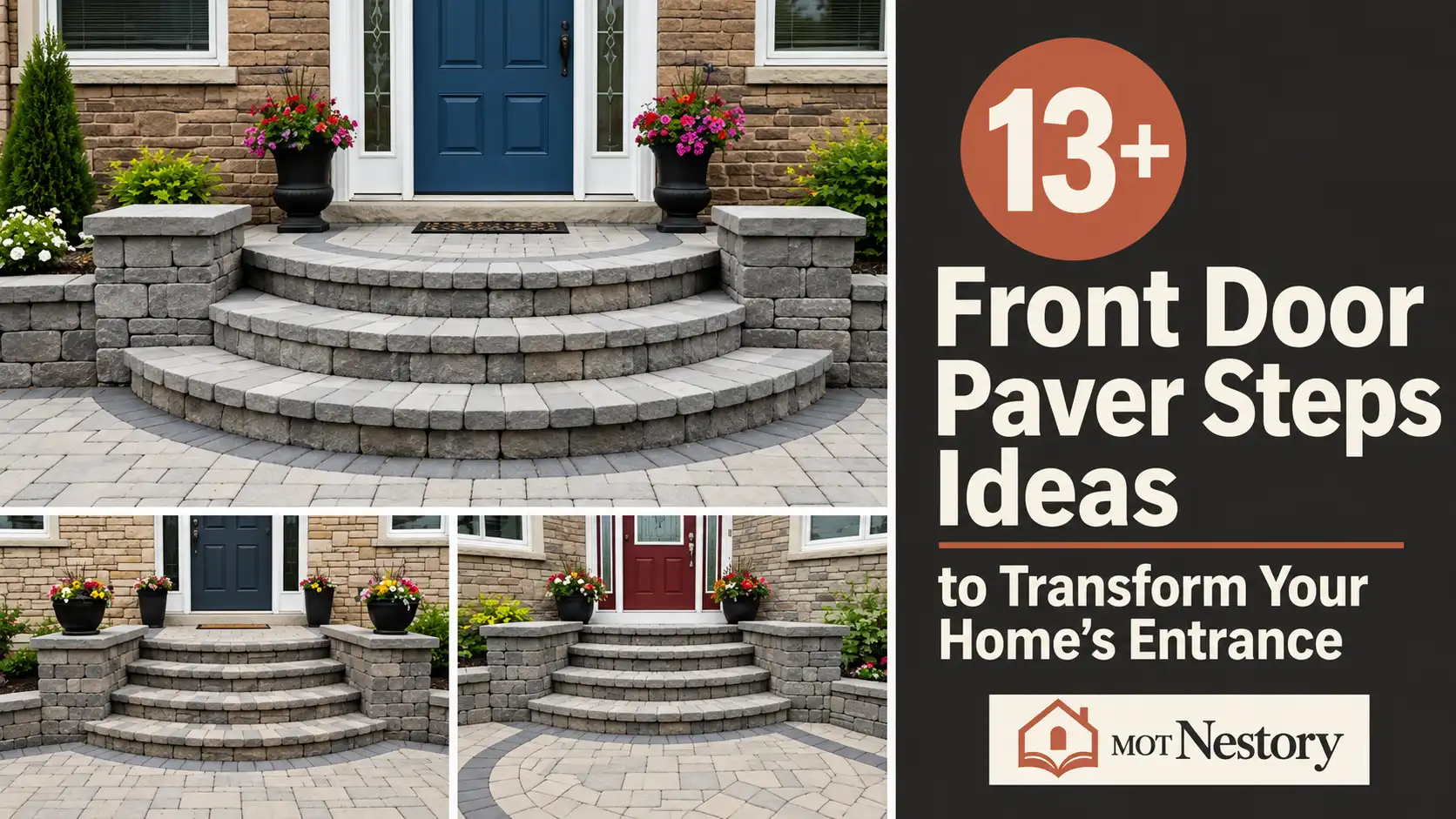
Your front steps do more than provide a path to your door—they help define the first impression of your home. With the right pavers, you can turn a simple entrance into a stylish, welcoming feature that complements your home’s architecture and landscaping.
Front door paver steps come in countless materials, colors, patterns, and layouts. Whether you prefer the natural character of flagstone, the timeless appeal of brick, the clean lines of concrete, or the luxurious look of marble, there is an option to suit almost every style.
Here are 13 inspiring front door paver step ideas to help you create an entrance that feels both functional and beautiful.
1. Create Tiered Steps with Plant Accents
Tiered paver steps can give your front entrance a sense of depth and dimension. Instead of creating one straight staircase, use several wider levels to produce a more dramatic approach to the door.
Surround the steps with planters, shrubs, ornamental grasses, or seasonal flowers to soften the hard surfaces. Choose plants that complement the colors of your pavers and work well with the amount of sunlight your entrance receives.
For an especially inviting look, add subtle landscape lighting along the edges of the steps. The combination of layered pavers and greenery can make even a simple entrance feel more substantial.
2. Choose Sophisticated Bluestone Pavers
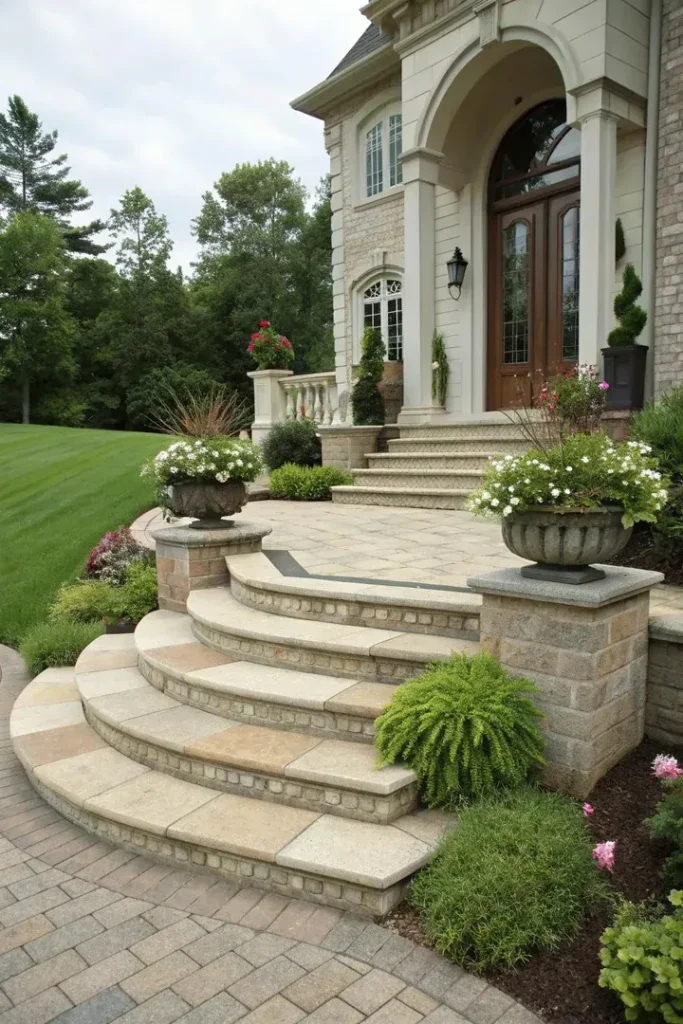
Bluestone is an excellent option if you want front steps with a refined, natural appearance. Its characteristic blue-gray tones work particularly well with contemporary, traditional, and coastal-style homes.
Use large bluestone slabs for a clean appearance or arrange smaller pieces in a more traditional pattern. The cool tones can also provide an attractive contrast against warm-colored siding, brick, or wooden doors.
For a cohesive design, continue the same bluestone from the steps into the walkway or surrounding patio area.
3. Add Unique Mosaic Patterns
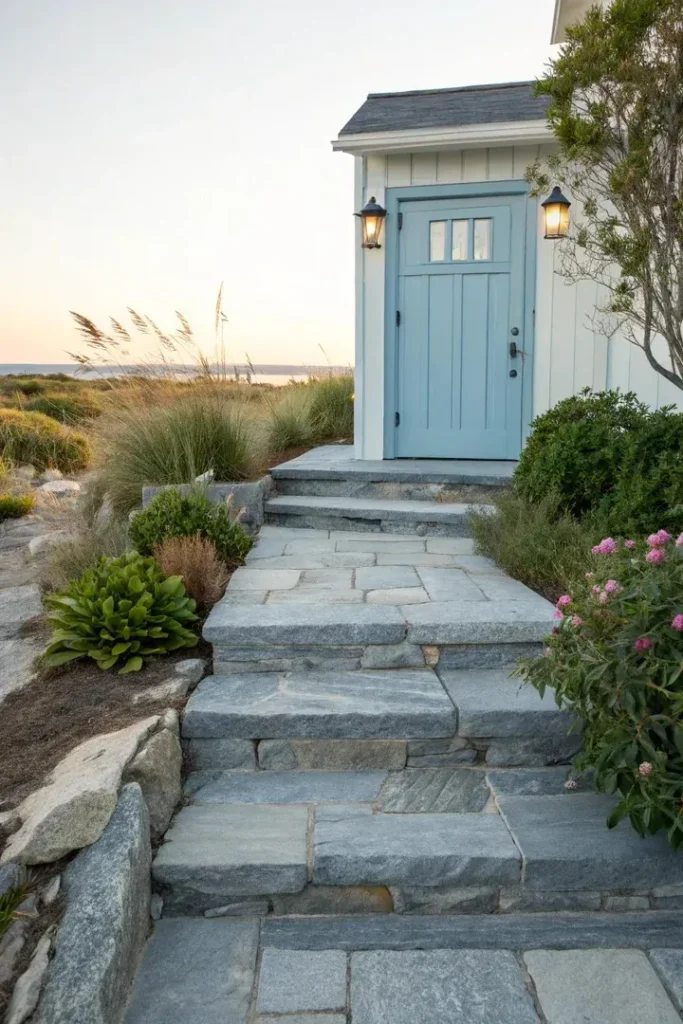
Mosaic-style pavers can turn your front steps into an artistic feature. Rather than using one uniform material, combine different colors, shapes, or patterns to create visual interest.
You can keep the design subtle by using variations of the same color or make a stronger statement with contrasting tones. Geometric patterns, borders, and repeating motifs can help define each step.
When working with patterned pavers, keep the surrounding landscaping relatively simple so the steps remain the main attraction.
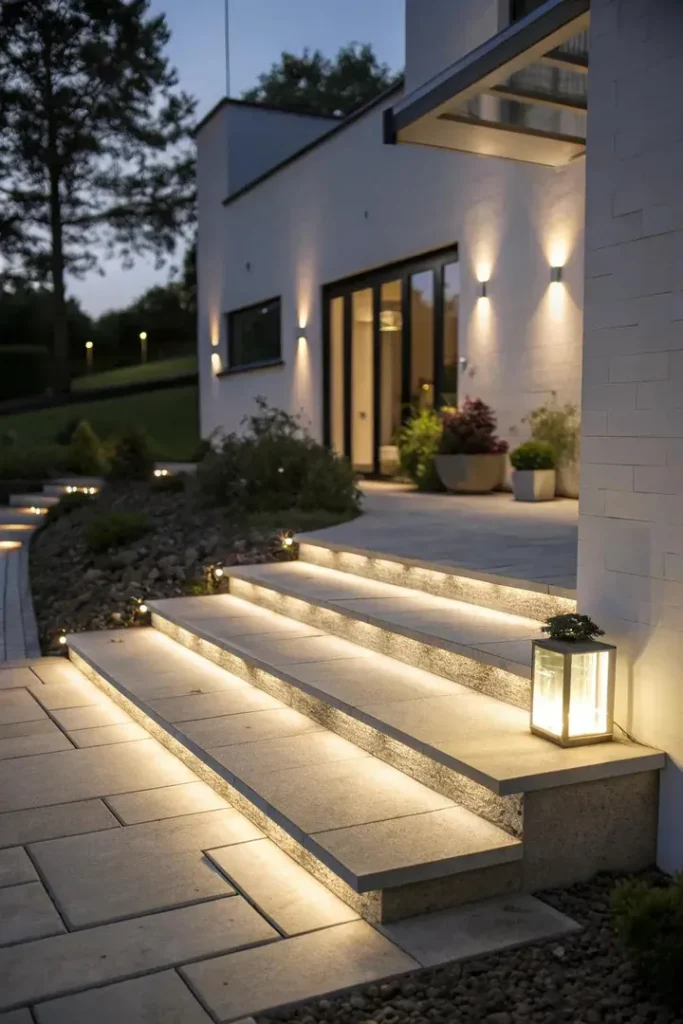
4. Illuminate the Steps with Outdoor Lighting
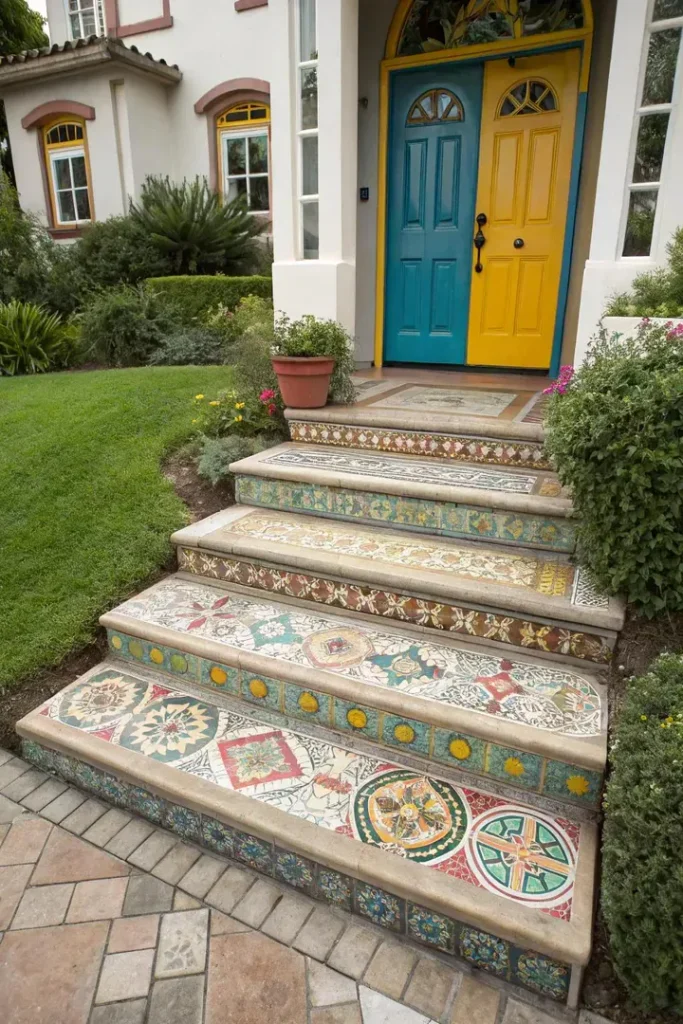
Lighting your front steps is an easy way to improve both appearance and visibility after dark. Strategically placed lights can highlight the shape of the steps while helping guests navigate them safely.
Consider recessed lights along retaining walls, low pathway lights beside the steps, or subtle LED fixtures beneath step edges. Warm-toned lighting can create a welcoming atmosphere without making the entrance feel overly bright.
For the best result, position the lights so they illuminate the walking surface without shining directly into visitors’ eyes.
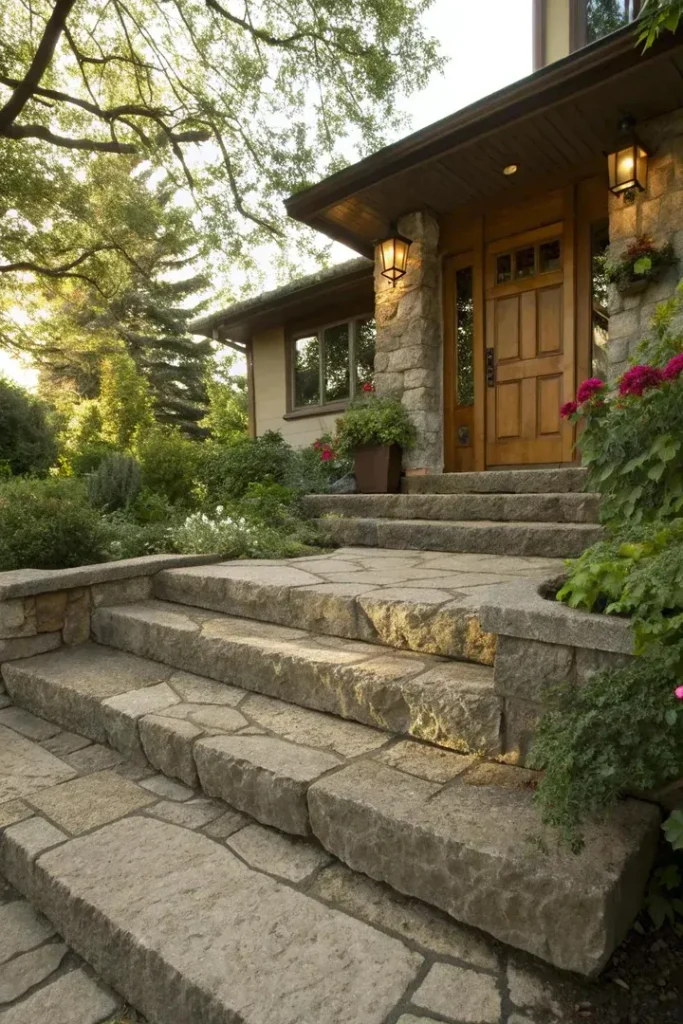
5. Use Textured Pavers for Better Grip
The appearance of your front steps matters, but safety should be just as important. Textured pavers can provide additional traction, particularly in areas exposed to rain, snow, or frequent moisture.
Natural stone with a slightly rough surface or purpose-made textured pavers can provide a practical alternative to very smooth finishes. This approach allows you to maintain an attractive design while making the steps more comfortable to use in wet conditions.
When selecting pavers, consider your local climate and choose a surface suitable for the conditions your entrance regularly experiences.
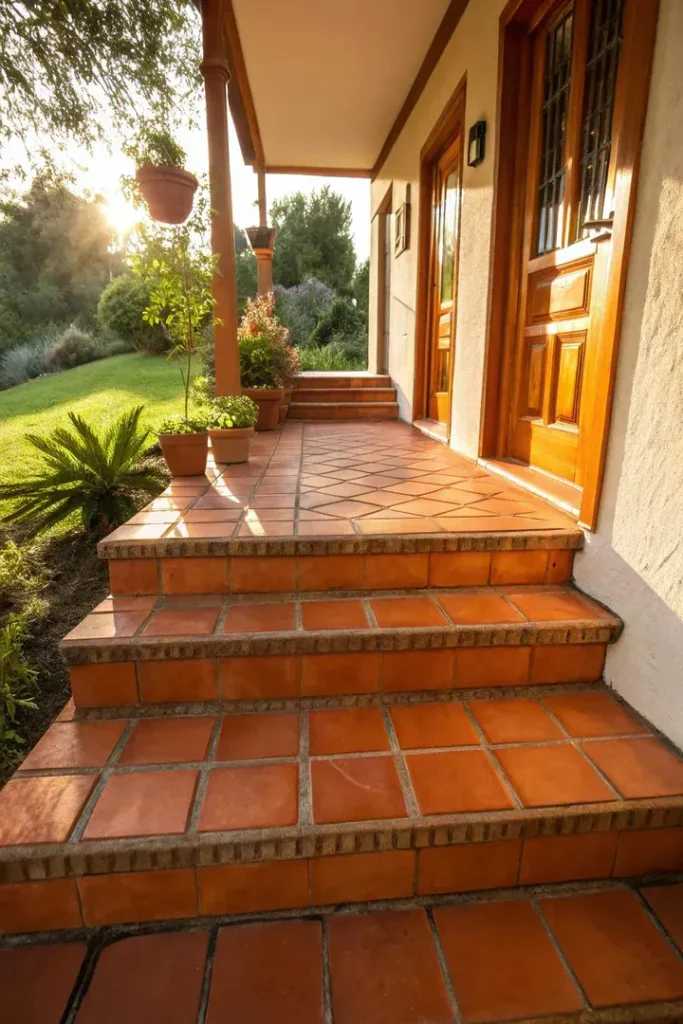
6. Bring Warmth with Terracotta Pavers
Terracotta-colored pavers can give your entrance a warm, inviting appearance. Their earthy orange, red, and brown tones work especially well with Mediterranean, Spanish, rustic, and farmhouse-inspired homes.
Pair terracotta steps with natural wood doors, neutral walls, or lush greenery for a balanced look. You can also use the same tones in the surrounding walkway to create visual continuity.
Because terracotta-inspired colors naturally feel warm, they are particularly effective when you want your front entrance to feel welcoming and relaxed.
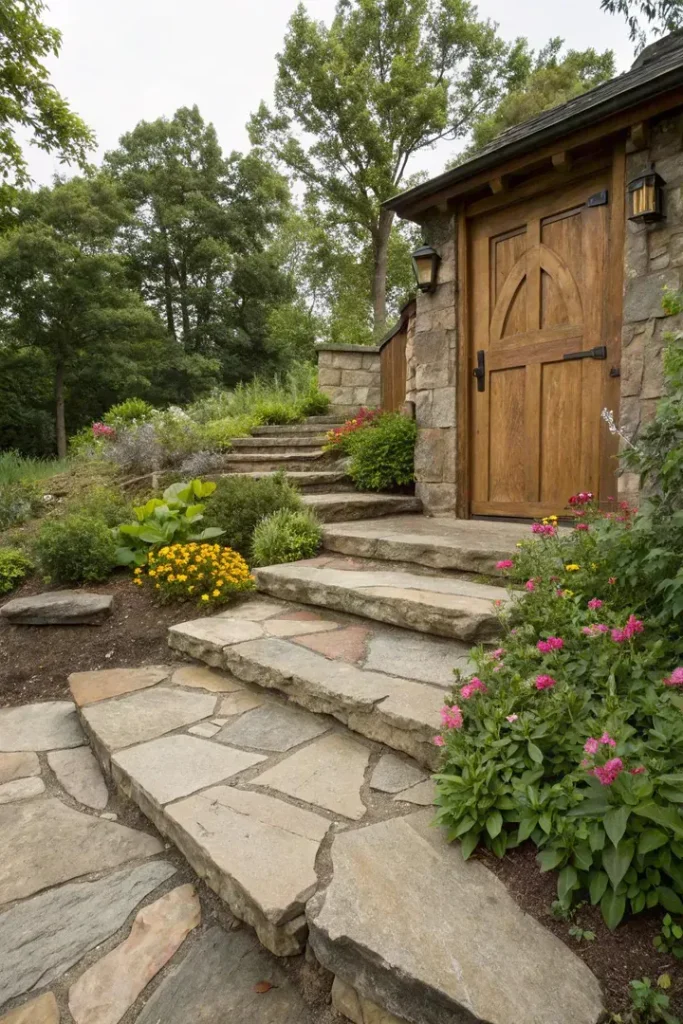
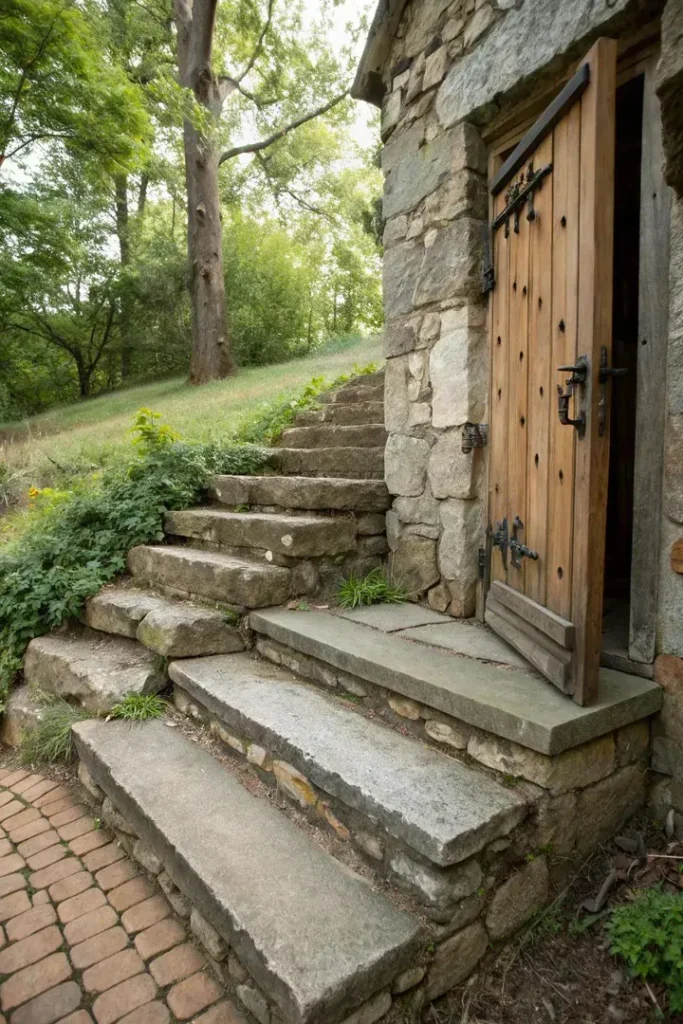
7. Embrace Natural Flagstone
Flagstone is ideal for homeowners who prefer an organic, less uniform appearance. Its irregular shapes and natural variations create a relaxed look that blends beautifully with gardens and landscaped entrances.
Arrange large flagstone pieces carefully to create stable, comfortable steps while allowing the natural shapes to remain visible. Surround the edges with greenery or ground cover to strengthen the connection between the stone and landscape.
For evening appeal, small solar or low-voltage landscape lights can highlight the natural texture of the stone.
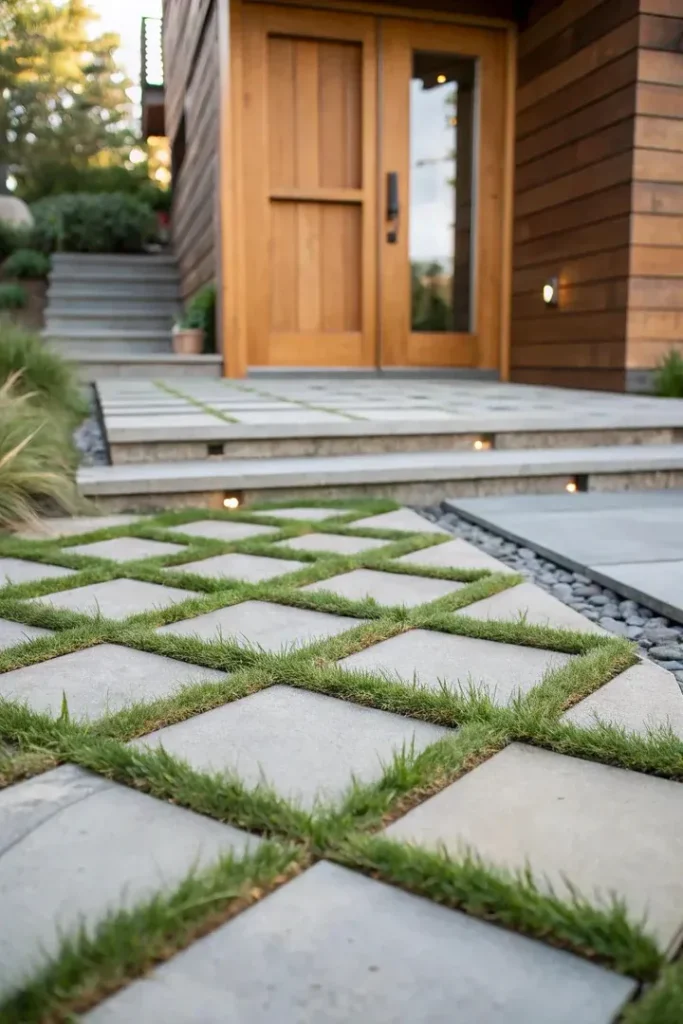
8. Add Grass Inlays Between Pavers
Grass inlays can soften the appearance of a hardscape and introduce a touch of greenery directly into the step design.
Instead of placing pavers tightly together, leave carefully planned gaps between selected pieces and fill them with grass or another suitable ground cover. The contrast between green vegetation and stone can create a fresh, contemporary appearance.
This approach works particularly well for homes with natural landscaping and modern outdoor spaces. However, choose a plant or grass variety that can tolerate the amount of sunlight, moisture, and foot traffic in the area.
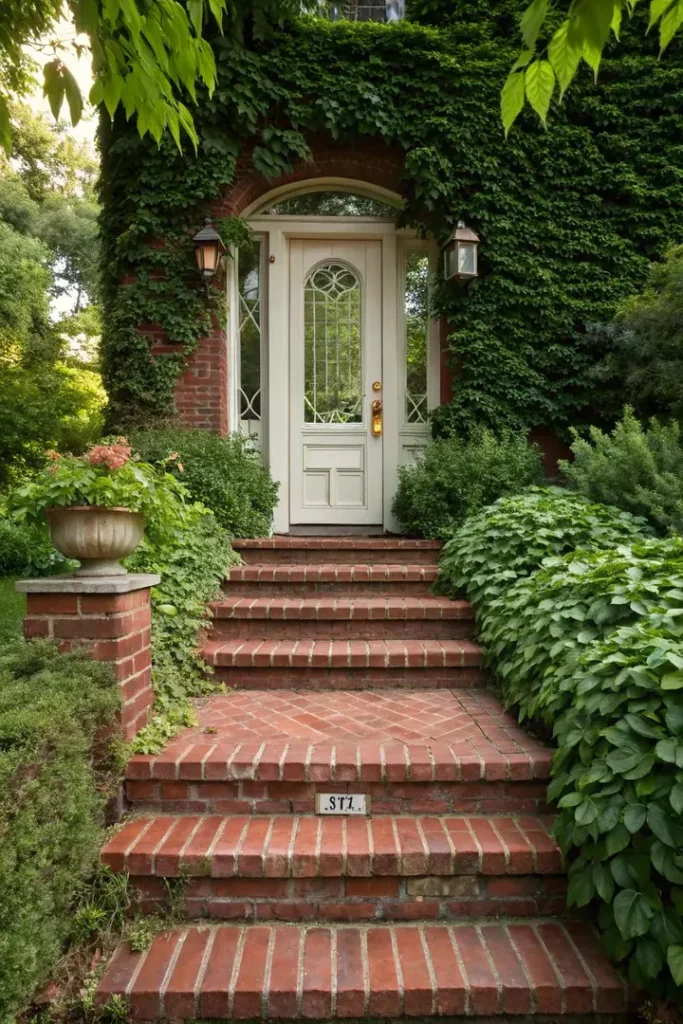
9. Keep It Classic with Brick Pavers
Brick pavers are a timeless choice for front steps. Their warm colors and traditional appearance can complement everything from historic homes to modern houses with traditional architectural details.
You can arrange brick in a running bond, herringbone, basketweave, or other pattern to create additional visual interest. Matching the brick steps with a brick walkway can also make the entrance feel more cohesive.
For a softer appearance, combine the brick with plants, shrubs, or natural stone borders.
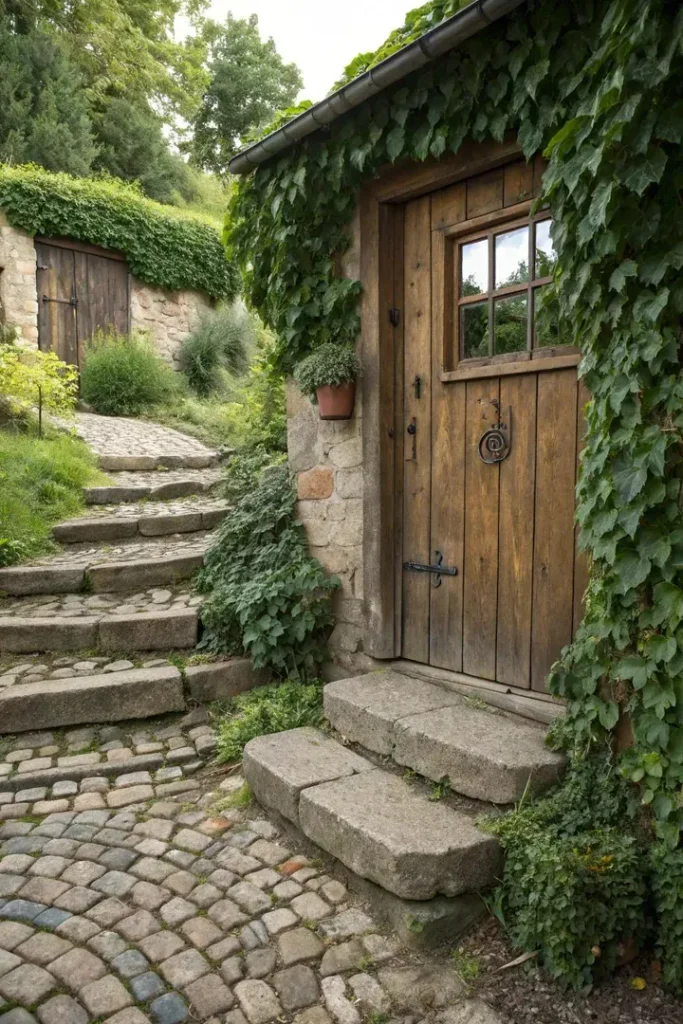
10. Add Rustic Charm with Cobblestone
Cobblestone pavers bring old-world character and texture to a front entrance. Their uneven appearance can make the steps feel established and naturally connected to the surrounding landscape.
Cobblestone works particularly well with cottage, rustic, European-inspired, and traditional homes. Pair it with natural stone walls, wooden doors, or climbing greenery for an especially charming entrance.
Because cobblestone has a strong visual character, balance it with relatively simple landscaping and architectural finishes.
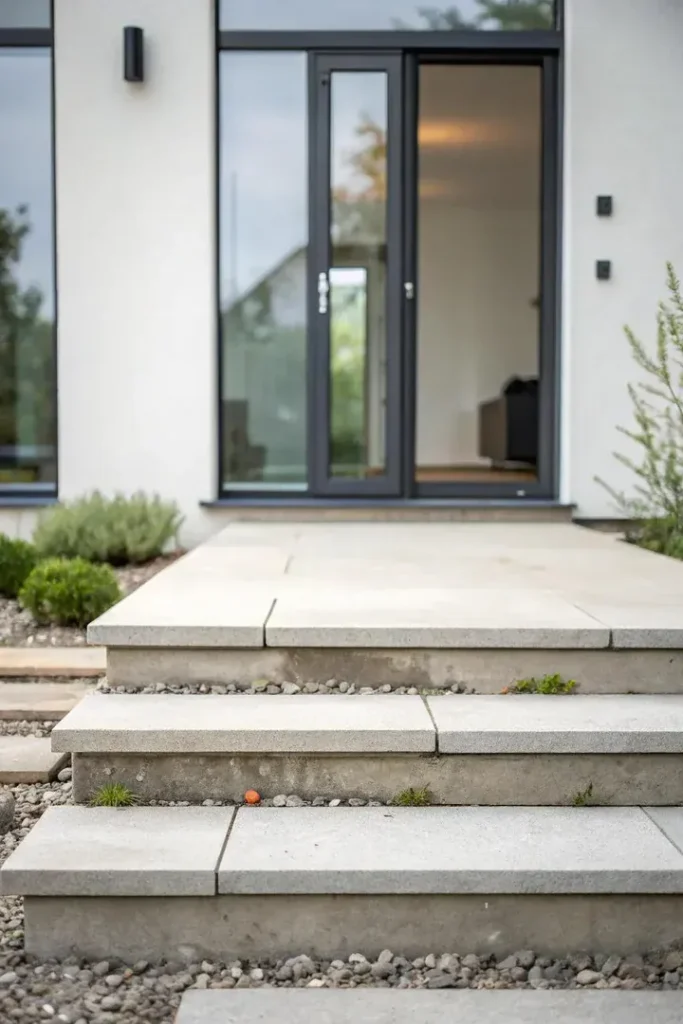
11. Choose Modern Concrete Pavers
For a sleek contemporary entrance, concrete pavers offer plenty of flexibility. They can be used in different shapes, sizes, colors, and layouts, making them suitable for both minimalist and more structured designs.
Large-format concrete pavers can create clean lines and a streamlined appearance, while smaller units can introduce geometric patterns.
Pair gray or neutral concrete with modern lighting, simple landscaping, and a contemporary front door for a polished look. Concrete can also be combined with wood or greenery to soften an otherwise minimalist design.
12. Mix Stone and Wood
Combining different materials can give your front steps more texture and personality. Stone pavers paired with wood elements create an appealing contrast between natural hardscape and warm organic materials.
For example, use stone for the primary steps and incorporate wood into the surrounding landing, railings, or architectural details. The contrast works particularly well for contemporary, rustic, and transitional homes.
Keep the number of materials under control so the entrance looks coordinated rather than overly busy. Repeating one of the materials elsewhere in the entryway can help tie the design together.
13. Create a Luxurious Marble Finish
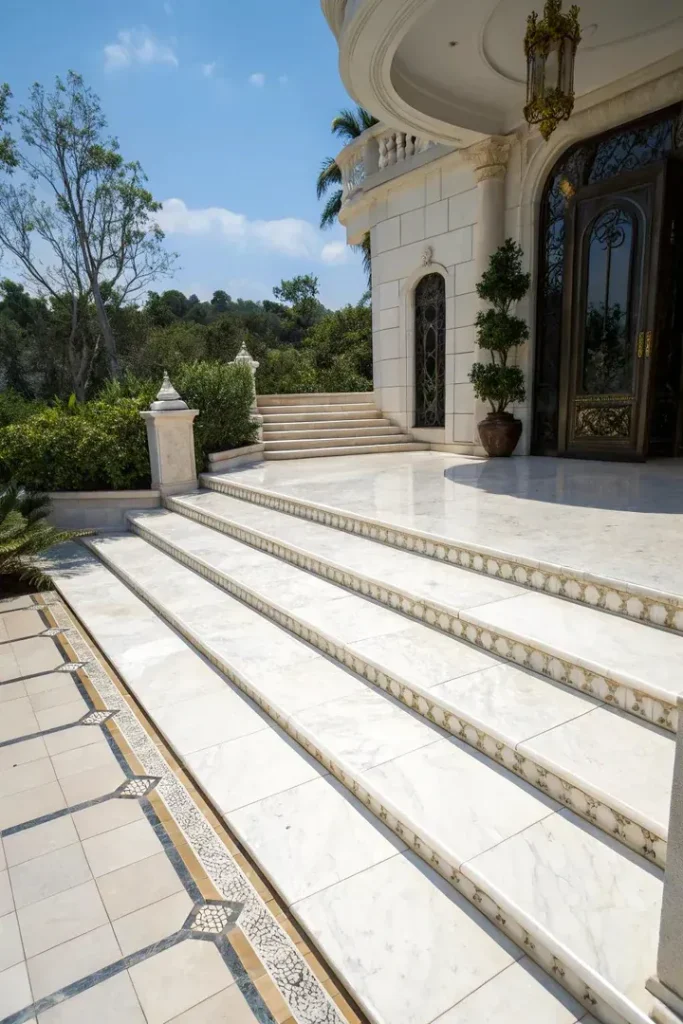
If you want your front entrance to feel sophisticated and high-end, marble pavers can create a striking result. Their natural veining and polished appearance immediately add visual interest.
Light-colored marble can make an entrance feel bright and spacious, while darker varieties can create a more dramatic effect. Consider using marble selectively rather than covering every surface so the material remains a focal point.
Because marble can require more maintenance than some other paver materials, choose a finish appropriate for outdoor use and follow the manufacturer’s recommendations for sealing and care.
Conclusion
The right front door paver steps can completely change the character of your home’s entrance. From warm terracotta and classic brick to natural flagstone, sophisticated bluestone, rustic cobblestone, and sleek concrete, there are plenty of materials and designs to explore.
Think about more than just the appearance of the pavers. Consider durability, traction, drainage, maintenance, lighting, landscaping, and how the steps connect with your existing walkway and front door.
Whether your style is rustic, traditional, modern, or somewhere in between, a thoughtfully designed paver entrance can make your home feel more welcoming while adding lasting curb appeal.
Start with the architectural style of your home, choose a material that suits your climate and maintenance preferences, and then build the surrounding design with lighting, plants, and complementary finishes. With the right combination, your front steps can become one of the most attractive features of your home’s exterior.