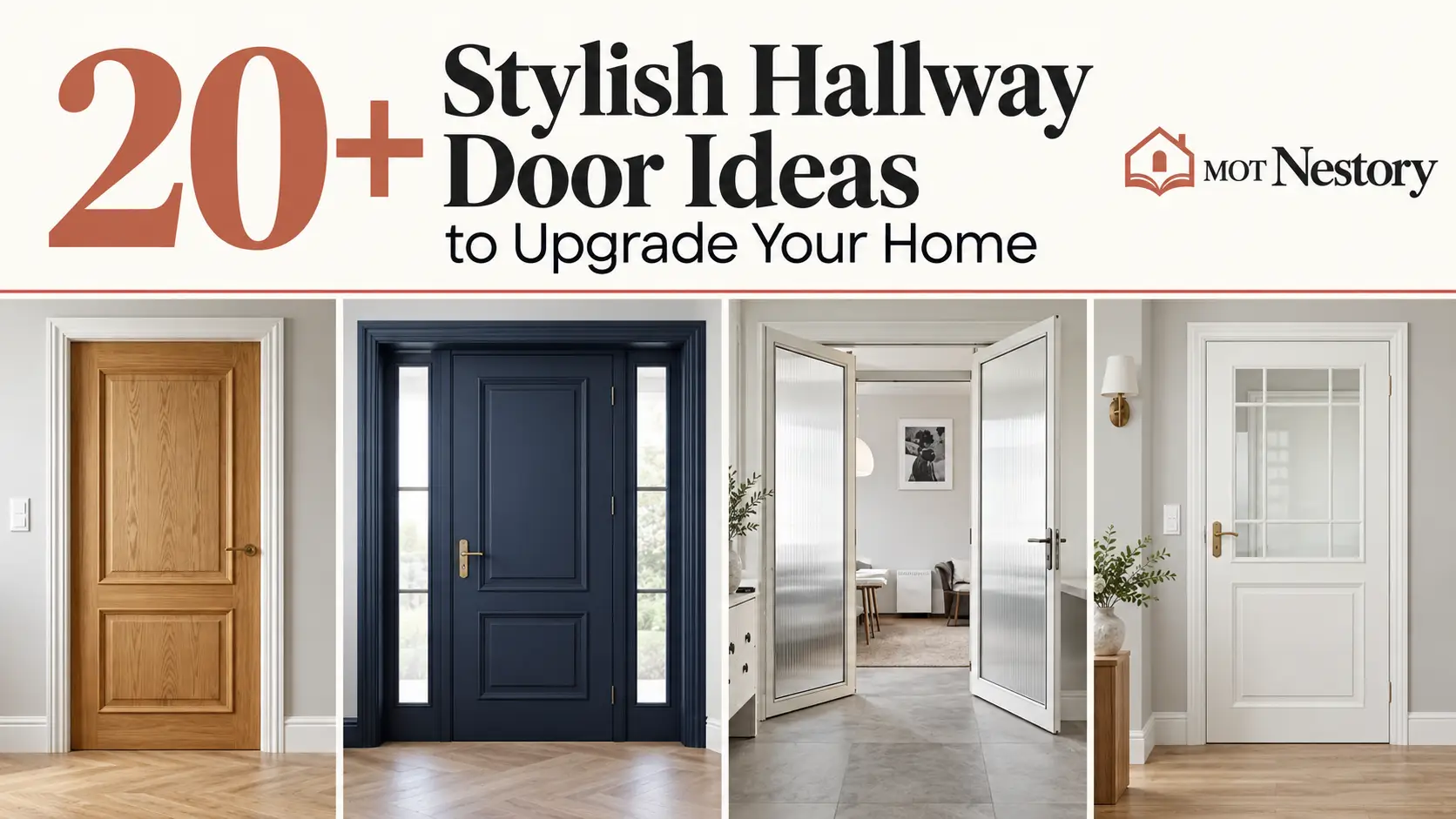
Hallway doors can be much more than simple functional features. The right door style can add character, improve the flow of your home, and make an ordinary hallway feel more intentional and polished. From natural wood and bold colors to glass panels and space-saving pocket doors, there are countless ways to make your doors part of your overall interior design.
Whether your home leans modern, rustic, traditional, or eclectic, these stylish hallway door ideas can help you create a look that feels cohesive and personal. Explore these 20+ ideas to find a design that works with your space and complements the rest of your home.
1. Choose Eco-Friendly Materials
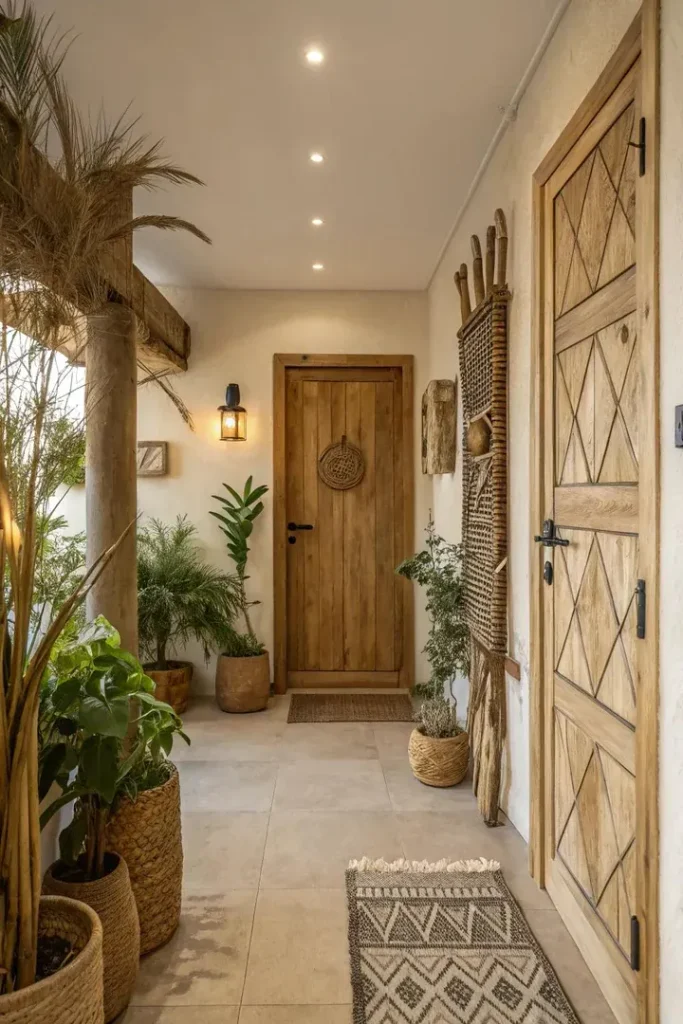
Sustainable materials can give hallway doors a natural, distinctive look while supporting a more environmentally conscious approach to home design.
Bamboo doors are a great option for adding warmth and texture with a contemporary feel. Reclaimed wood is another attractive choice, especially if you want rustic character and visible grain. These materials can make the hallway feel more connected to natural elements without compromising style.
2. Elevate the Space with a High-Gloss Finish
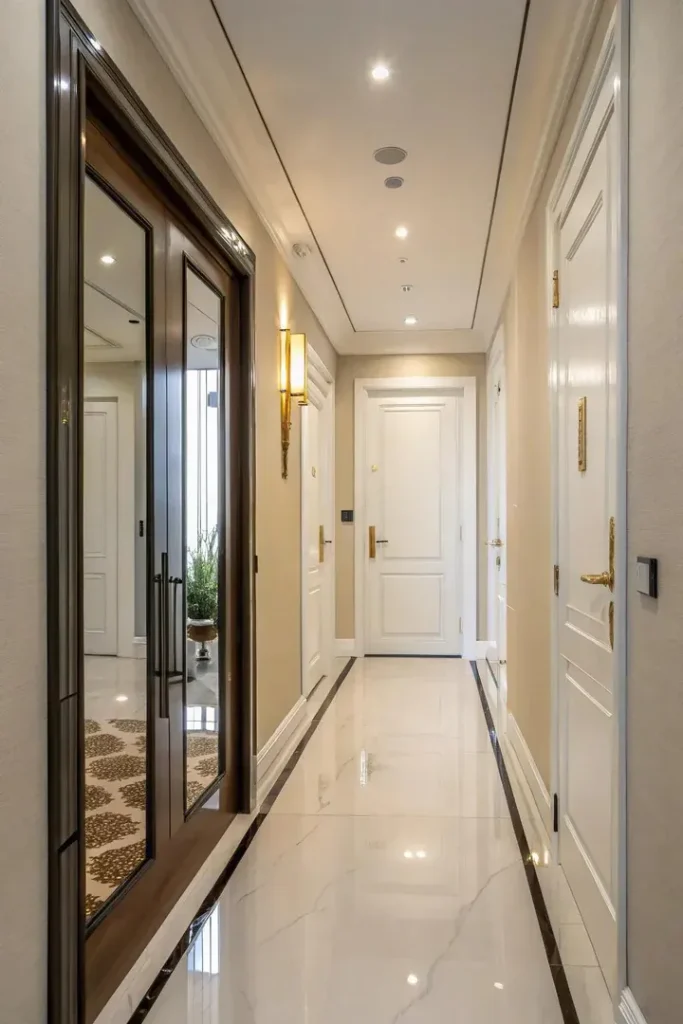
A high-gloss hallway door can create a sleek and sophisticated appearance by reflecting light throughout the space. This finish works particularly well in modern interiors where clean surfaces and polished details are important.
You can use a high-gloss paint color for a simple update or choose glossy panels for a more dramatic effect. Keep the surrounding decor relatively simple so the door remains the visual focus.
3. Keep It Minimalist
Minimalist doors are ideal for creating a clean and uncluttered hallway. Look for designs with simple lines, flat surfaces, and neutral colors that blend naturally with the surrounding walls.
White, beige, gray, and other understated shades can create a calm appearance while allowing architectural details elsewhere in the hallway to stand out. This approach works especially well in contemporary and modern homes.
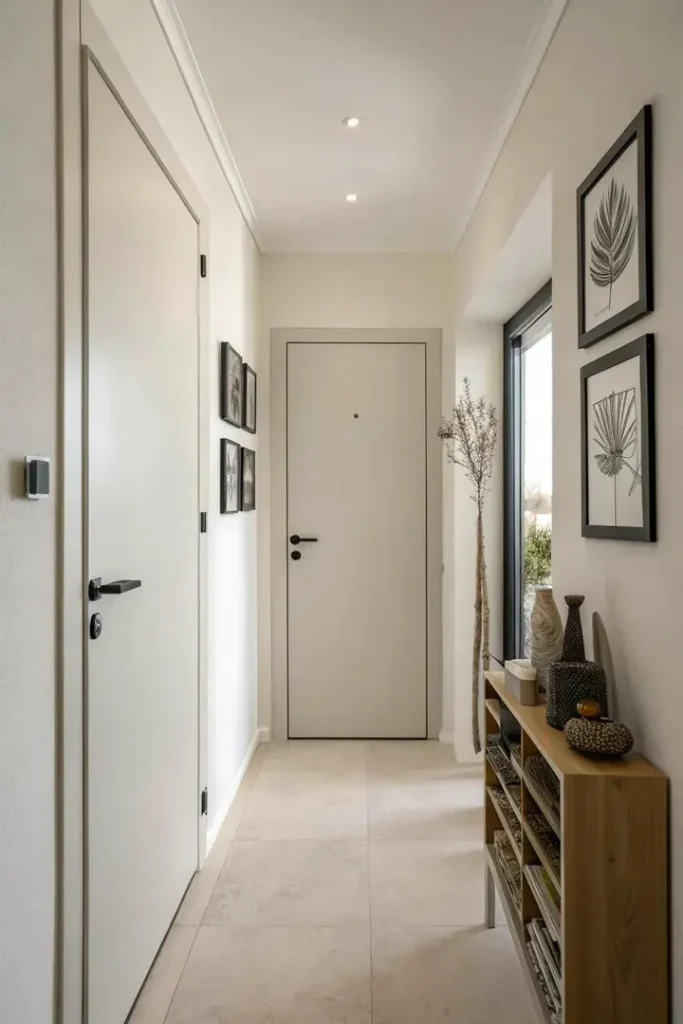
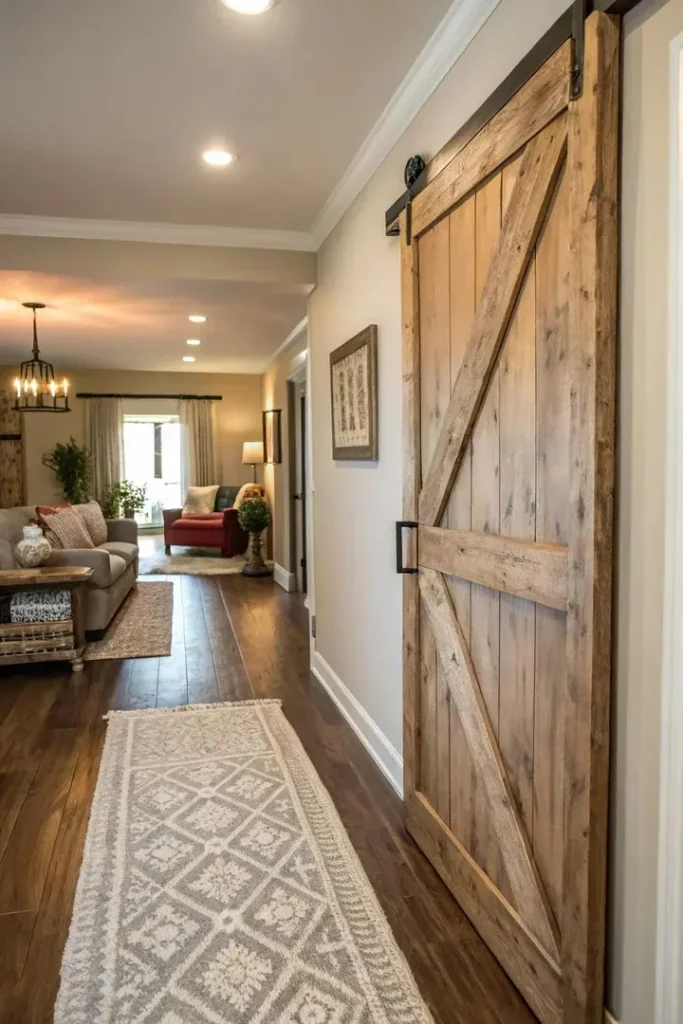
4. Add Rustic Character with a Barn Door
Barn doors bring warmth and rustic charm to a hallway while also providing an opportunity to introduce a strong architectural feature.
A sliding barn door can work particularly well where traditional swing doors would take up valuable floor space. Choose natural wood for a classic farmhouse appearance, or paint the door in a darker shade for a more contemporary interpretation of the style.
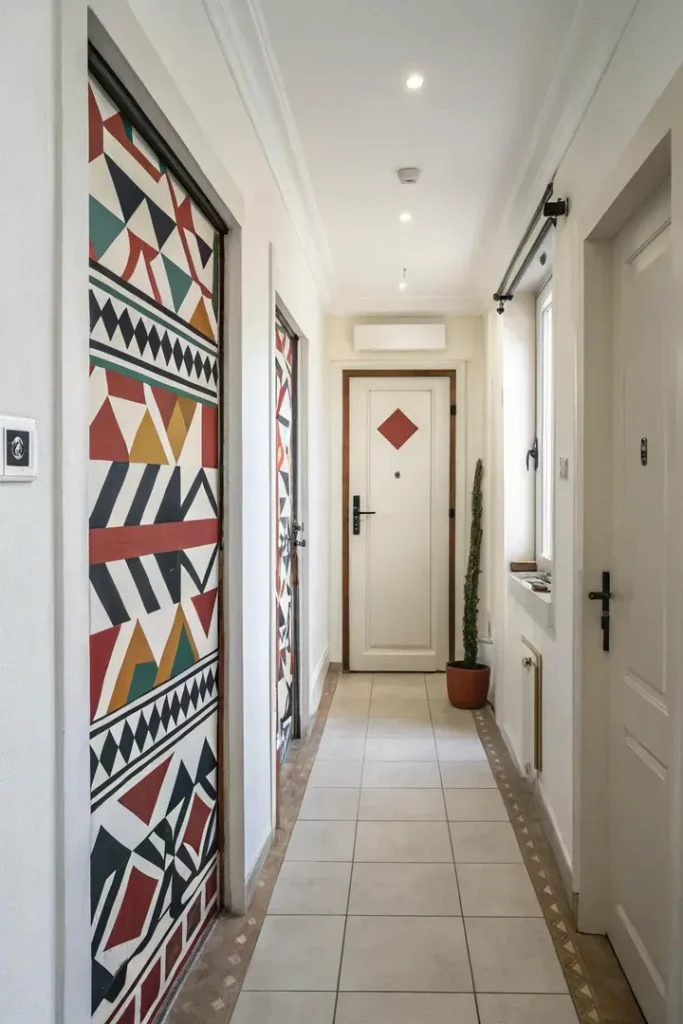
5. Experiment with Geometric Patterns
Geometric patterns can instantly give a plain hallway door a more modern appearance. Shapes can be painted directly onto the door, created with molding, or introduced through decorative panels.
Try simple rectangles, diagonal lines, or repeating patterns depending on the overall style of your home. For a balanced look, choose a pattern that complements rather than competes with the hallway’s other design elements.
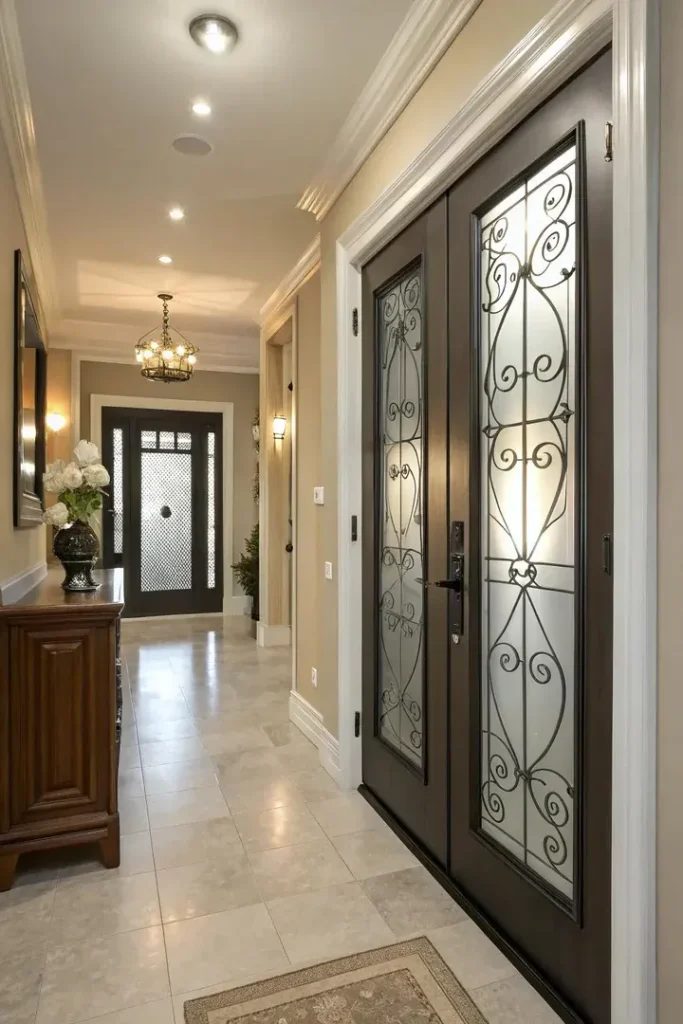
6. Blend Styles with Transitional Doors
Transitional doors combine traditional details with contemporary design, making them a versatile choice for homes that use a mixture of styles.
A door with classic proportions and modern finishes can create a smooth connection between different rooms. Frosted or lightly textured glass can also be incorporated to add visual interest while maintaining a sophisticated appearance.
7. Create an Element of Surprise with a Hidden Door
Hidden doors can turn an ordinary hallway into an unexpected design feature. These doors are designed to blend into the surrounding wall, making the entrance less obvious.
For a seamless appearance, match the door’s color, paneling, or finish to the wall around it. Concealed hinges and minimal hardware can further strengthen the hidden-door effect.
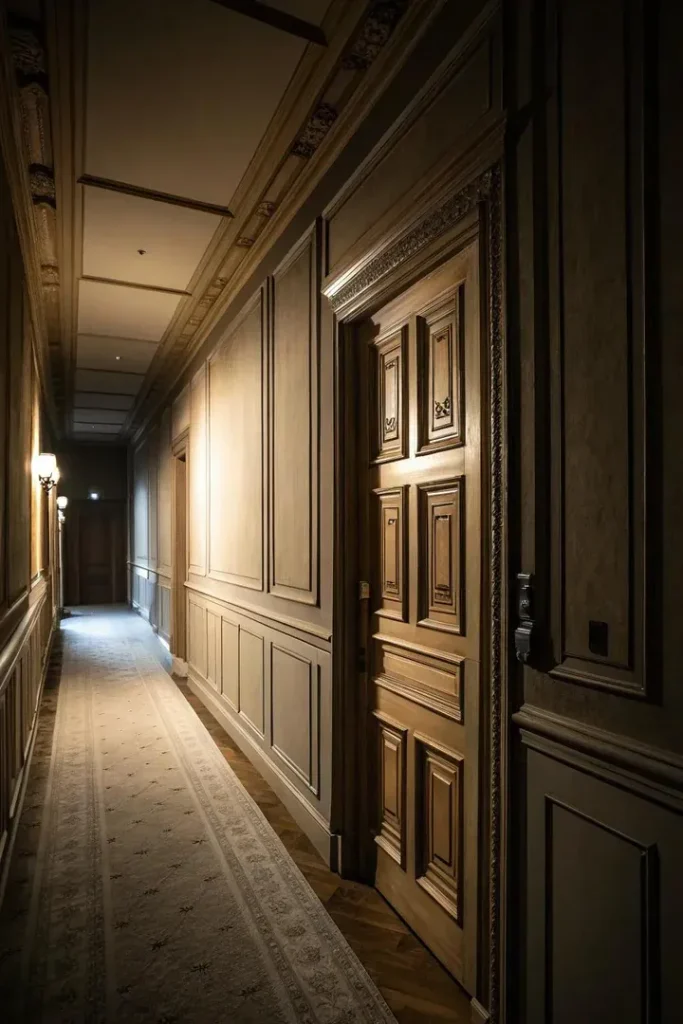
8. Add Detail with Paneling and Molding
Decorative paneling and molding can give a simple hallway door a more refined architectural appearance. This approach works particularly well in traditional, transitional, and classic interiors.
You can use rectangular molding for a timeless look or experiment with more elaborate arrangements for a decorative effect. Painting the door and molding in the same color creates a cohesive finish, while contrasting colors can make the details stand out.
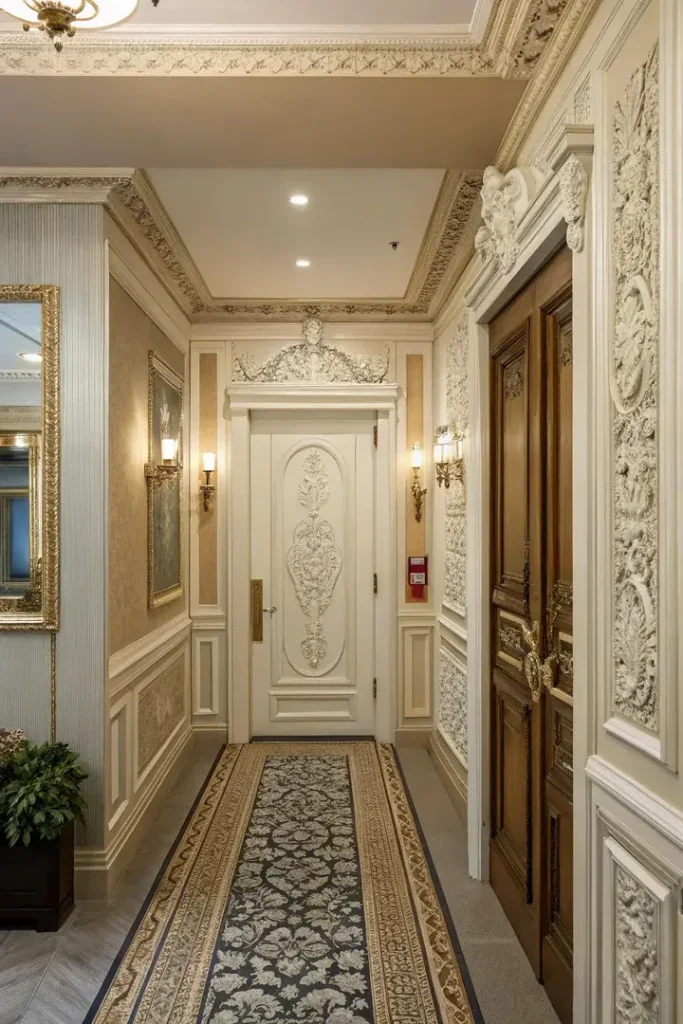
9. Bring Warmth with Wooden Doors
Wooden doors remain a timeless choice for hallway interiors. Their natural grain and warm tones can make a space feel welcoming while adding texture and character.
Solid wood doors work well in traditional homes, while streamlined wood designs can complement contemporary spaces. Pairing the door with a matching frame can create a polished and coordinated appearance.
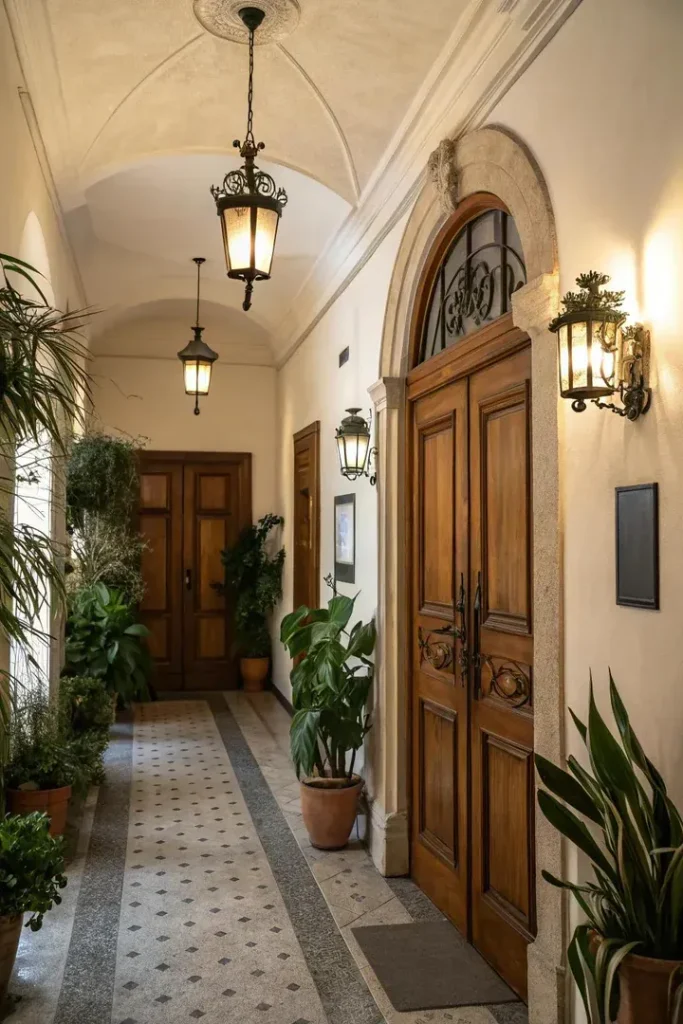
10. Introduce Vintage Charm
Vintage-inspired doors can bring character and a sense of history to your hallway. Look for traditional paneling, aged finishes, or decorative hardware to create an authentic appearance.
Antique-style knobs and handles can further enhance the design. If you want a more subtle vintage look, keep the door relatively simple and let the hardware provide the decorative detail.
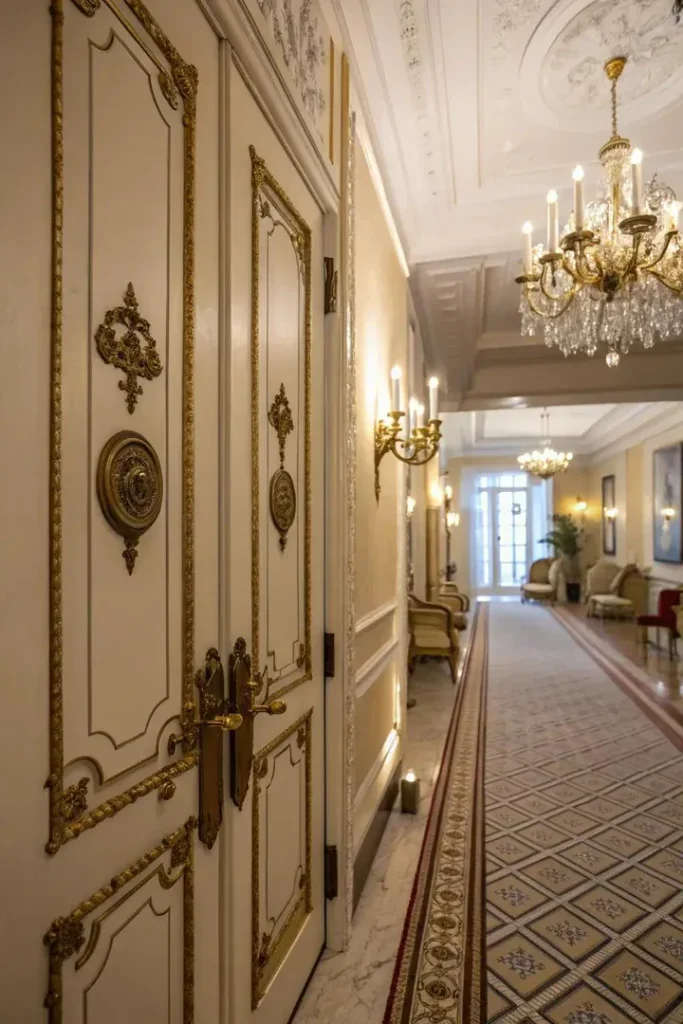
11. Add Art Deco Style
Art Deco-inspired doors can bring glamour and visual sophistication to a hallway. Look for geometric shapes, symmetrical patterns, metallic accents, and decorative hardware associated with the style.
A simple door can take on an Art Deco character through statement handles or carefully placed geometric detailing. This approach works particularly well when repeated through other hallway elements such as mirrors, lighting, or wall decor.
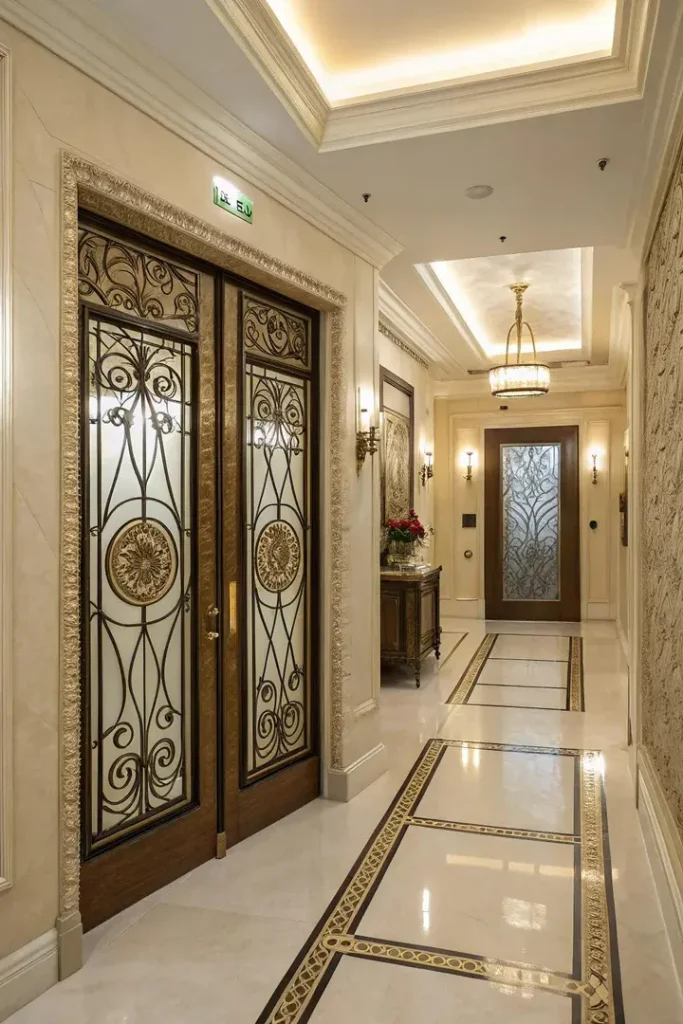
12. Brighten the Hallway with Glass Doors
Glass doors can help bring natural light into darker hallways and create a more open feeling between rooms.
Clear glass works well when you want maximum visibility and light, while frosted or textured glass provides more privacy. Framed glass doors can also introduce a modern architectural element without making the hallway feel closed off.
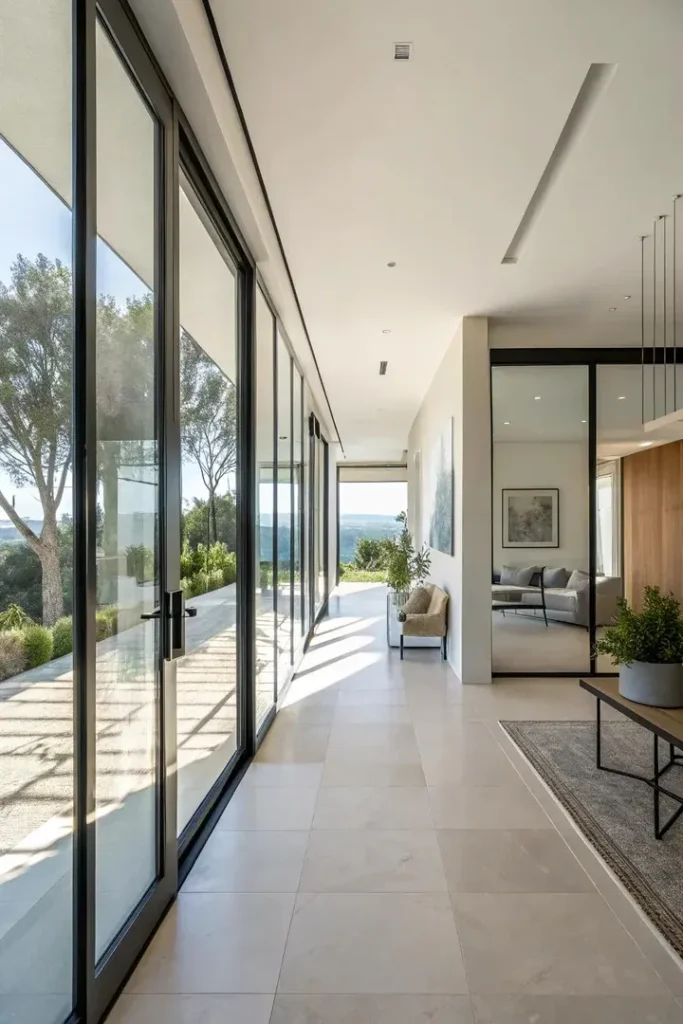
13. Highlight the Door with Stylish Lighting
Good lighting can make an attractive hallway door stand out while improving the overall atmosphere of the space.
Wall sconces, pendant lights, or recessed lighting can be positioned to illuminate the door and surrounding walls. Warm lighting is especially effective for creating a welcoming environment, while sleek fixtures suit contemporary interiors.
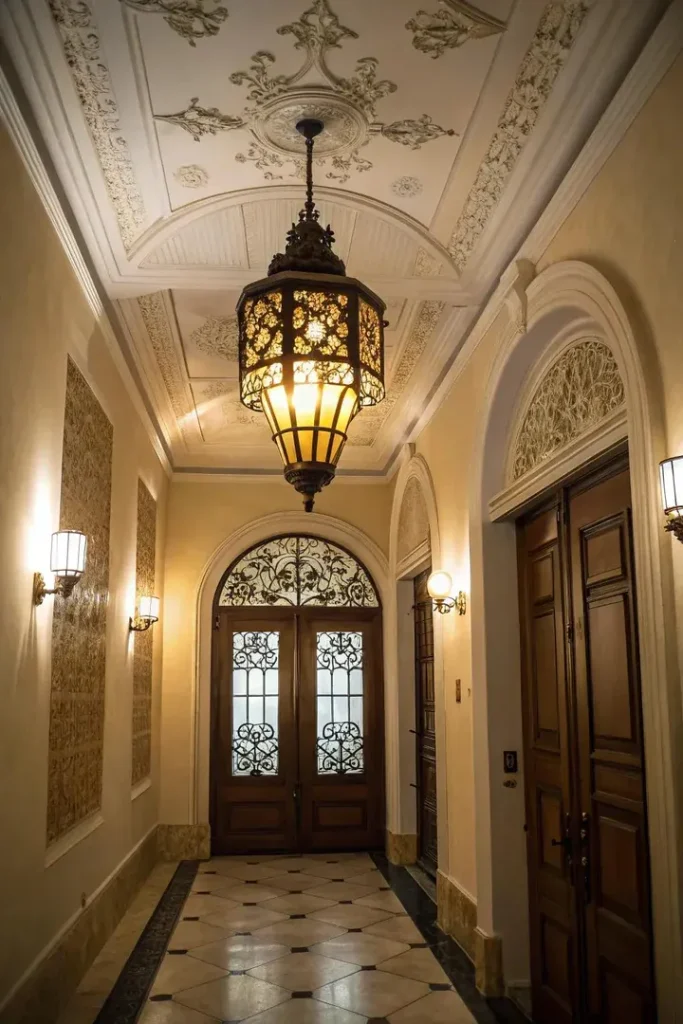
14. Create Depth with Mirror Doors
Mirrored doors are particularly useful in narrow hallways because they reflect light and make the space appear larger. They also provide a convenient full-length surface for checking your appearance before leaving home.
Full-height mirror panels can create a dramatic effect, while mirrored sliding doors offer both practicality and space efficiency. Choose a simple frame for a modern look or a decorative frame for a more traditional interior.
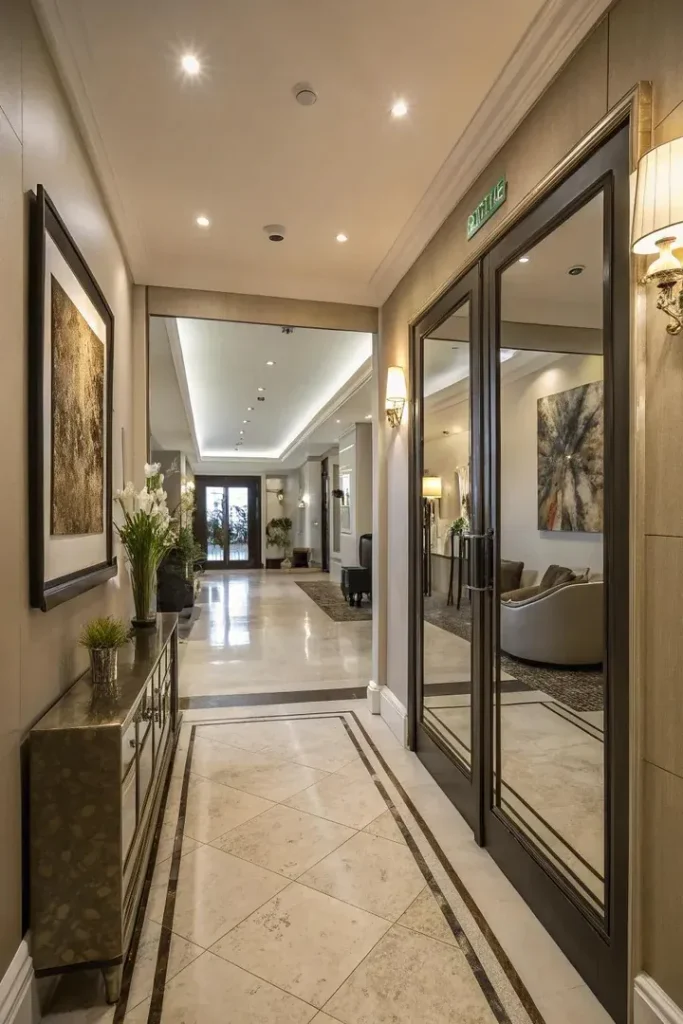
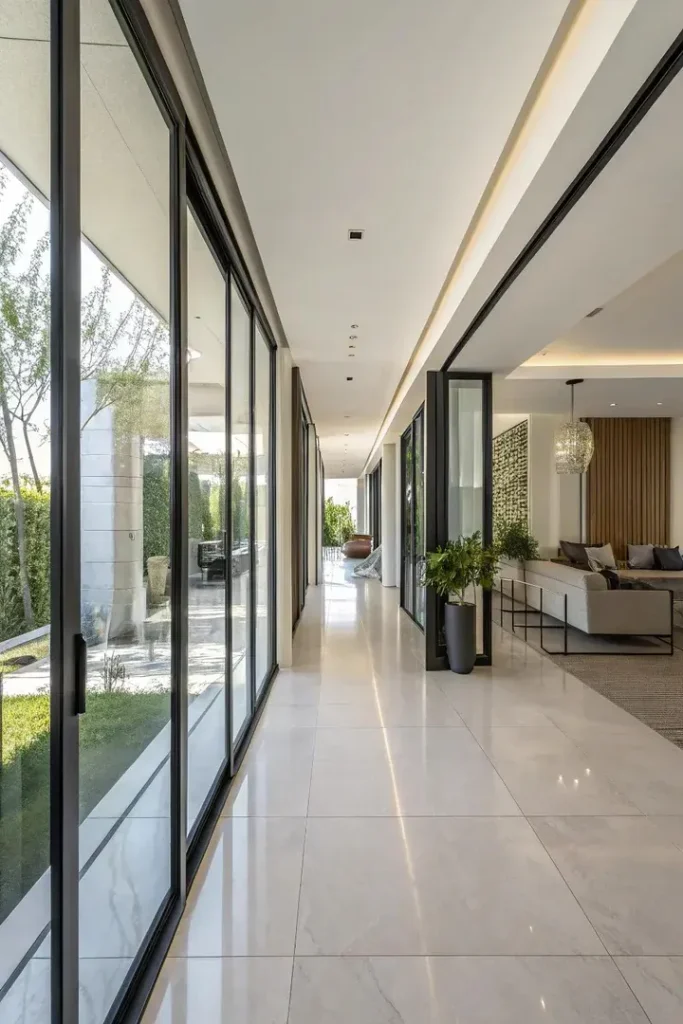
15. Use Sliding Glass Panels
Sliding glass panels provide a modern alternative to conventional hinged doors. Because the panels slide along a track, they can be especially useful where hallway space is limited.
Large glass panels allow light to move between rooms while maintaining a clean, contemporary appearance. Black or dark frames can create an industrial look, while lighter frames work well in minimalist interiors.
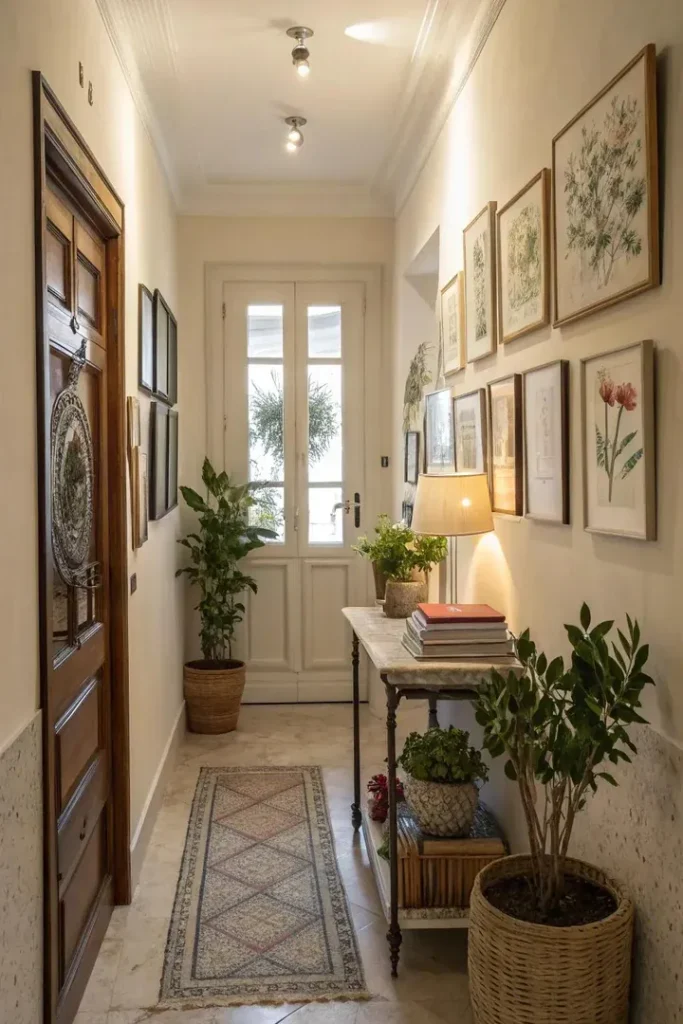
16. Decorate Around the Door
The area surrounding a hallway door can be just as important as the door itself. Plants, artwork, mirrors, consoles, and decorative accessories can help turn the doorway into a complete design feature.
For a natural look, place a few indoor plants near the entrance. Framed artwork or botanical prints can add personality, while a slim console or small table can provide useful storage without overwhelming a narrow hallway.
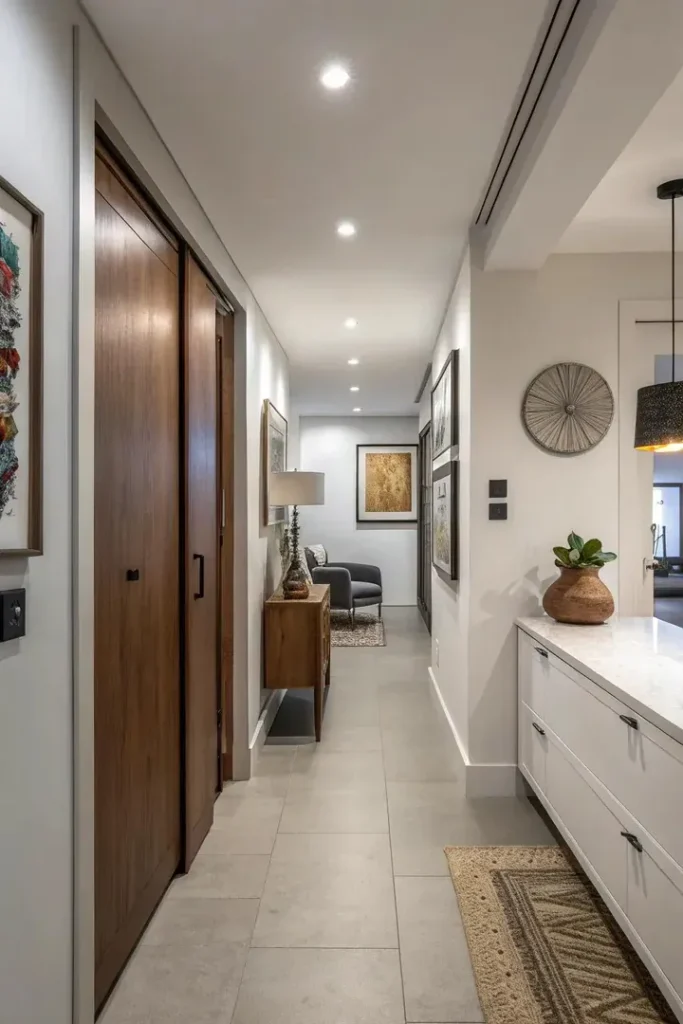
17. Save Space with Pocket Doors
Pocket doors are a practical choice for narrow hallways because they slide into the wall instead of swinging into the room or corridor.
This design can improve movement through tight spaces and create a cleaner visual appearance. Wooden pocket doors can add warmth, while painted or glass versions can create a more contemporary look.
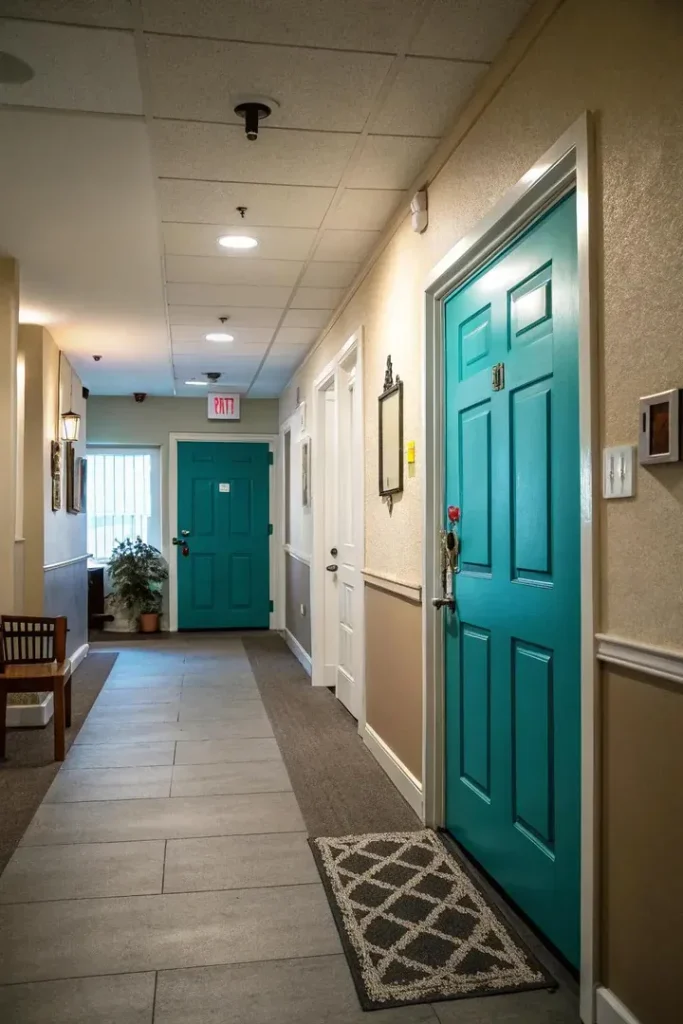
18. Make a Statement with Bold Colors
A brightly colored hallway door can instantly become a focal point. Shades such as teal, mustard yellow, deep green, navy, or rich blue can add personality without requiring major changes to the rest of the hallway.
If the walls and flooring are neutral, a bold door can provide a strong contrast. For a more coordinated design, repeat a small amount of the door color in artwork, rugs, or accessories elsewhere in the space.
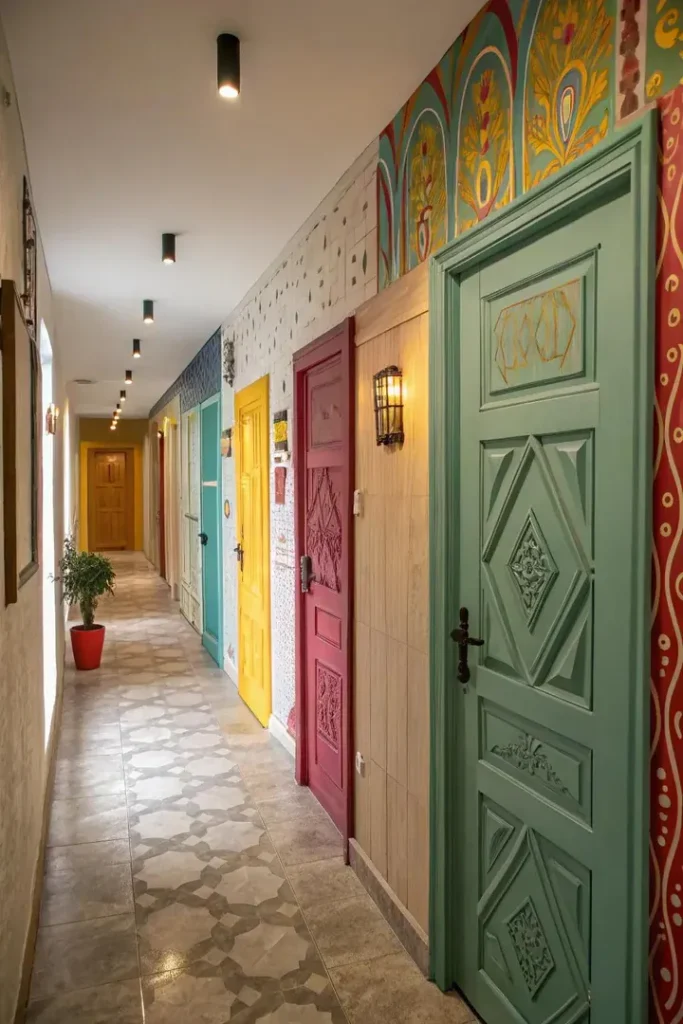
19. Embrace an Eclectic Style
An eclectic hallway gives you the freedom to combine different colors, materials, patterns, and door styles. Rather than matching every element perfectly, focus on creating a balanced overall composition.
Colorful wooden doors, unusual hardware, decorative patterns, and artwork can all contribute to an eclectic look. The key is to repeat a few colors or materials so the hallway still feels connected and intentional.
20. Add Texture with Fabric-Covered Doors
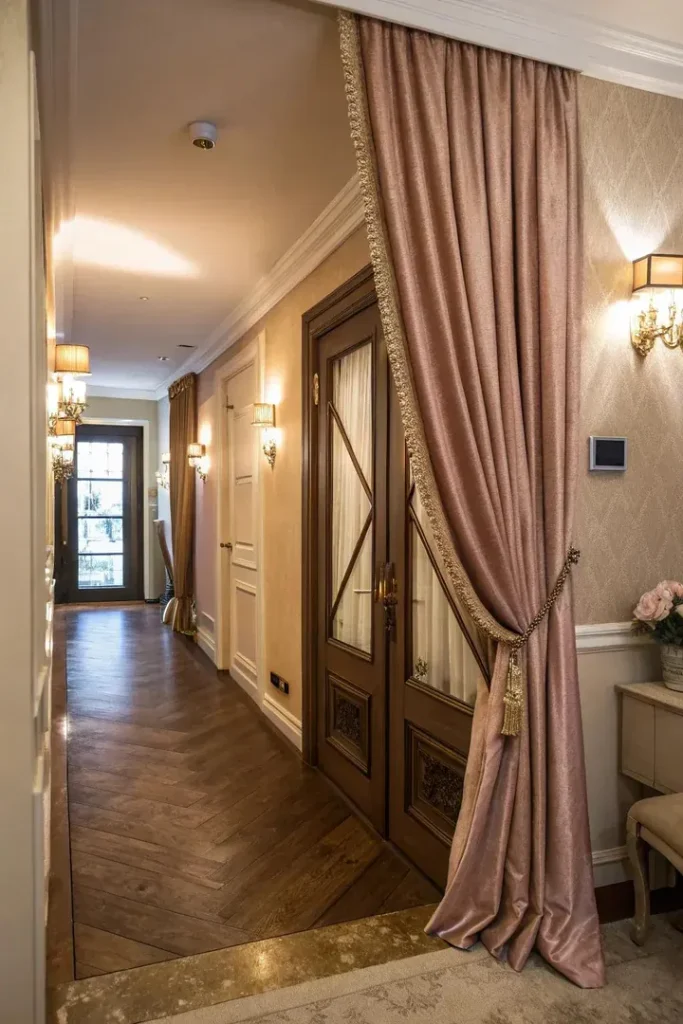
Fabric-covered doors can introduce softness, texture, and warmth to a hallway. They can be particularly effective when you want the door to feel more decorative and less architectural.
Choose a fabric that complements the hallway’s existing colors and textures. Neutral linen, woven materials, or subtle patterns can create a sophisticated appearance without overwhelming the space.
Conclusion
Hallway doors are an easy opportunity to add personality and style to your home. Whether you prefer the warmth of natural wood, the clean appearance of minimalist doors, the character of barn doors, or the brightness of glass panels, the right choice can transform an otherwise overlooked part of your home.
Consider your hallway’s size, lighting, existing decor, and practical needs before choosing a design. Space-saving options such as pocket and sliding doors work well in narrow areas, while mirrors and glass can help create a brighter, more open feeling.
With the right combination of material, color, hardware, and surrounding decor, your hallway door can become more than a passage between rooms—it can be an important part of your home’s overall style.