
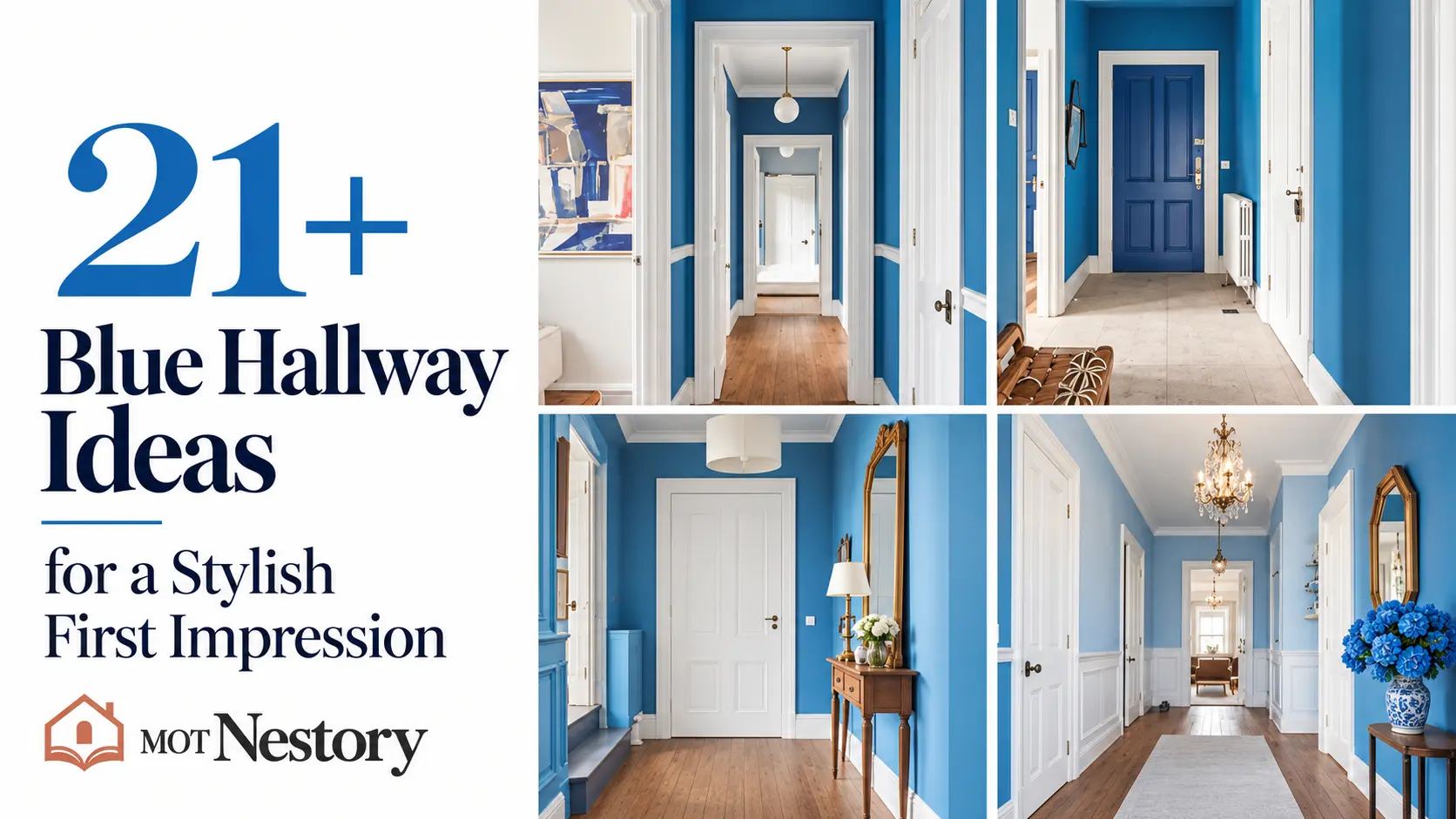
Blue can transform a hallway from a simple passageway into a stylish and welcoming part of the home. From soft powder blue to rich navy and vibrant teal, different shades can create very different moods while adding depth and personality.
Whether you want a subtle update or a dramatic makeover, blue works beautifully with white trim, natural wood, metallic accents, greenery, artwork, and patterned textiles. These 21+ blue hallway ideas can help you create a space that feels cohesive, inviting, and full of character.
1. Coordinate the Color Between Rooms
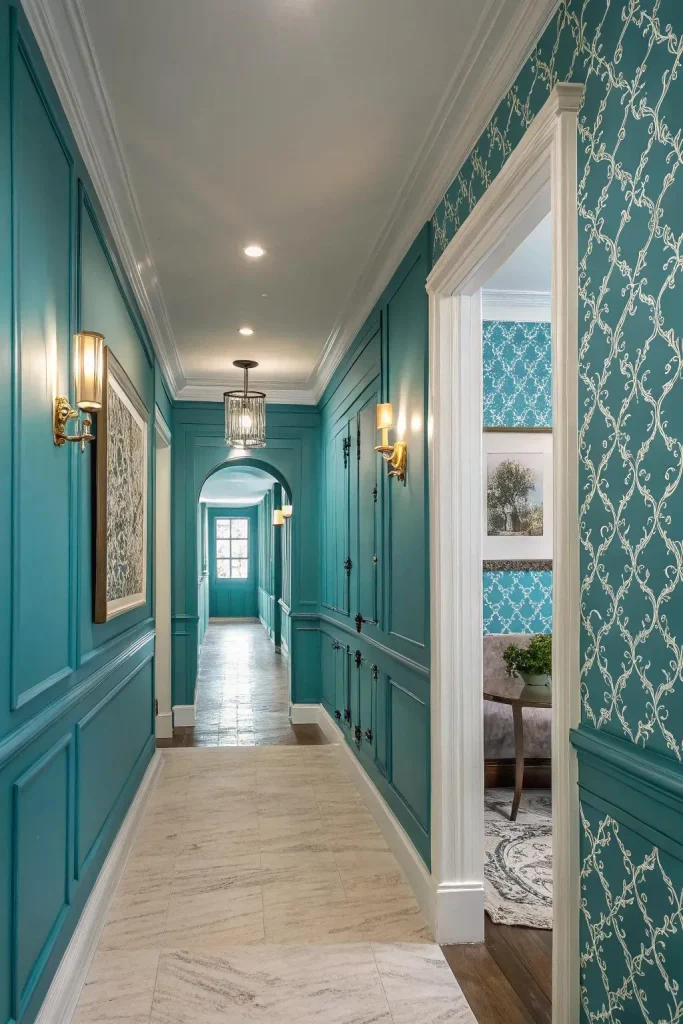
Create a seamless transition between your hallway and adjoining rooms by carrying a blue shade throughout the spaces. Teal blue can bring depth and sophistication while helping separate areas feel visually connected.
You can repeat the color through painted walls, wallpaper, artwork, rugs, or smaller decorative accents. Keeping a consistent color palette makes the entire home feel more cohesive and can help a narrow hallway feel more connected to surrounding rooms.
2. Keep It Airy With Powder Blue
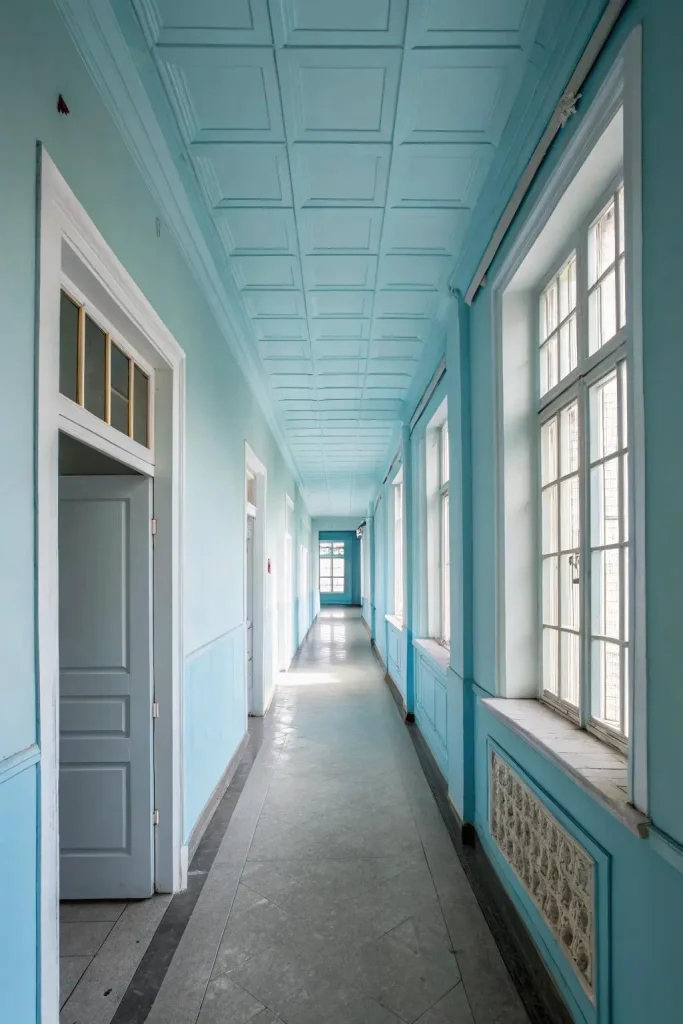
Powder blue is an excellent choice for creating a light and open hallway. Its soft tone reflects natural and artificial light, helping the space feel brighter and more spacious.
Use powder blue on the walls and, if desired, continue the color onto the ceiling for a more immersive effect. White trim, neutral flooring, and simple blue accessories can complete the look without making the hallway feel busy.
3. Go Dark and Regal With Navy
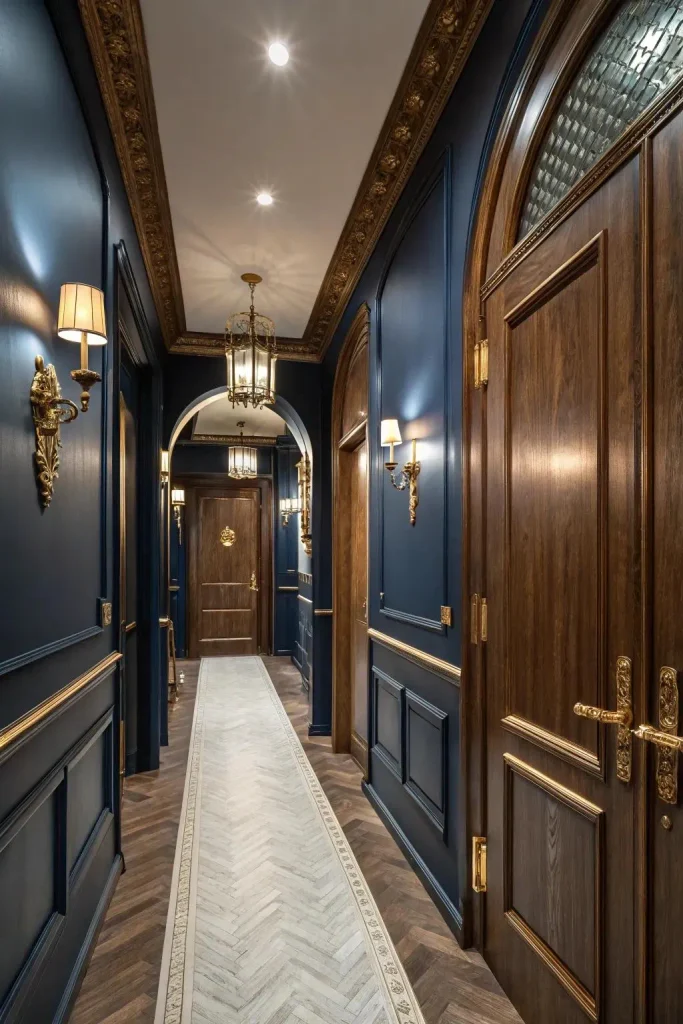
Deep navy blue can give a hallway a sophisticated and dramatic appearance. It works particularly well with warm wood, brass hardware, and traditional architectural details.
For a balanced design, pair navy walls with lighter flooring or trim. Brass lighting and door hardware can add warmth and contrast, while natural wood prevents the darker color from feeling too heavy.
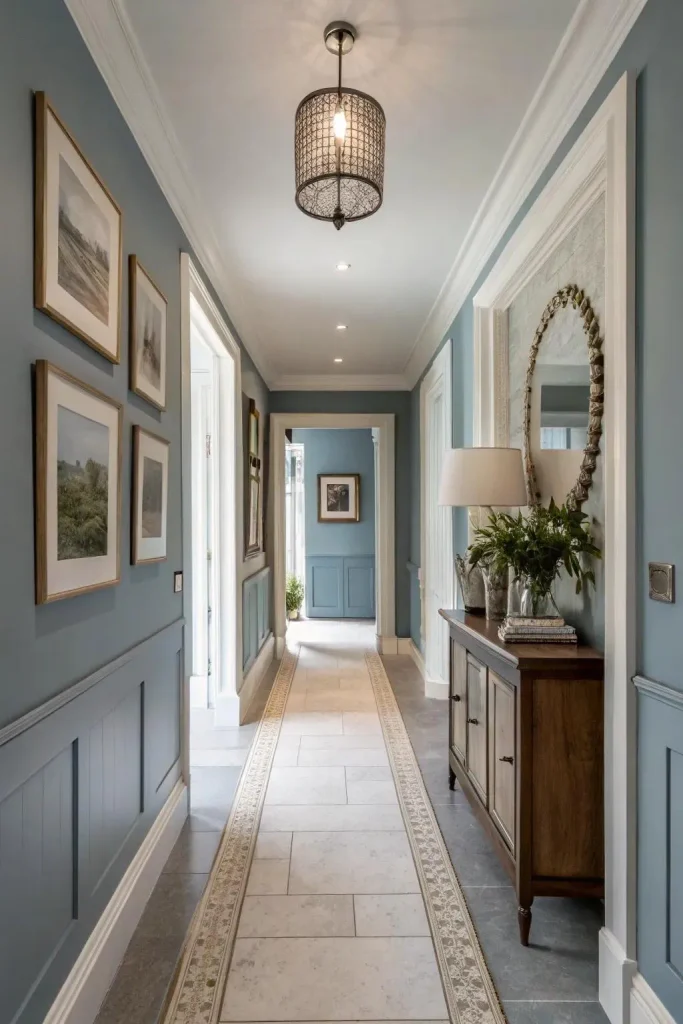
4. Keep It Neutral With Slate Blue
Slate blue offers a more understated alternative to brighter or deeper blue shades. Its muted quality works well in both modern and traditional interiors.
Pair slate blue walls with white trim, natural wood, or soft neutral furnishings. This combination creates a calm backdrop while still giving the hallway more character than a standard neutral paint color.
5. Pair White and Baby Blue
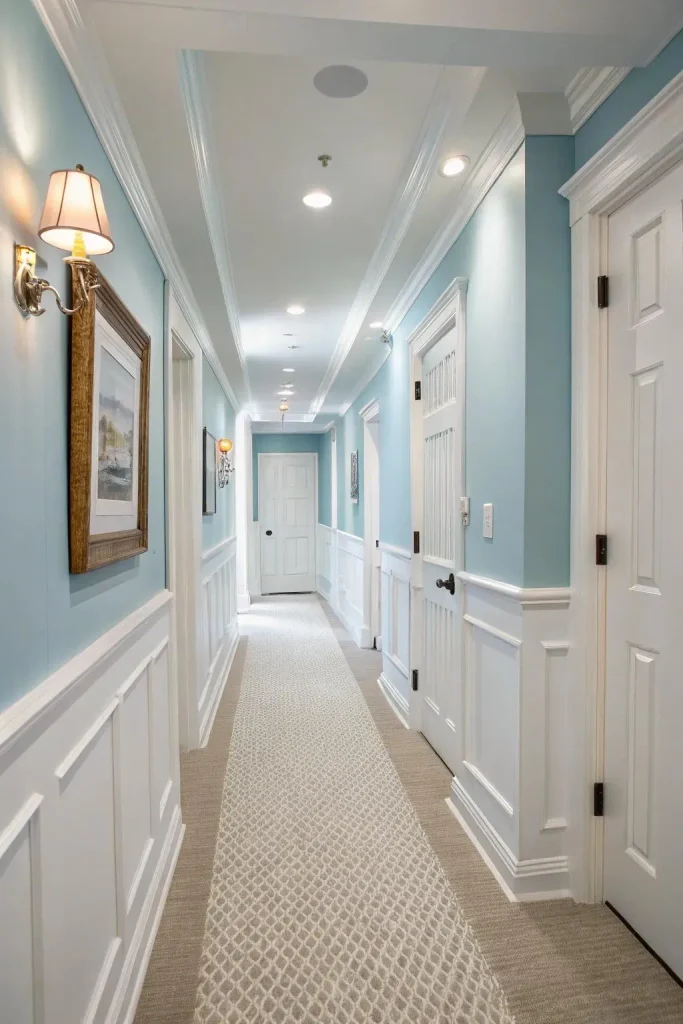
Baby blue and crisp white create a fresh, airy combination that works especially well in narrow hallways. The pale blue walls add color without making the space feel enclosed.
Use white on trim, molding, doors, or architectural details to create contrast. A neutral hallway runner can add warmth and texture while keeping the overall design light and inviting.
6. Paint the Baseboards to Match
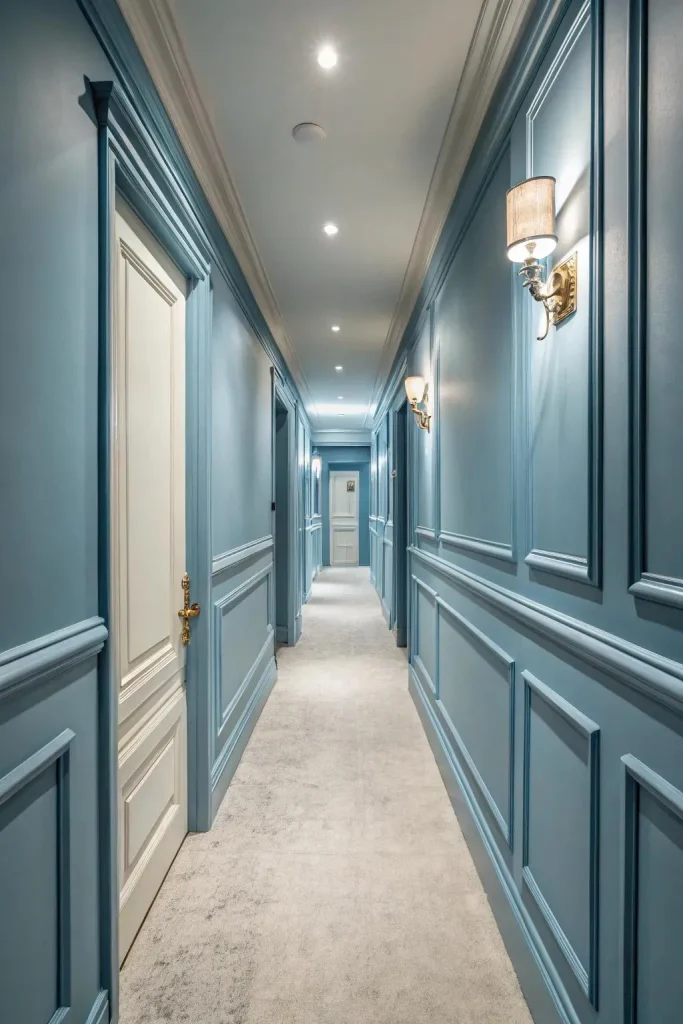
For a more cohesive and contemporary look, paint the baseboards in the same blue shade as the hallway walls. This technique reduces visual breaks and allows the color to flow continuously around the space.
Matching the baseboards can also make traditional trim feel more modern. Use a durable finish designed for high-traffic areas so the woodwork can withstand everyday wear.
7. Go Bold and Bright With Teal
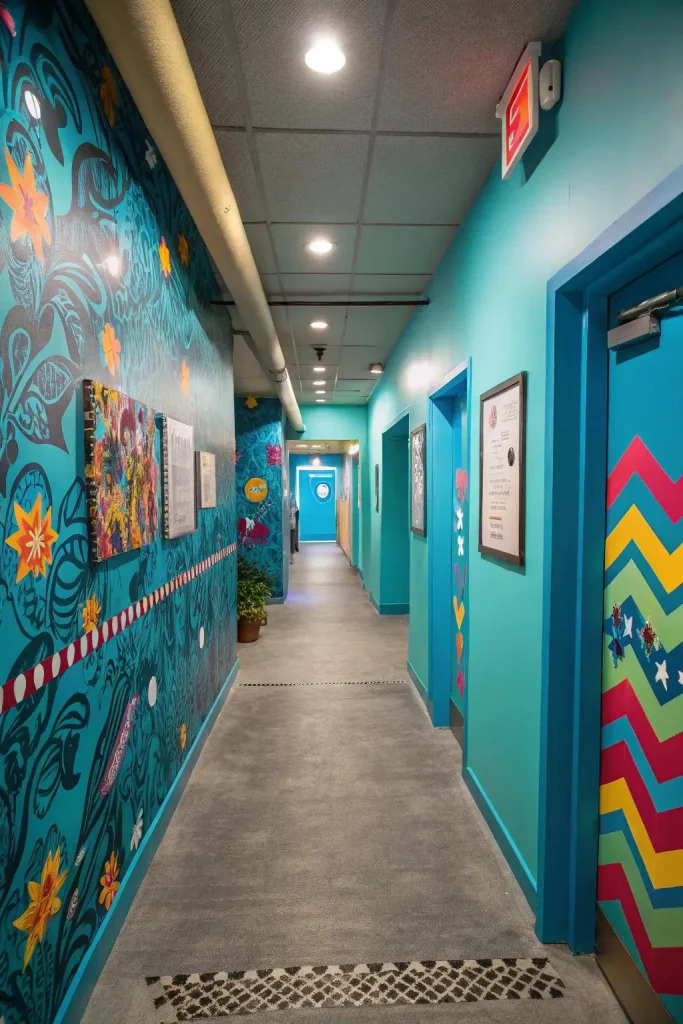
If you want your hallway to make a strong impression, consider a vibrant teal blue. This energetic shade can instantly turn an ordinary corridor into a standout feature.
Keep the rest of the design relatively simple so the wall color remains the focal point. Patterned artwork, decorative accents, or subtle geometric details can add personality without competing with the bold blue.
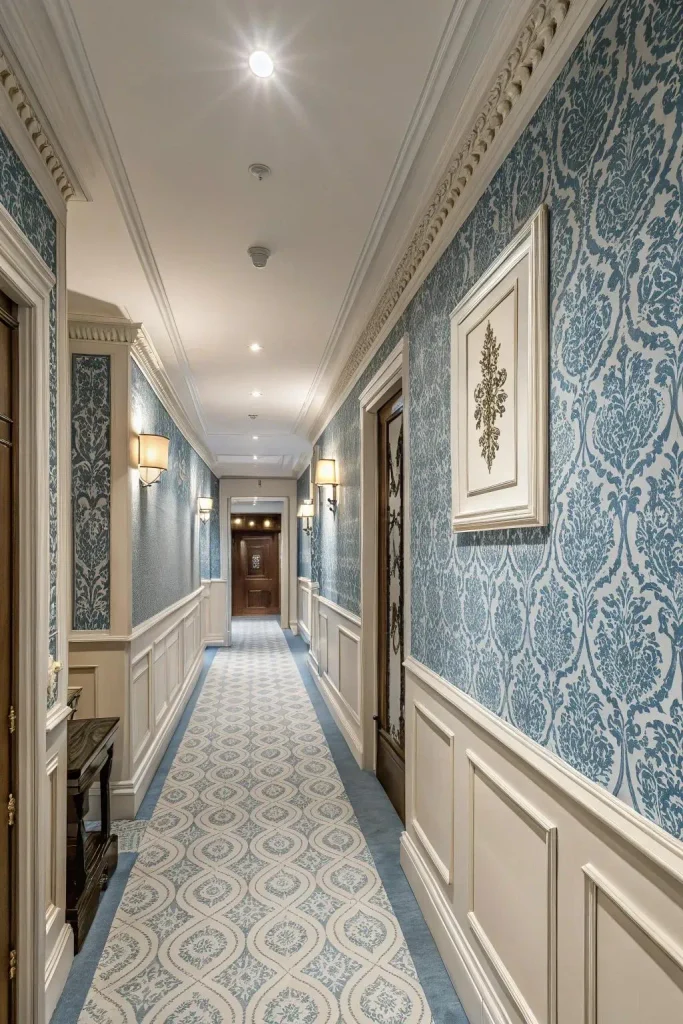
8. Try Blue Wallpaper
Blue wallpaper is an easy way to introduce both color and pattern. Botanical prints, geometric designs, damask patterns, and subtle textures can all give a hallway a distinctive appearance.
For a coordinated finish, consider painting the doors, trim, or woodwork in a blue shade pulled from the wallpaper. This creates a layered look while allowing the wallpaper pattern to remain the main feature.
9. Choose Blue Decor to Match
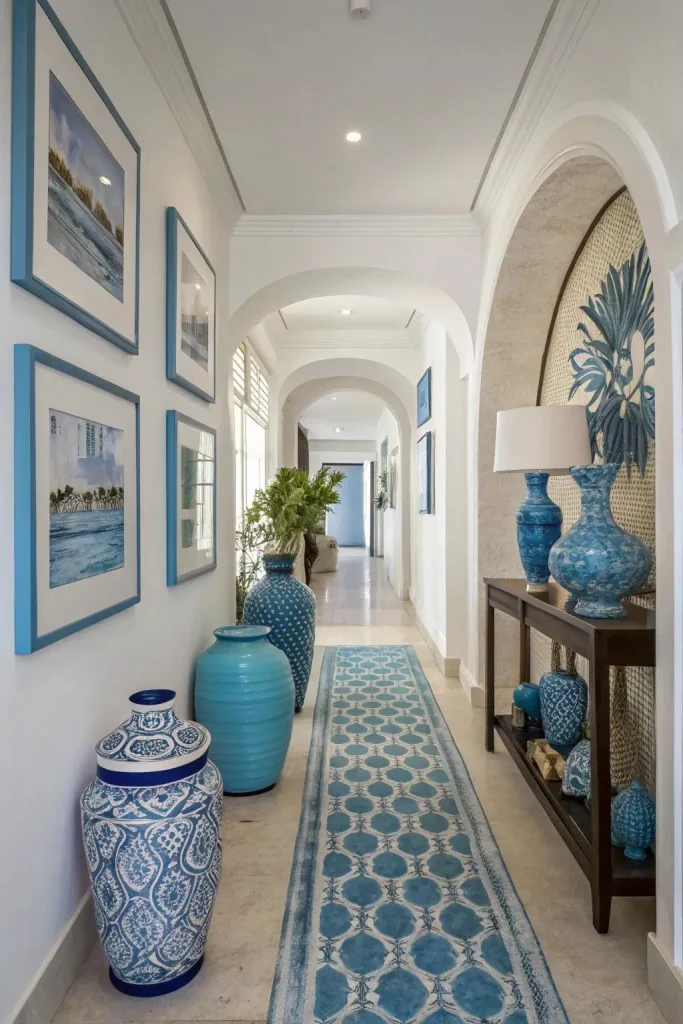
You don’t have to paint your hallway blue to bring the color into the space. Decorative accents can introduce blue while keeping the walls neutral.
Consider blue lamps, vases, artwork, rugs, cushions, or decorative objects. This approach is especially useful for renters or anyone who prefers an easy-to-change design. Using several blue accents throughout the hallway can create a cohesive color story without requiring major renovations.
10. Pair Blue With Contrasting Colors
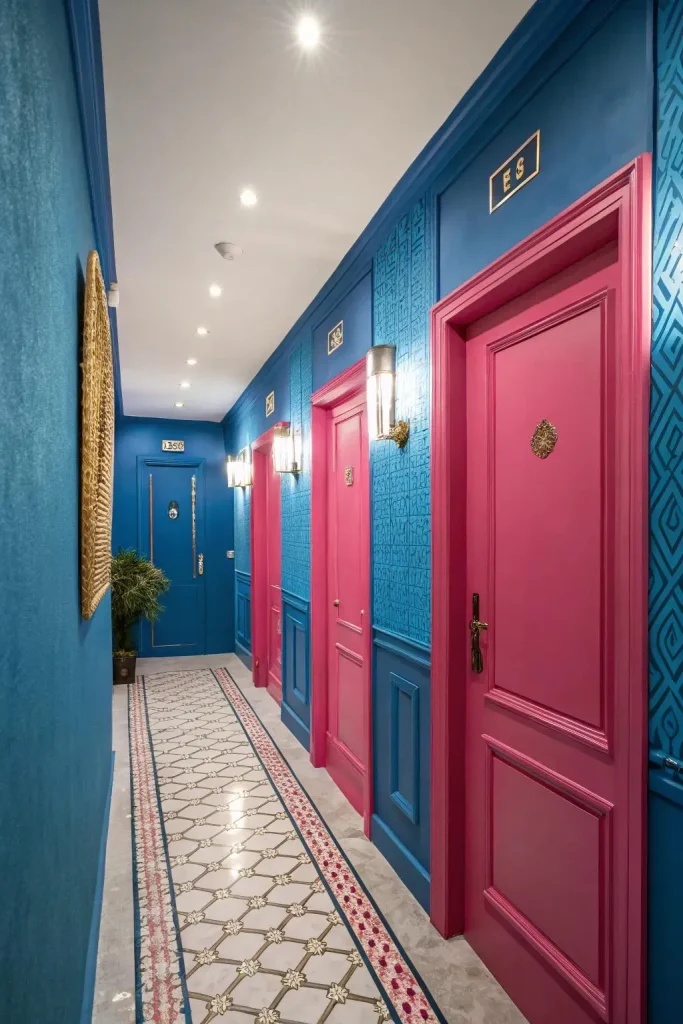
Blue becomes even more striking when paired with contrasting colors and finishes. A teal wall, for example, can stand out beautifully against warm wood, brass, gold, or other rich tones.
Consider using contrasting colors on doors, hardware, artwork, or furniture. The key is to create enough contrast to add personality while keeping the overall palette balanced.
11. Make It Moody
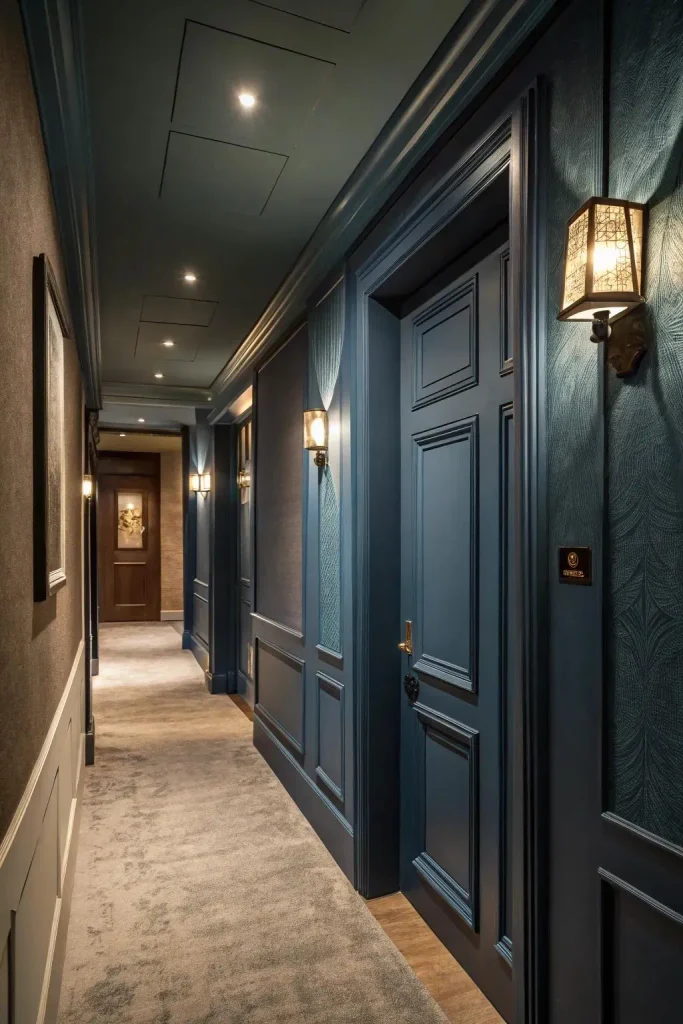
Dark blue can create a cozy and intimate hallway with plenty of visual depth. Shades such as deep navy, indigo, or midnight blue work particularly well in spaces where you want a dramatic atmosphere.
Continue the dark blue onto door frames or other woodwork for a more enveloping effect. Soft wall lighting, warm bulbs, natural wood, and neutral accessories can keep the space from feeling too dark.
12. Try Blue and Green
Blue and green create a natural color combination that feels both calming and lively. Pair blue walls with sage, olive, or deeper green accents for a layered look.
Bring the colors together through plants, artwork, rugs, or decorative accessories. Natural wood finishes can also help connect the cool tones with the warmth of the rest of the interior.
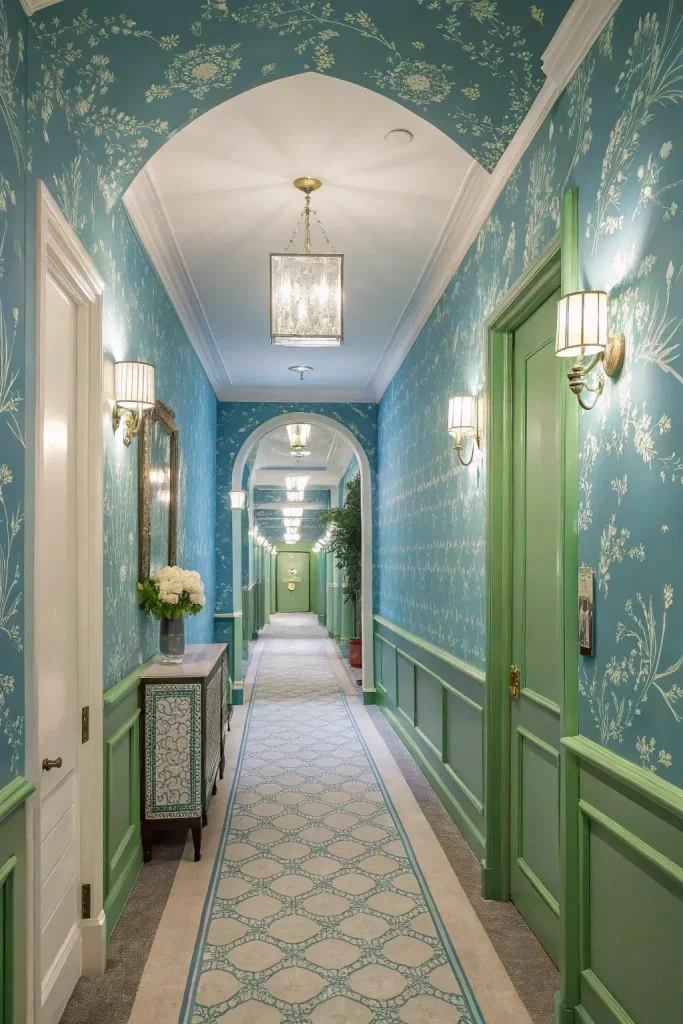
13. Use Traditional Blue With White Woodwork
Deep blue walls paired with white woodwork create a classic combination that works particularly well in traditional homes.
White doors, baseboards, trim, and molding provide crisp contrast against the blue walls while highlighting the hallway’s architectural details. Add wood flooring or traditional furniture to reinforce the timeless character.
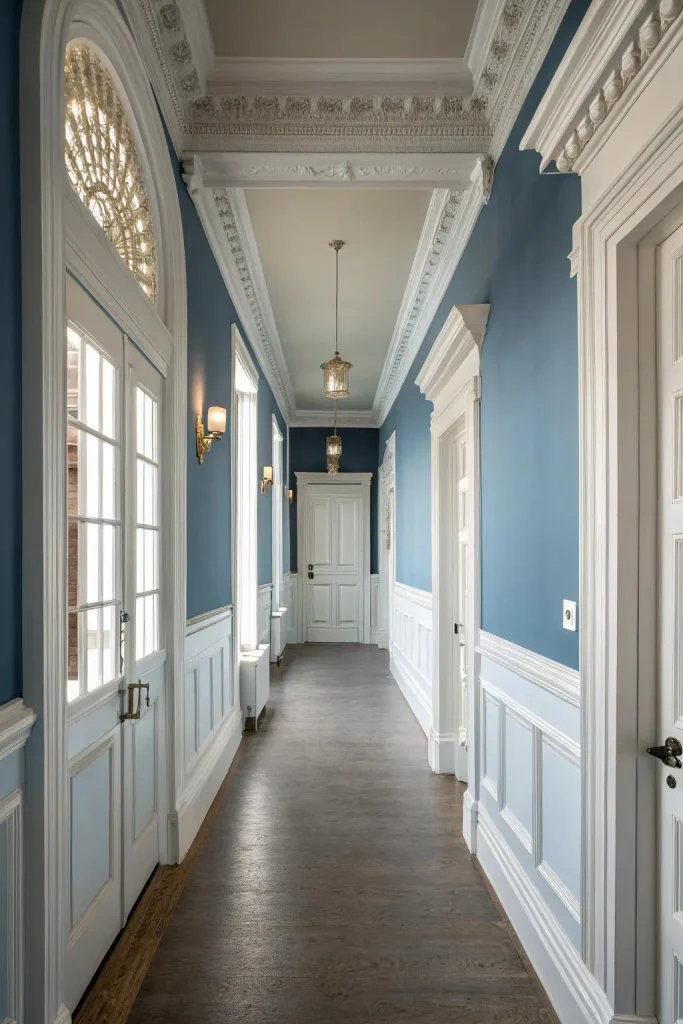
14. Try Blue Color Drenching
For a bold and cohesive effect, use the same or closely related blue shades across multiple surfaces. This can include walls, doors, trim, baseboards, and even the ceiling.
Color drenching creates a continuous visual effect that can make a hallway feel intentional and sophisticated. Use different finishes or subtle tonal variations if you want to add depth without breaking the overall color flow.
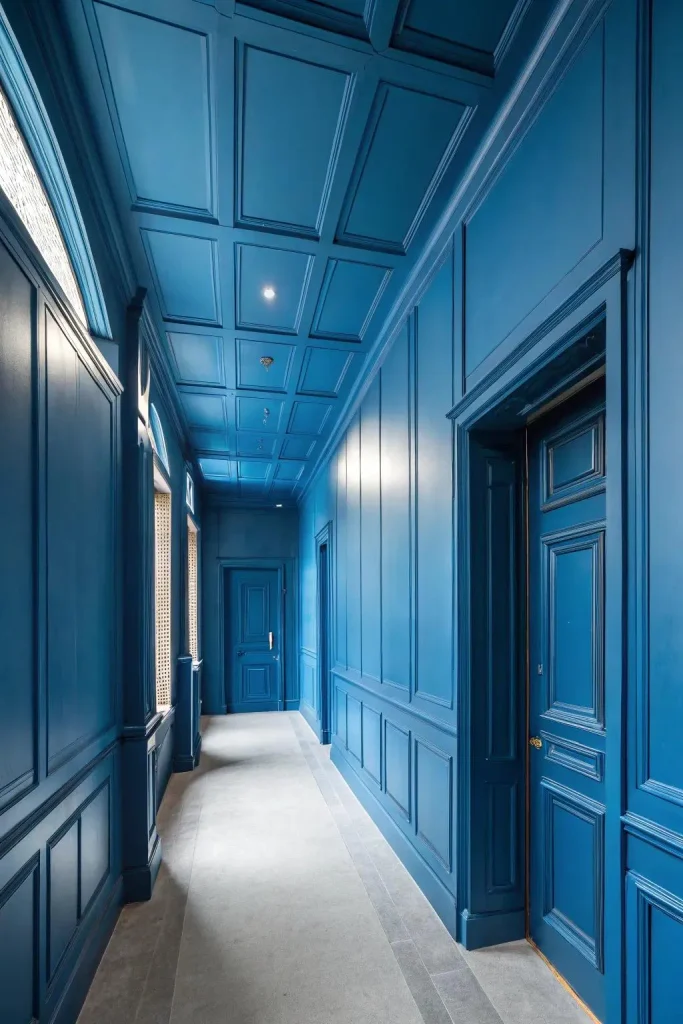
15. Paint Only the Woodwork
If covering the entire hallway in blue feels too dramatic, introduce the color through the woodwork instead.
Blue-painted doors, baseboards, window trim, or paneling can add personality while leaving the walls neutral. This approach works particularly well when you want a smaller dose of color or need to maintain a light and open feel.
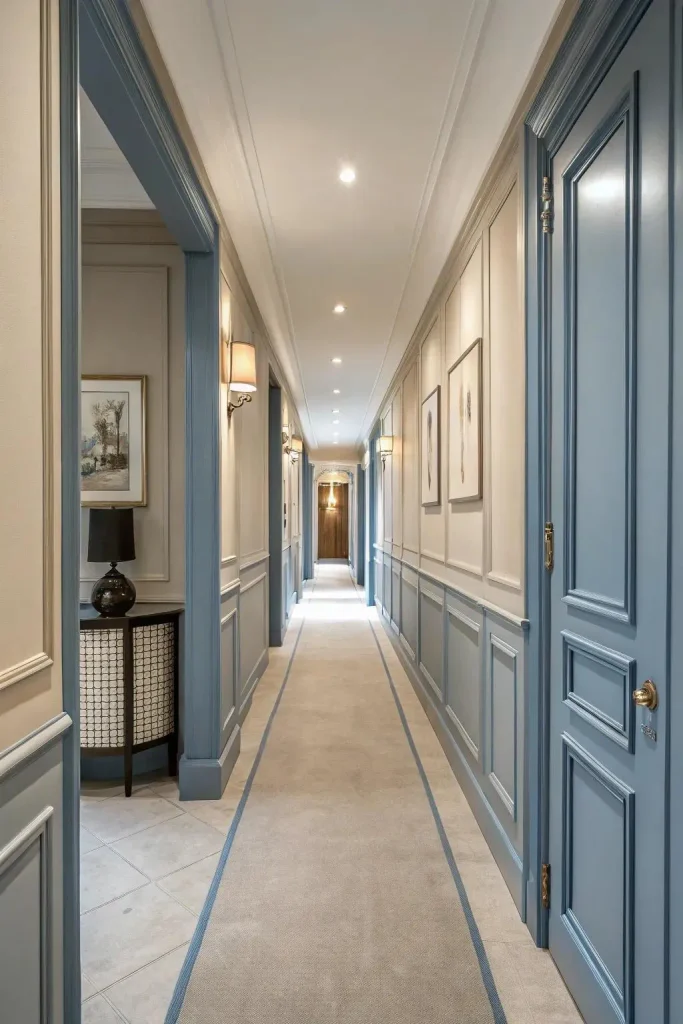
16. Pair Blue With Patterned Wallpaper
Combine blue-painted woodwork with patterned wallpaper to create a layered and decorative hallway. A blue damask, botanical, or geometric wallpaper can give the space a more refined appearance.
Use painted trim to pick up one of the colors from the wallpaper. A gallery wall, mirror, or simple console can add additional detail without overwhelming the pattern.
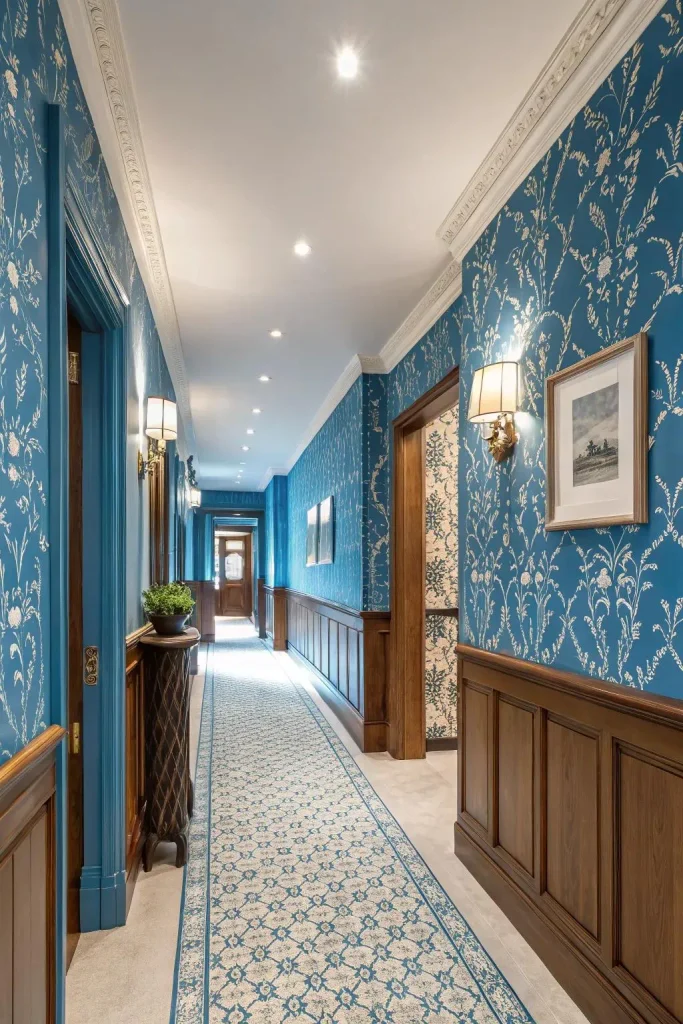
17. Double Up on Blue Shades
Using two different shades of blue can create depth without introducing too many colors. Try a lighter blue on the walls and a darker shade on the doors, trim, or woodwork.
This tonal approach gives the hallway more dimension while maintaining a cohesive palette. You can also reverse the combination by using darker walls with lighter blue architectural details.
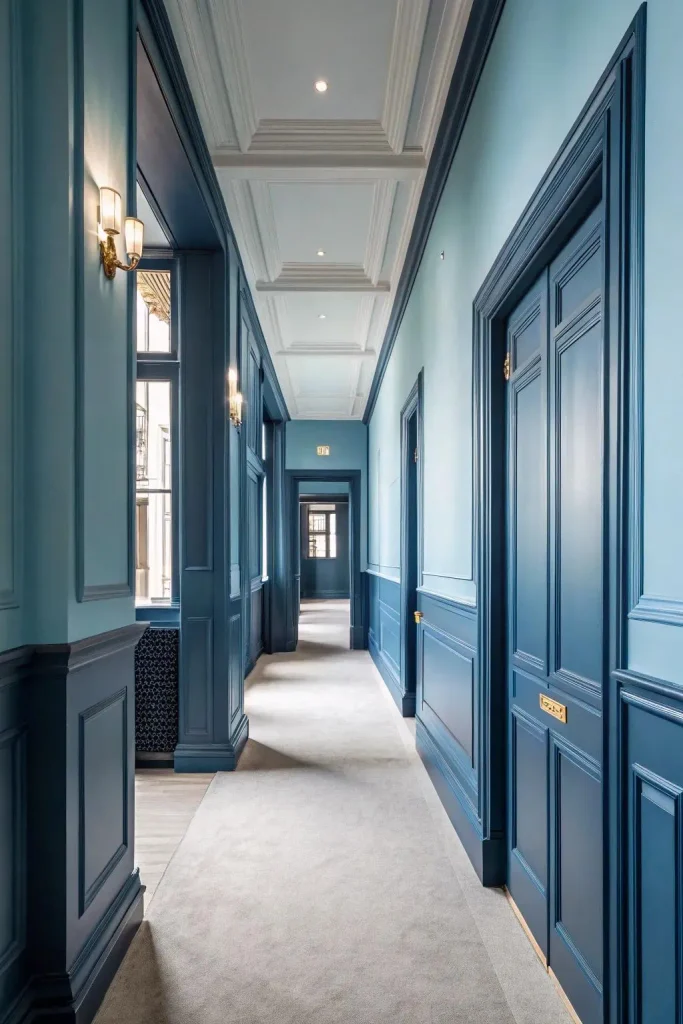
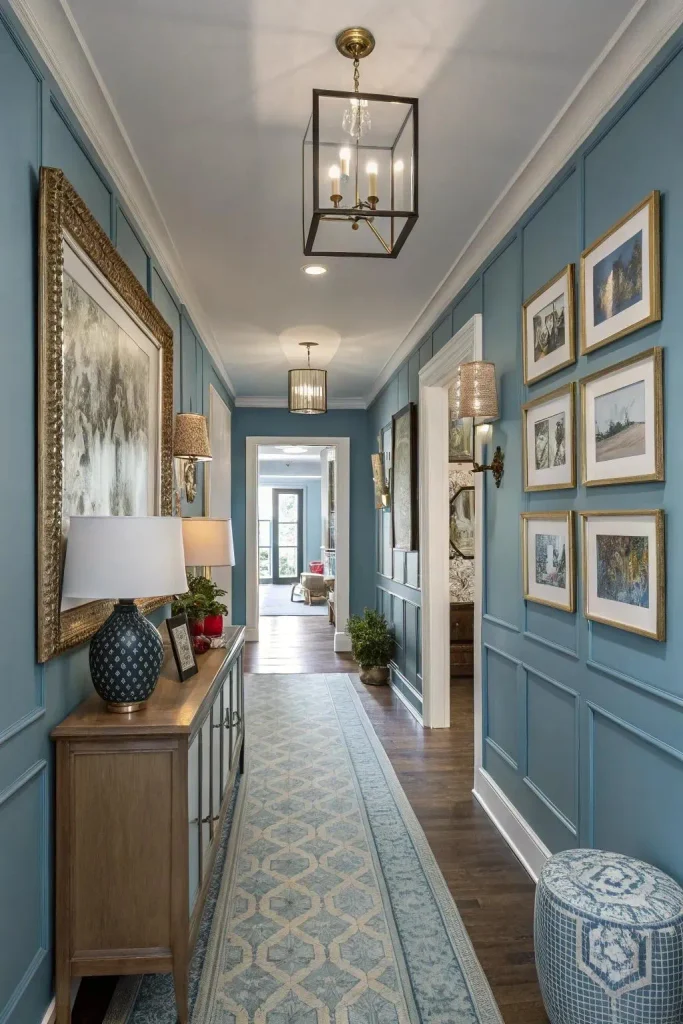
18. Add Blue Paneling
Blue wall paneling combines decorative detail with practical durability, making it particularly suitable for busy hallways.
Paint traditional raised panels, board-and-batten, or other molding styles in a blue shade to give the walls more depth. Pair the paneling with contrasting trim or keep everything in one color for a more contemporary finish.
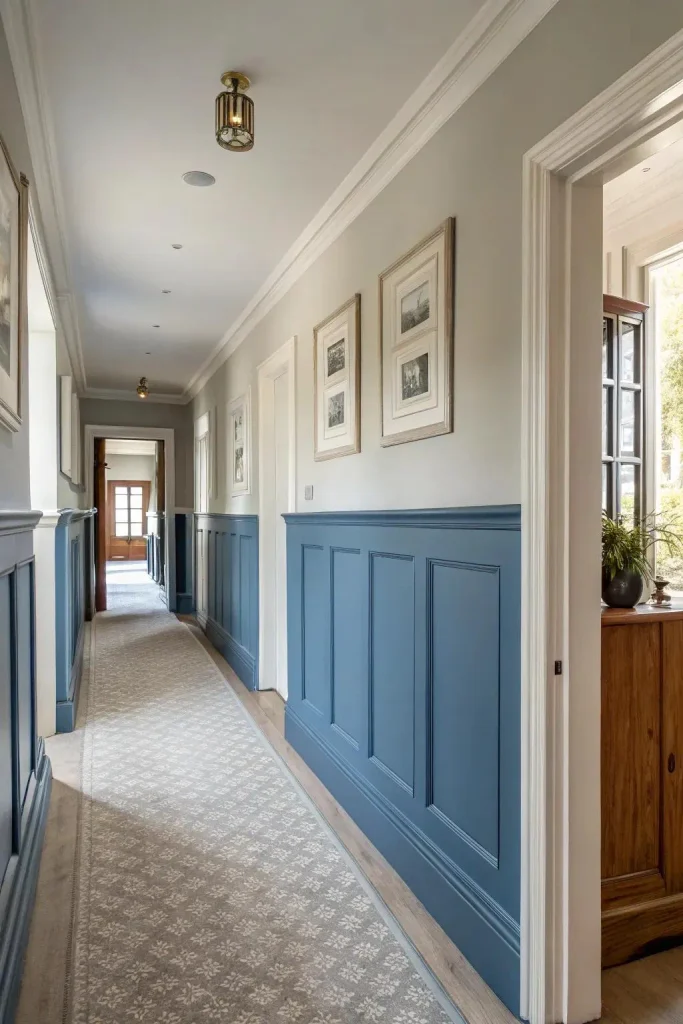
19. Create Dark Blue Elegance
A rich dark blue can create a sophisticated hallway that feels warm and enveloping. To prevent the space from becoming too heavy, balance the dark walls with carefully chosen lighting.
Wall sconces can provide a soft glow while highlighting architectural features. A patterned runner in complementary blue tones can add warmth, texture, and visual interest underfoot.
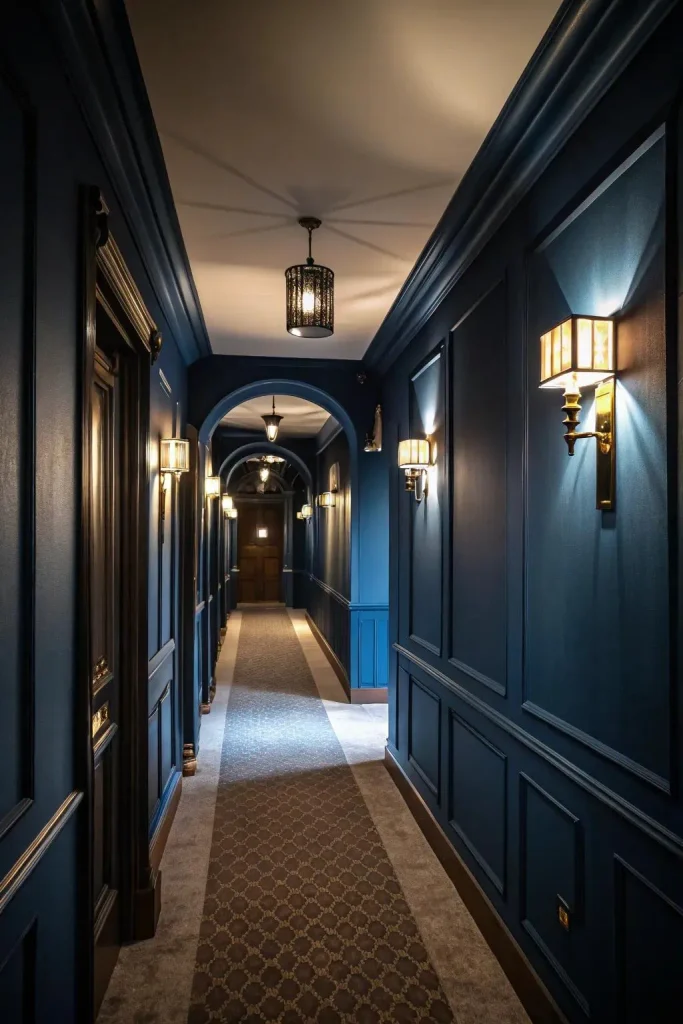
20. Add Art and Decor to a Blue Hallway
Artwork and decorative accessories can give a blue hallway a more personal and finished appearance. Choose framed prints, photographs, or paintings that complement the particular shade of blue on your walls.
A coordinated collection of artwork can turn a long hallway into a small gallery. Add a console table, decorative lamp, mirror, or a few carefully selected objects to bring warmth and personality to the space.
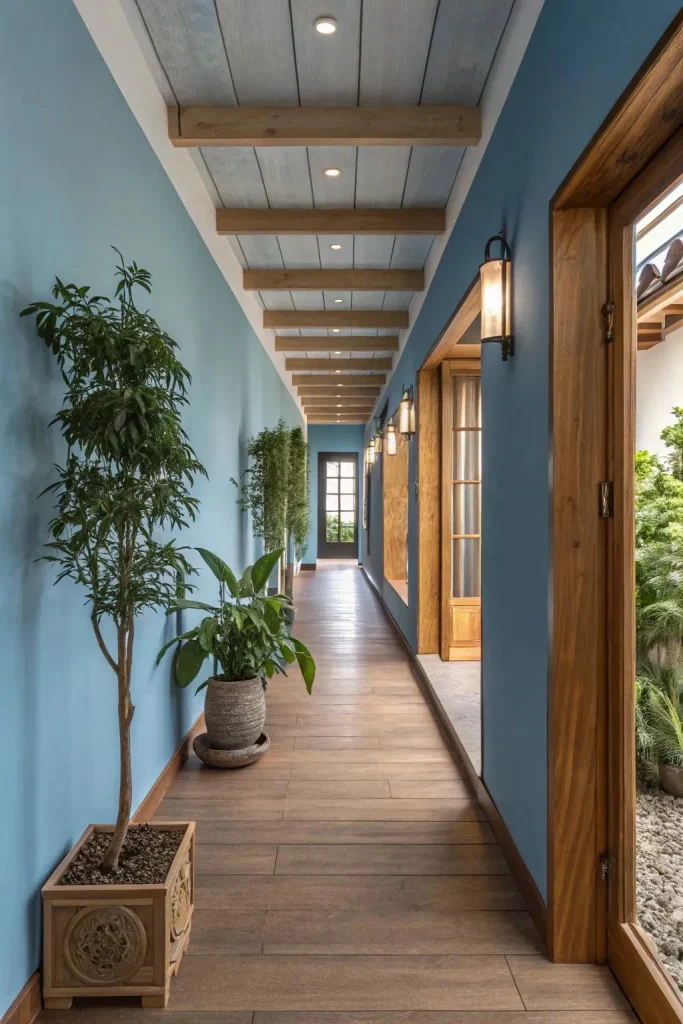
21. Combine Blue With Natural Elements
Balance cool blue tones with natural materials for a warmer and more inviting hallway. Wood, woven textures, greenery, and natural stone can soften the appearance of blue walls.
Deep navy works particularly well with warm oak or walnut, while lighter blues can be paired with pale woods and natural fibers. A few indoor plants can add freshness while helping connect the hallway with the outdoors.
Conclusion
Blue offers countless ways to transform a hallway, whether you prefer soft and airy colors, dramatic navy walls, vibrant teal accents, or layered blue tones. The right shade can influence how spacious, calm, dramatic, or welcoming the space feels.
Experiment with blue walls, wallpaper, woodwork, artwork, lighting, natural materials, and decorative accents to create a hallway that complements the rest of your home. By balancing color with lighting, texture, and practical features, you can turn even a narrow corridor into a stylish first impression.