
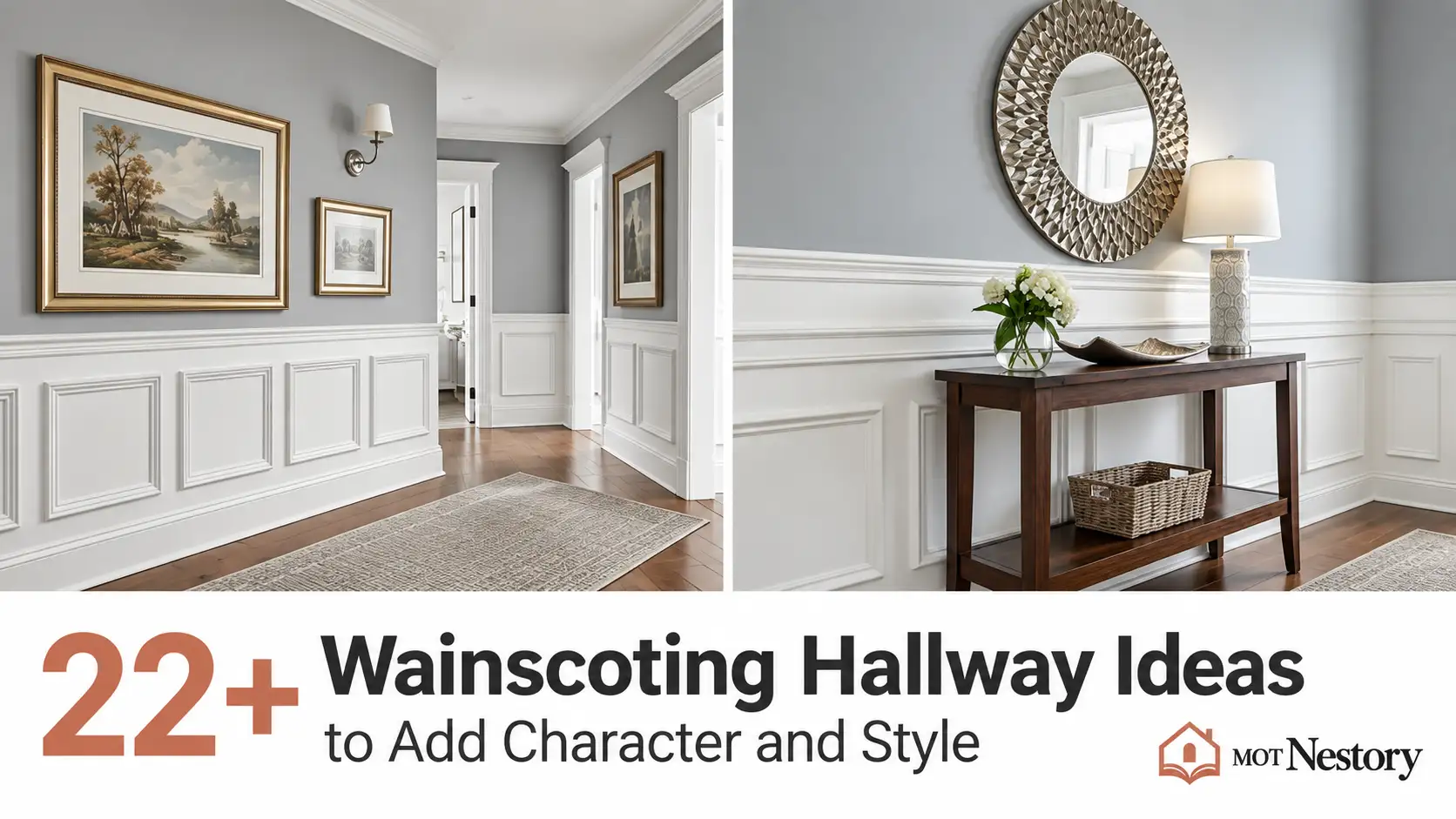
Wainscoting is a simple way to add depth, character, and visual interest to a hallway. It can protect walls from everyday wear while giving the space a more finished and intentional look.
From classic raised panels and crisp white finishes to bold colors, geometric patterns, and natural materials, there are plenty of ways to customize wainscoting to suit your home. Whether your style is traditional, modern, rustic, coastal, or eclectic, these hallway wainscoting ideas can help you create a space that feels polished and welcoming.
1. Classic White Wainscoting
Classic white wainscoting creates a bright, timeless look that works with almost any hallway style. The clean finish can make the space feel lighter while adding subtle architectural detail.
Pair white wainscoting with neutral walls for a traditional look, or use it with stronger wall colors for more contrast. It is especially effective in narrow hallways where a bright lower wall can help maintain an open appearance.
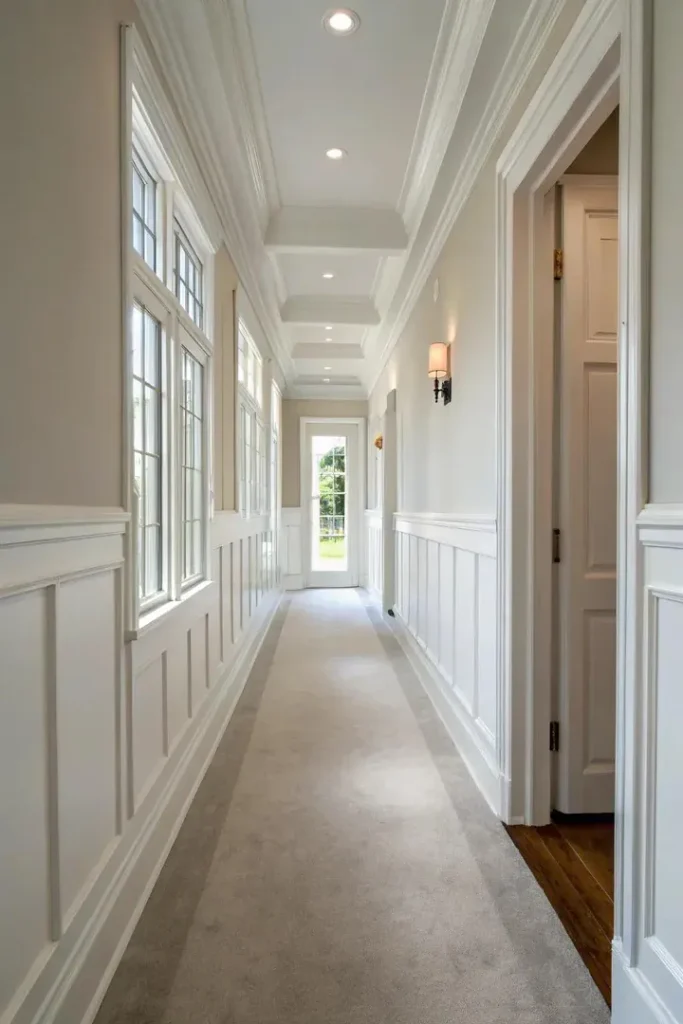
2. Two-Tone Elegance
Create more visual depth by combining two complementary colors. A darker shade on the wainscoting paired with a lighter wall color can give the hallway a defined focal point.
For a softer effect, choose closely related shades. If you want a stronger statement, combine a deep color below with a neutral shade above.
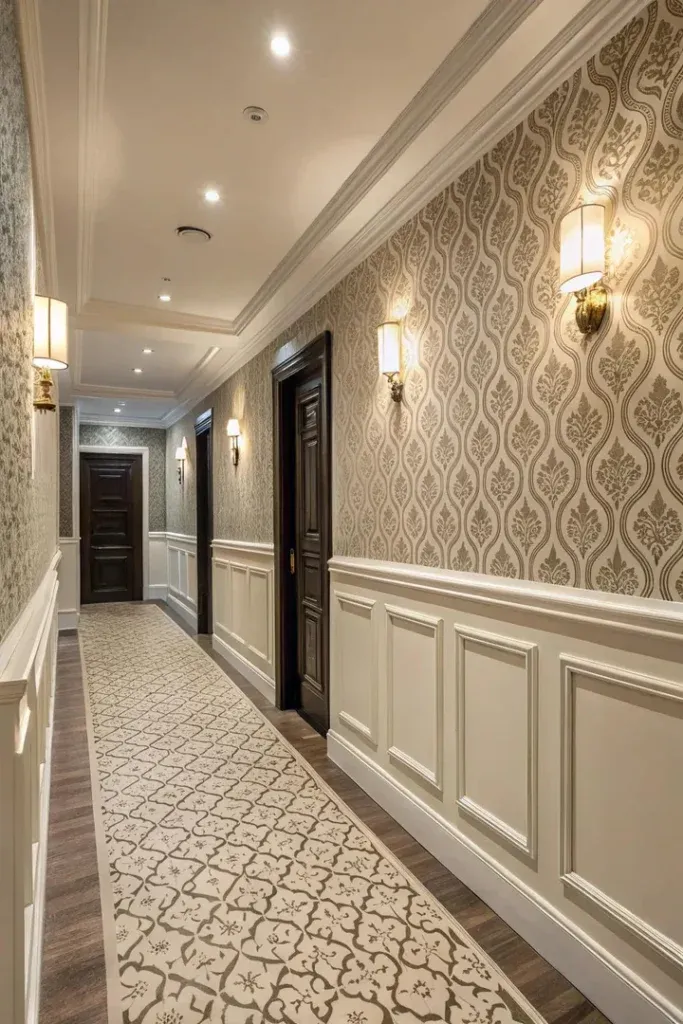
3. Rustic Wood Charm
Wood wainscoting brings warmth and natural texture to a hallway. Reclaimed or distressed wood can create a rustic appearance, while smooth wood panels offer a more refined interpretation.
This approach works particularly well in farmhouse, cottage, and rustic interiors. Keep the surrounding colors simple so the natural texture remains the main feature.
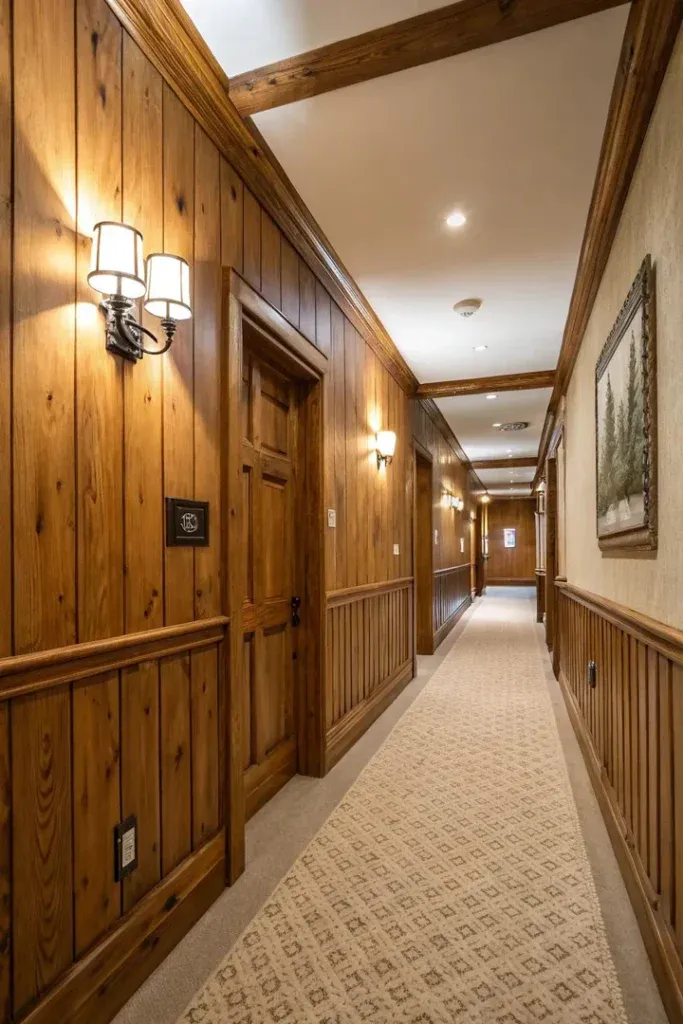
4. Geometric Patterns
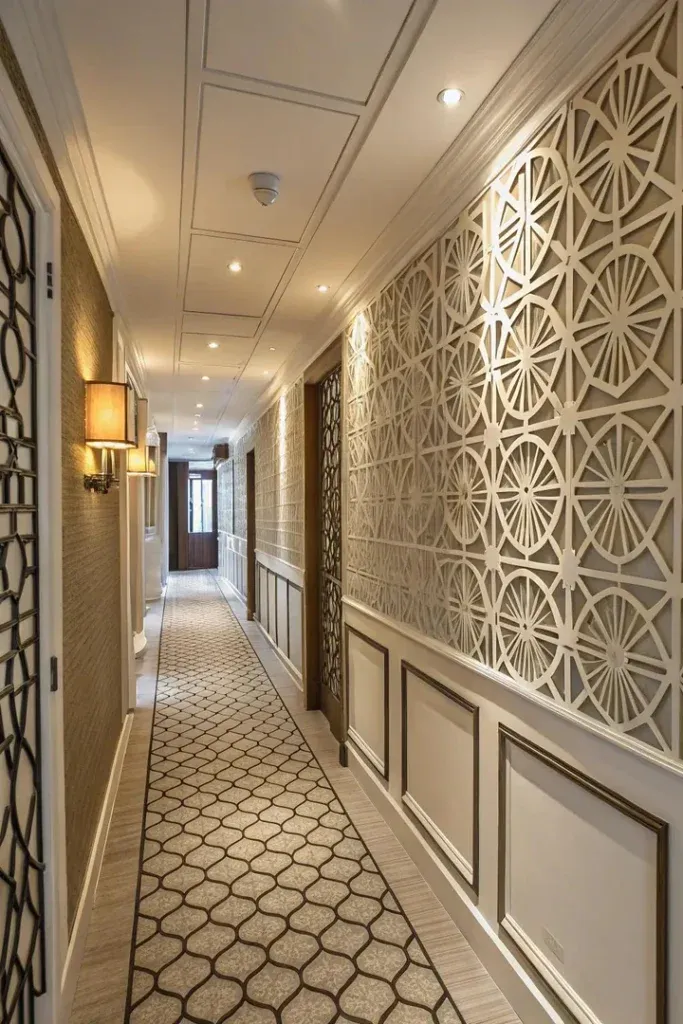
Geometric wainscoting offers a modern way to introduce pattern without overwhelming the hallway. Square, rectangular, diamond, or other repeating shapes can create a strong architectural feature.
In a narrow hallway, keep the pattern relatively simple to avoid making the walls feel visually crowded. A consistent design can add personality while maintaining a clean appearance.
5. High-Gloss Finish
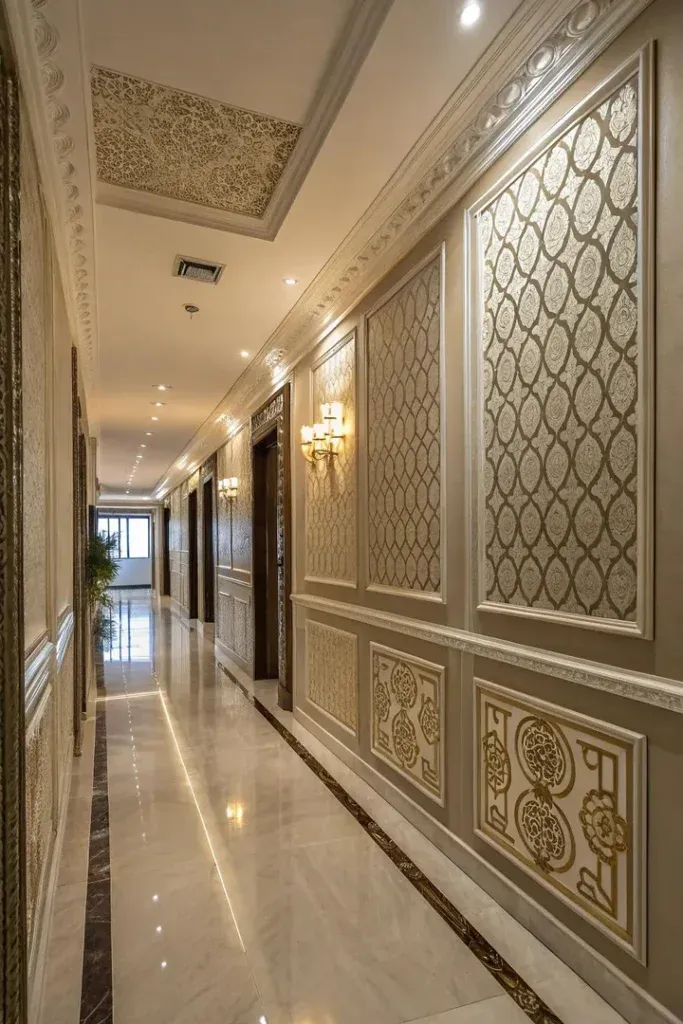
A high-gloss finish gives wainscoting a sleek and polished appearance. Its reflective surface can also help bounce light around the hallway.
This style works especially well in contemporary interiors. Pair glossy wainscoting with simple trim, modern lighting, and streamlined doors for a cohesive look.
6. Integrate Storage Solutions
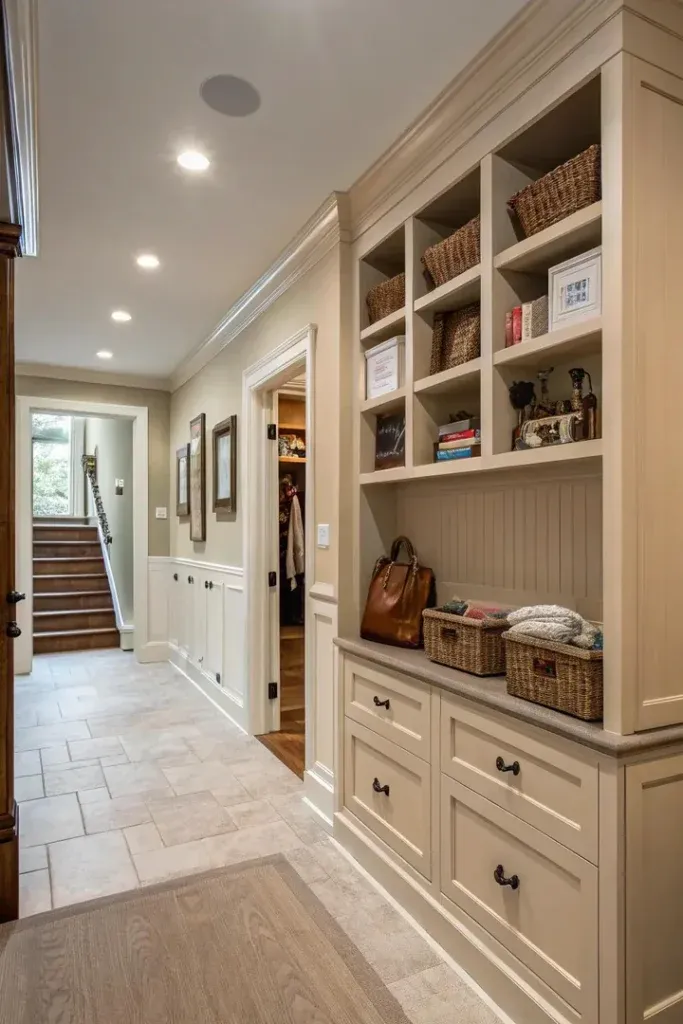
Wainscoting can be combined with practical storage to make a hallway more functional. Shelves, hooks, benches, or compact cabinets can be incorporated above or alongside the paneling.
This approach is useful in busy entryways where extra space is needed for shoes, bags, keys, or decorative items. Keep the storage visually coordinated with the wainscoting for a built-in appearance.
7. Contrast with Dark Colors
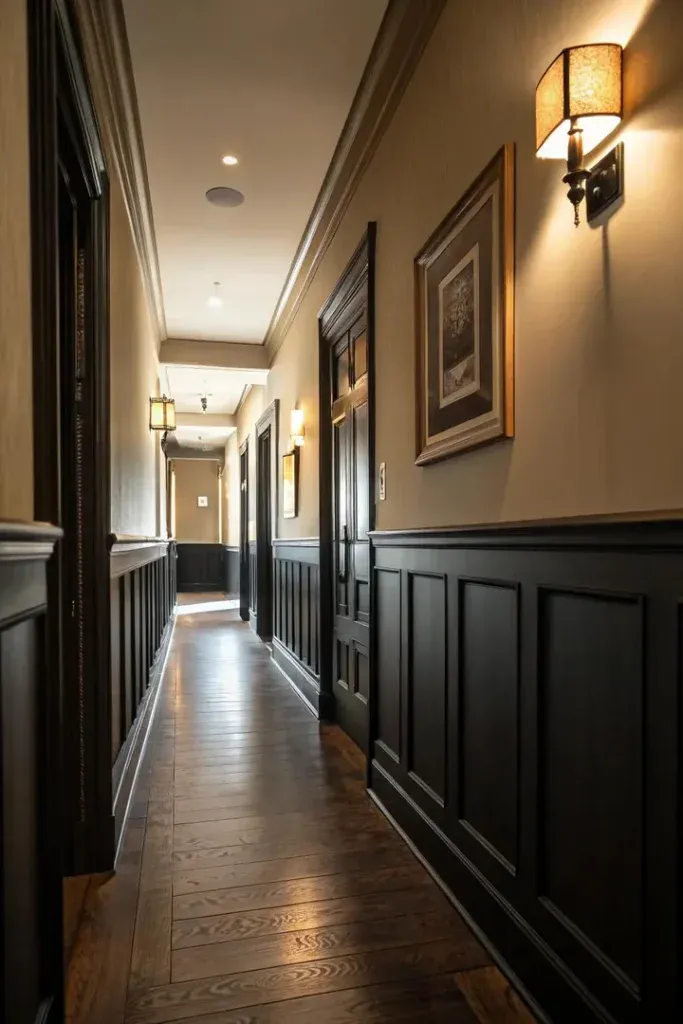
Dark wainscoting creates a dramatic and sophisticated hallway. Deep navy, charcoal, forest green, or dark brown can make the lower portion of the wall stand out.
For balance, pair darker paneling with lighter walls and adequate lighting. This combination can create a cozy atmosphere without making the hallway feel closed in.
8. Minimalist Lines
For a contemporary hallway, choose wainscoting with clean, uncomplicated lines. Simple rectangular panels and understated trim can add architectural detail without creating visual clutter.
Minimalist wainscoting works particularly well in narrow hallways because it provides structure while maintaining a streamlined appearance.
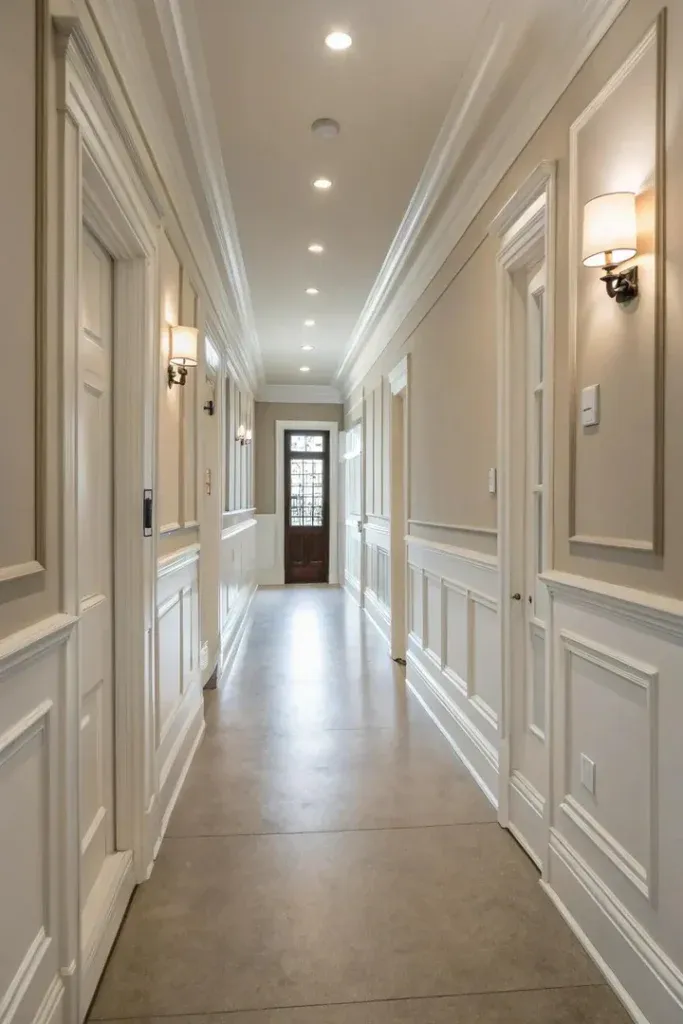
9. Victorian Elegance
Victorian-inspired wainscoting is ideal for homes with traditional or historic character. Detailed molding, raised panels, and layered trim can create a more elaborate appearance.
To keep the design cohesive, combine the wainscoting with classic lighting, traditional flooring, and complementary wall colors.
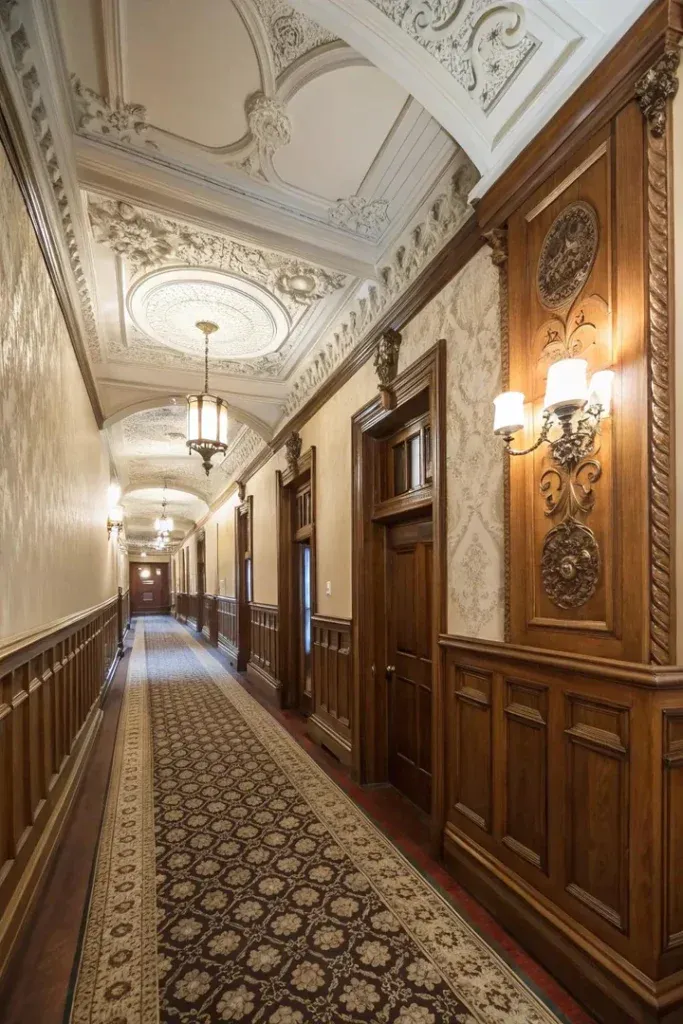
10. Add a Pop of Color
Wainscoting does not have to be white or neutral. A bold color can turn the lower section of a hallway wall into an eye-catching feature.
Try rich blue, deep green, warm terracotta, or another color that complements the rest of your interior. If the wainscoting is colorful, keep surrounding decorative elements relatively simple.
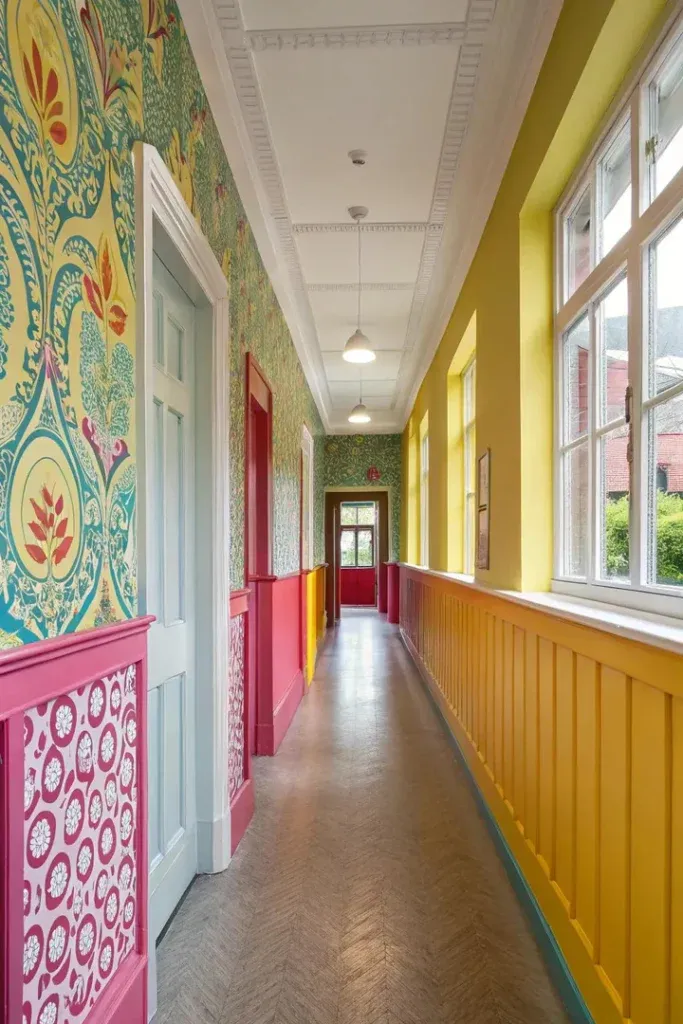
11. Coastal Vibes
Bring a relaxed coastal feel to your hallway with light-colored wainscoting and soft shades inspired by the sea. Pale blue, sandy beige, white, and muted gray can create an airy atmosphere.
Combine the paneling with natural textures and simple decorative details for a relaxed look that works well in both coastal and contemporary homes.
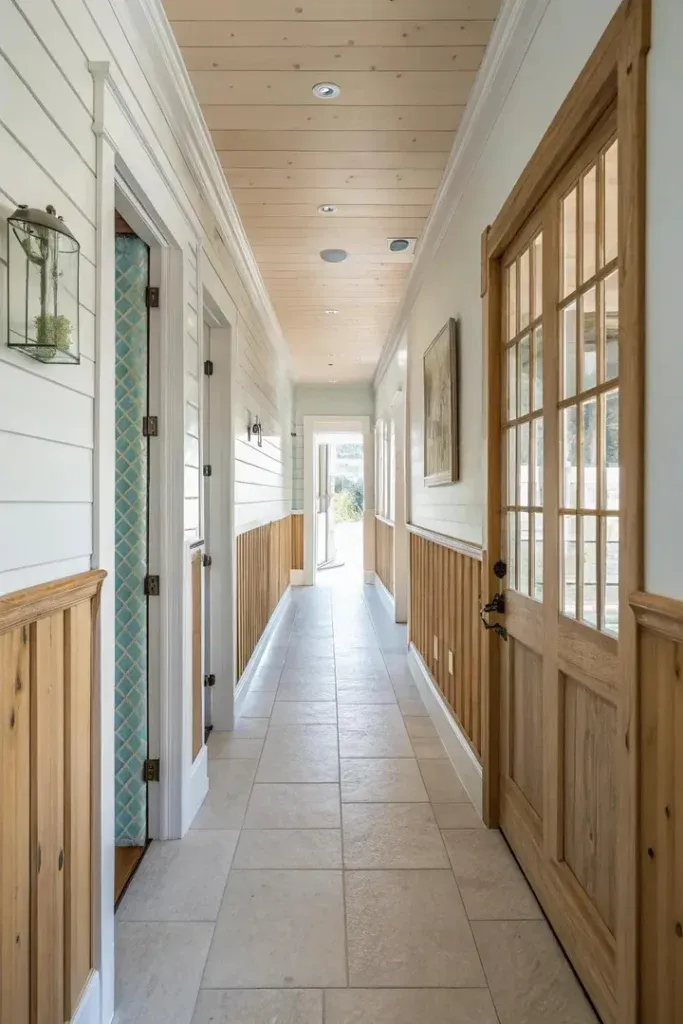
12. Mix Materials
Combining different materials can give wainscoting a more distinctive appearance. Wood, metal, painted panels, or textured surfaces can be used together to introduce contrast and depth.
The key is to keep the materials visually connected through a consistent color palette. This prevents the hallway from feeling overly busy.
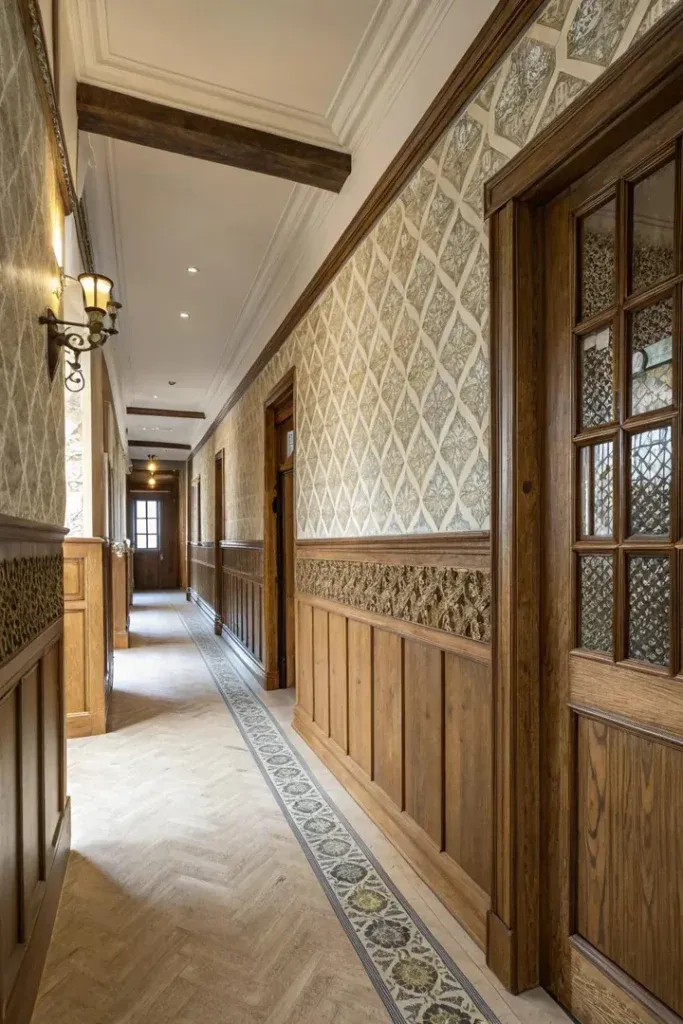
13. Monochrome Magic
A monochrome color scheme can create a sophisticated and cohesive hallway. Instead of using one exact shade throughout, work with several tones of the same color.
For example, a soft gray wall with slightly darker gray wainscoting creates subtle contrast while maintaining a unified appearance. This approach is especially effective in modern interiors.
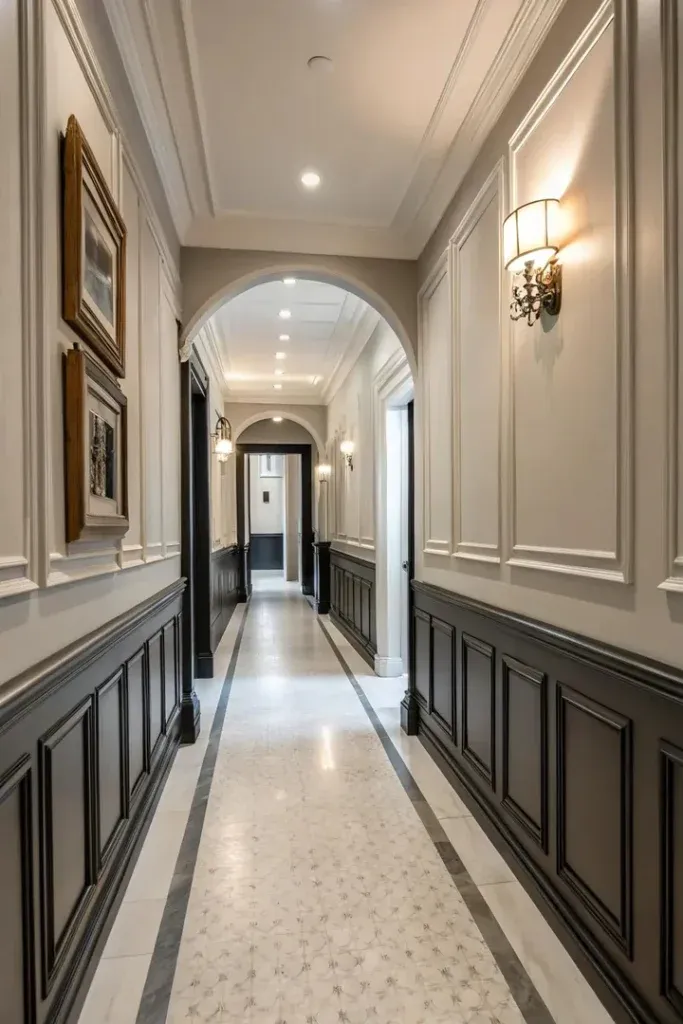
14. Art Deco Influence
Art Deco-inspired wainscoting can add glamour through geometric shapes, strong symmetry, and carefully chosen metallic accents.
Use bold panel arrangements or repeating geometric details to create an elegant feature wall. Keep the rest of the hallway relatively restrained so the wainscoting remains the focal point.
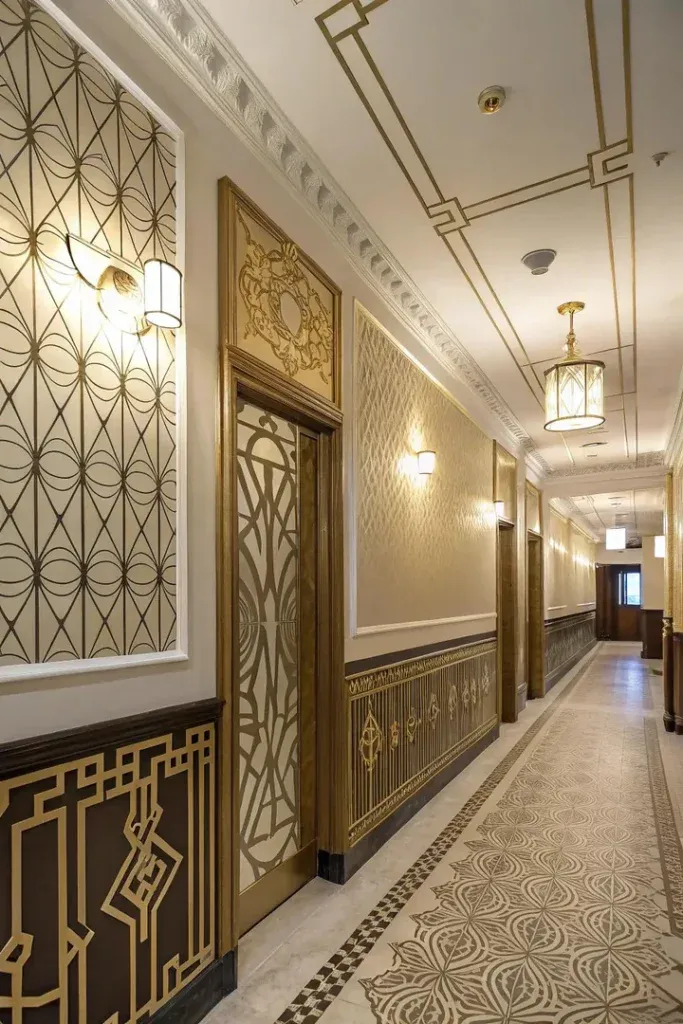
15. Natural Elements
Natural materials such as bamboo, rattan, or warm-toned wood can bring an organic quality to hallway wainscoting.
These materials work well with neutral walls, natural flooring, and indoor plants. The result is a warmer, more relaxed hallway with a connection to natural textures.
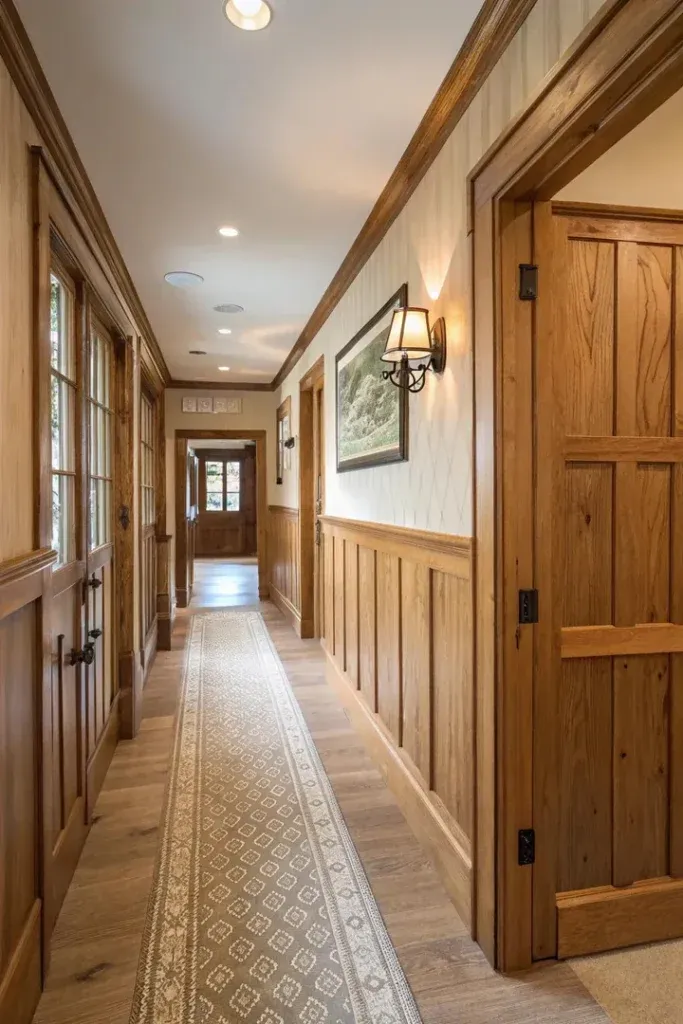
16. Mid-Century Modern
Mid-century modern wainscoting combines simple lines with understated colors and warm wood tones. The style can add retro character without making the hallway feel dated.
Choose streamlined panel designs and avoid overly decorative molding. Pair the wainscoting with simple lighting and minimal accessories for a balanced mid-century look.
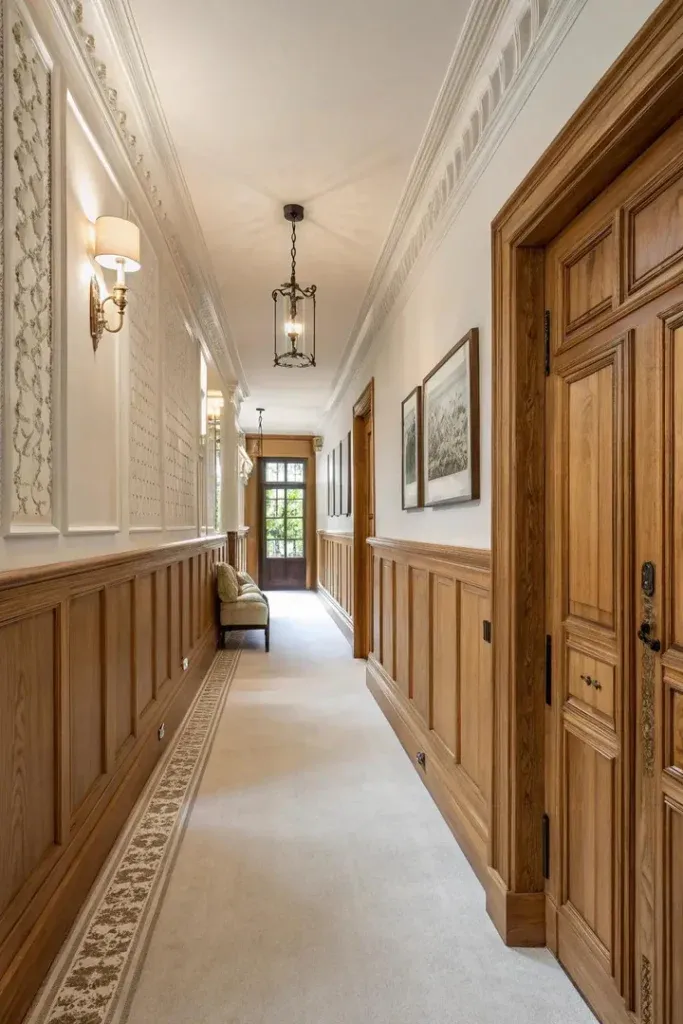
17. Industrial Edge
Give hallway wainscoting an industrial character by incorporating raw-looking materials, darker finishes, or metal details.
Metal panels or wood with a weathered finish can create a rugged appearance that works particularly well in loft-style and modern interiors. Balance harder materials with softer lighting or textiles to keep the hallway inviting.
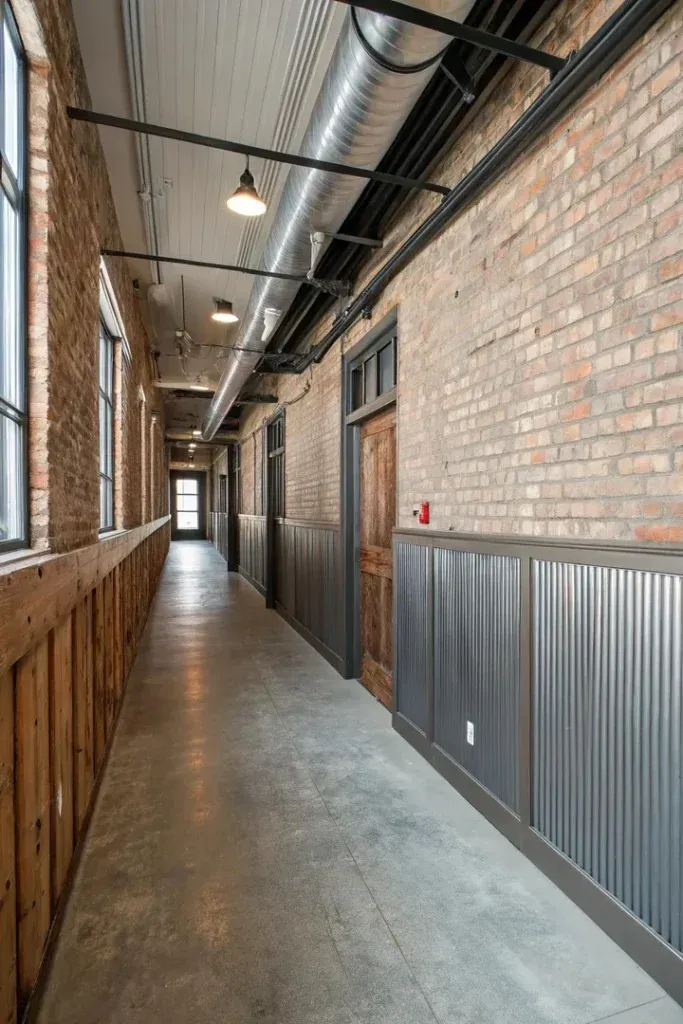
18. Soft Pastels
Pastel-colored wainscoting can create a calm and welcoming atmosphere. Soft blue, pale green, blush, cream, or muted lavender can add color without overwhelming the space.
This approach works well in bedrooms, upstairs hallways, and other areas where a softer aesthetic is preferred.
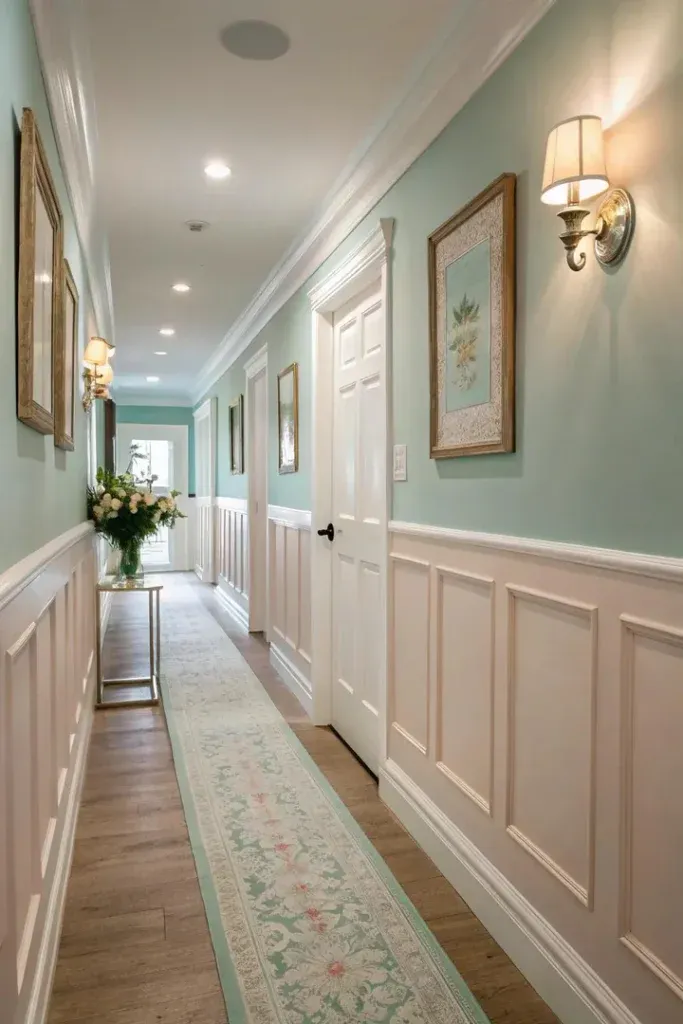
19. Eclectic Mix of Styles
If you prefer a more personalized interior, consider combining different wainscoting styles or details. Mixing panel shapes, colors, textures, or decorative elements can create an eclectic hallway with plenty of personality.
To keep the result cohesive, choose one common element—such as color, trim style, or material—to connect the different details.
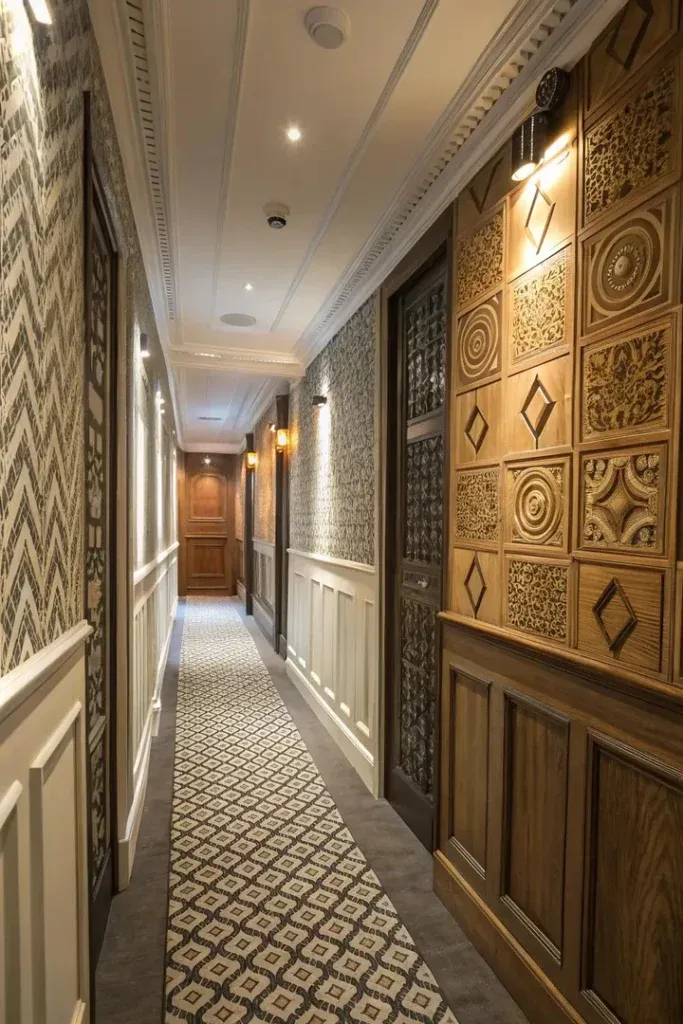
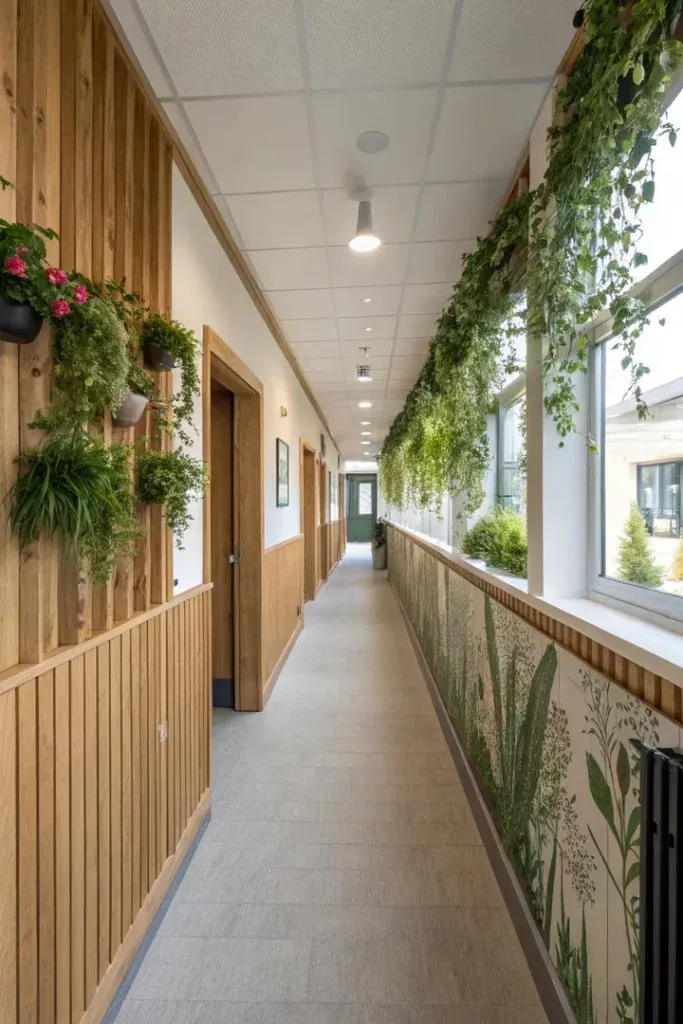
20. Nature-Inspired Motifs
Nature-inspired patterns can bring an organic decorative element to wainscoting. Leaf, vine, floral, or botanical motifs can introduce visual interest while creating a connection with the outdoors.
These details can work particularly well in cottage, traditional, or transitional interiors. Keep the pattern balanced with simpler surrounding walls and furnishings.
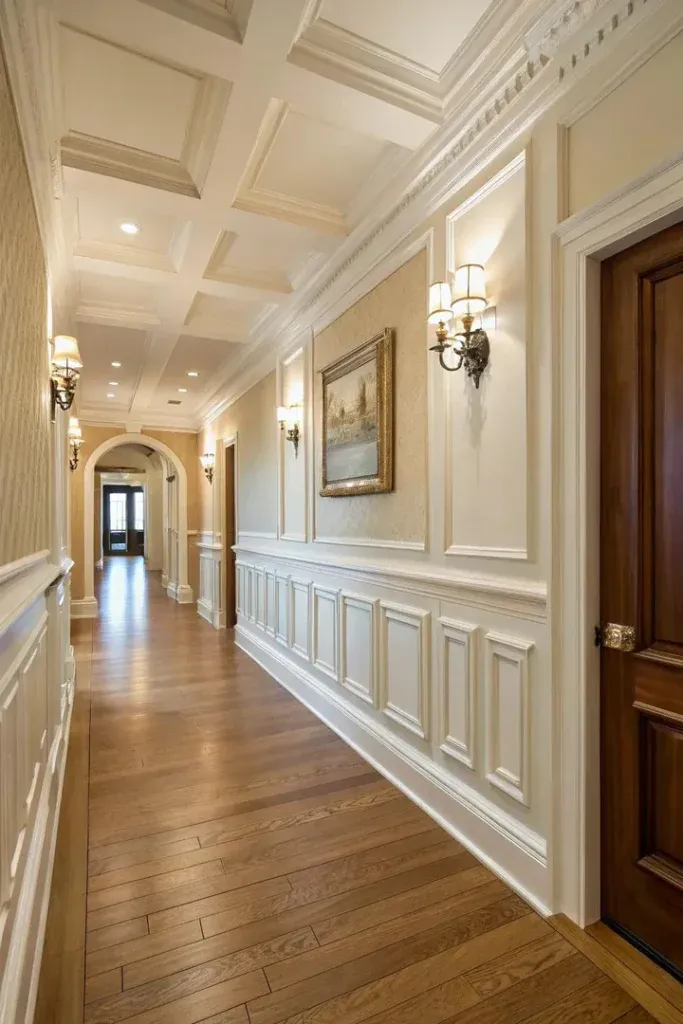
21. Traditional Raised Panels
Raised panel wainscoting is a classic choice that adds architectural detail and a sense of craftsmanship. The structured panels work especially well in traditional and formal interiors.
For a timeless hallway, combine raised panels with classic trim and a neutral paint color. This style can also complement other traditional architectural features throughout the home.
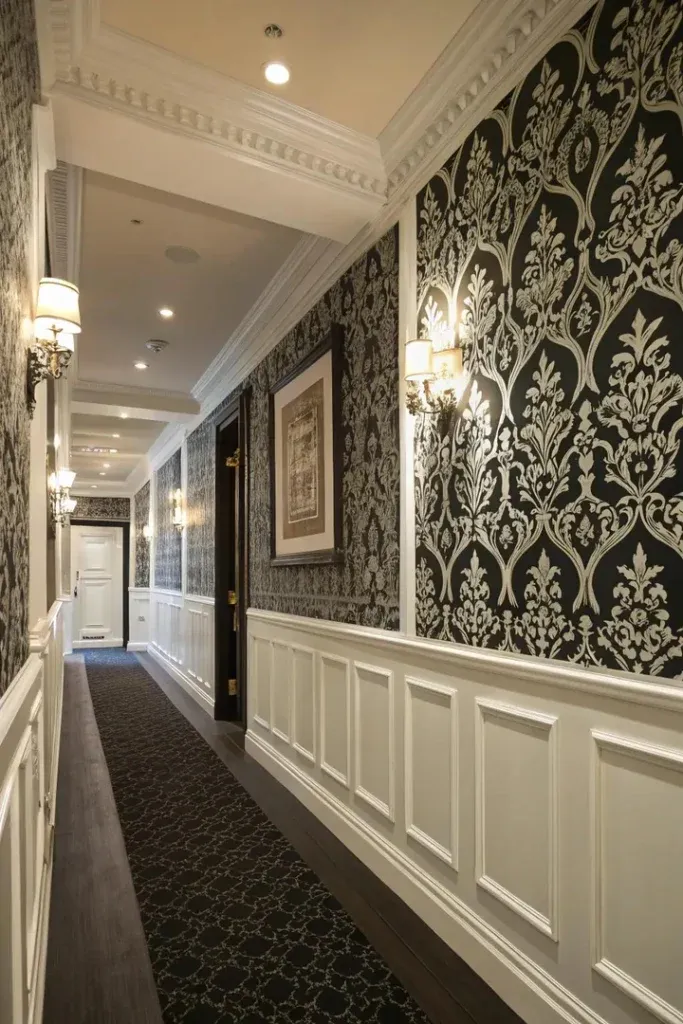
22. High Contrast with Black and White
Black and white wainscoting creates a bold, graphic look that can instantly define a hallway. White panels against dark walls offer strong contrast, while black lower panels paired with white walls create a dramatic effect.
This combination works across both traditional and modern interiors. Keep the rest of the decor simple so the contrasting wainscoting remains the main feature.
How to Choose the Right Wainscoting for Your Hallway
Before installing wainscoting, consider the size and shape of your hallway, the amount of natural light, and the overall style of your home. Narrow hallways generally benefit from simpler panel designs and lighter colors, while larger spaces can accommodate more detailed patterns and darker finishes.
Think about height as well. Traditional wainscoting often covers the lower portion of the wall, but taller paneling can create a more dramatic architectural effect. The trim, doors, flooring, and lighting should also work together with the wainscoting rather than compete with it.
For a practical hallway, choose durable finishes that are easy to clean and maintain. If the hallway experiences heavy traffic, consider materials and paint finishes that can withstand everyday bumps and marks.
Final Thoughts
Wainscoting can transform an ordinary hallway into a more polished and character-filled part of the home. Whether you prefer classic white panels, rustic wood, geometric designs, bold colors, or traditional raised molding, there is a style to suit almost every interior.
The best choice depends on your hallway’s proportions, lighting, existing finishes, and overall design style. With the right combination of paneling, color, materials, and trim, wainscoting can add both visual interest and practical wall protection while creating a more finished look throughout your home.