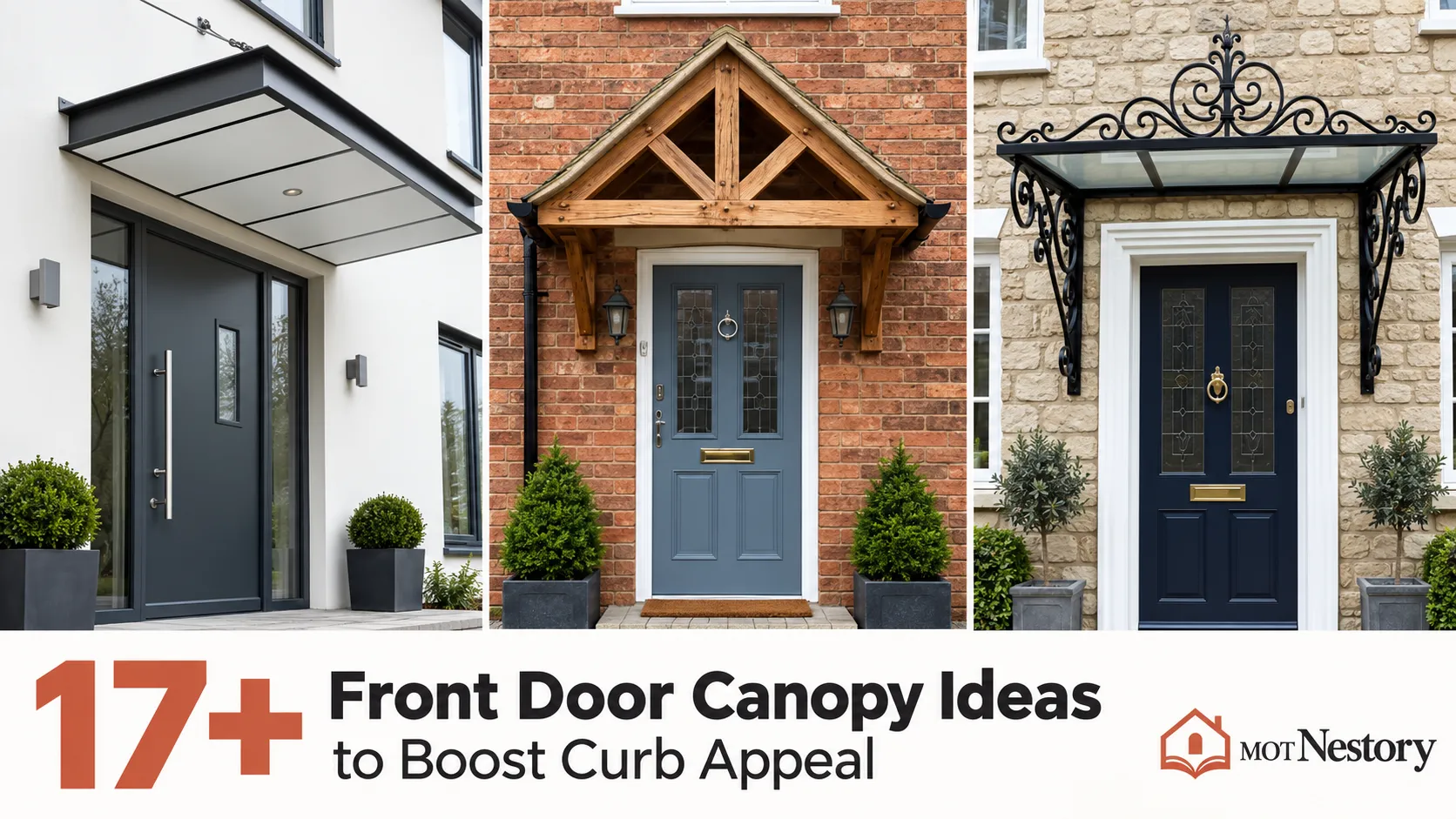
A front door canopy can do more than protect your entrance from rain and harsh sunlight. It can also add architectural detail, improve curb appeal, and create a more welcoming transition into your home.
From sleek aluminum and glass designs to rustic wood, classic ironwork, and custom-built structures, there are plenty of ways to choose a canopy that complements your home’s exterior. Here are 17+ front door canopy ideas to inspire your next exterior update.
1. Choose a Minimalist Aluminum Canopy
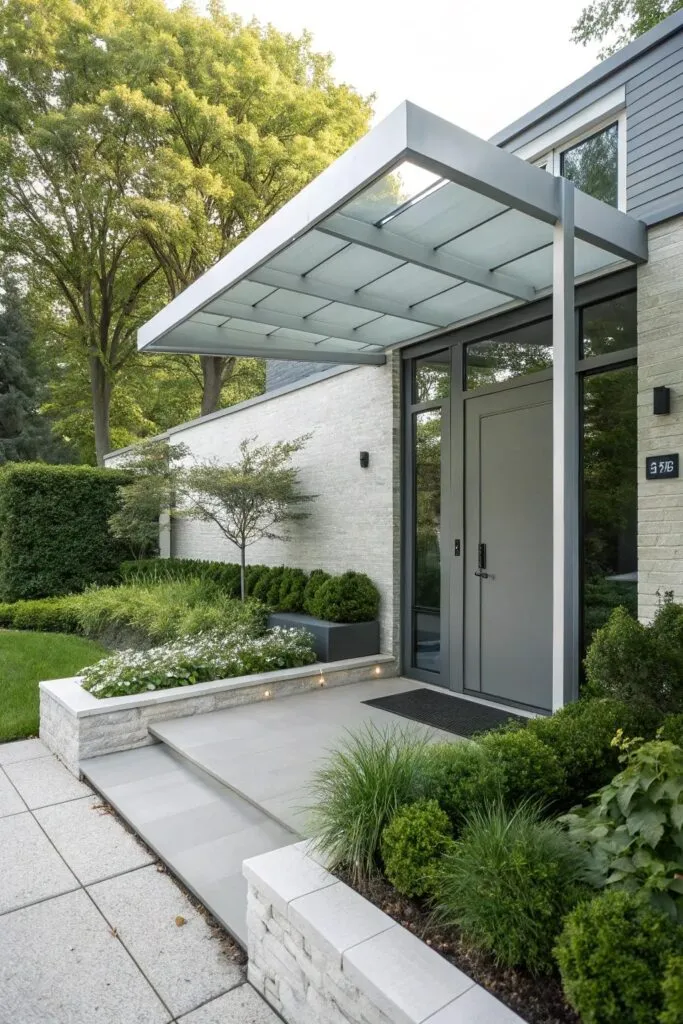
An aluminum canopy is a practical choice for contemporary homes. Its clean lines create a streamlined look without overwhelming the facade, while the material offers durability and resistance to changing weather conditions.
Choose a powder-coated finish in black, white, gray, or another color that complements your exterior. A simple design works particularly well with modern doors and minimalist architecture.
2. Add Timeless Copper Charm
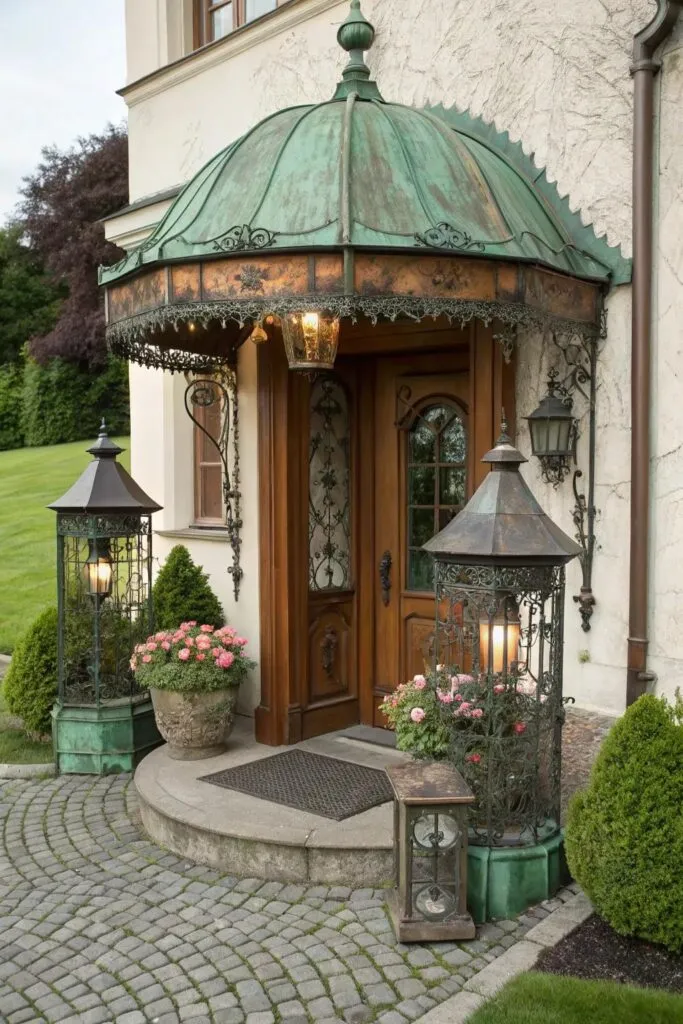
Copper canopies bring warmth and character to a front entrance. Over time, copper naturally develops a distinctive patina, giving the material an aged appearance that works beautifully with traditional and historic-style homes.
Pair a copper canopy with warm exterior lighting, wooden doors, or classic architectural details for a welcoming and timeless entrance.
3. Consider a Zinc Awning
Zinc offers a modern alternative to traditional canopy materials. Its understated appearance works well with contemporary architecture while providing reliable protection from rain and sunlight.
A simple zinc canopy can complement both light and dark exterior finishes. Its clean appearance also makes it suitable for homeowners who prefer a subtle, modern entrance.
4. Try an Aluminum and Vinyl Combination
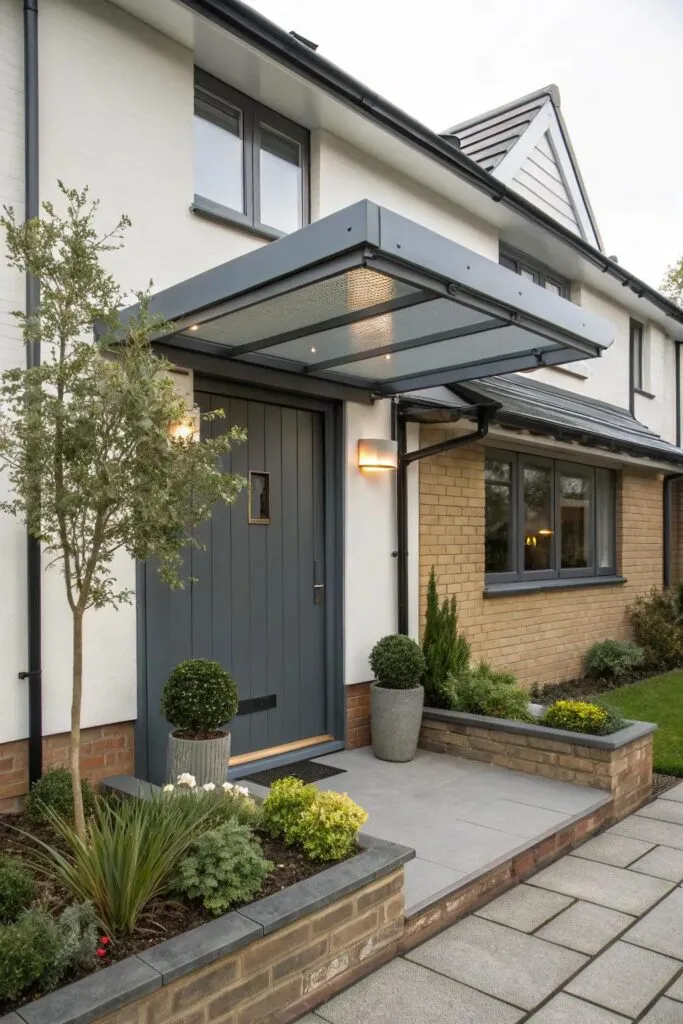
For a more budget-conscious option, consider combining an aluminum frame with vinyl panels. The aluminum provides a sturdy structure, while vinyl offers an affordable covering that can help protect the doorway from sun and rain.
This combination can work well for homeowners who want a practical canopy without committing to a more expensive custom structure.
5. Install a Stainless Steel and Glass Canopy
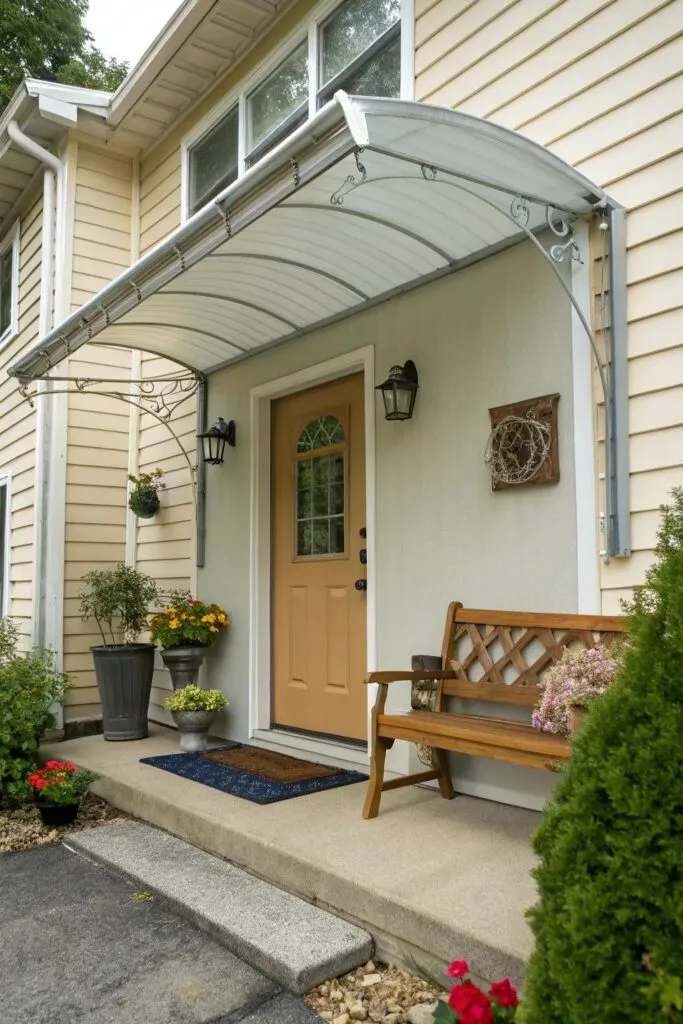
Stainless steel and glass create a polished, contemporary entrance. Tempered glass allows plenty of natural light to reach the doorway while providing shelter from the elements.
The combination is especially effective on modern homes, where the clean lines of the metal frame and transparent glass can complement large windows, contemporary doors, and minimalist landscaping.

6. Create a Classic Canvas Canopy
A canvas canopy can soften the appearance of an entrance while adding a traditional or relaxed feel. Fabric introduces texture and can be selected in a color or pattern that coordinates with the home’s exterior.
Choose weather-resistant fabric designed for outdoor use, particularly if the canopy will be exposed to strong sunlight or frequent rain.
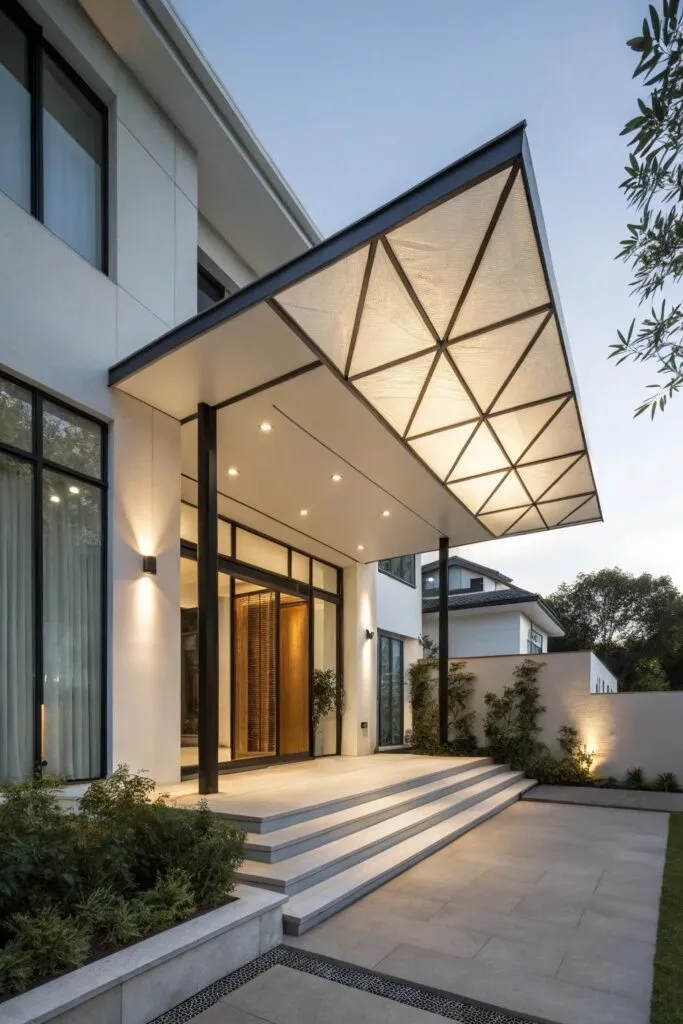
7. Make a Statement with Geometric Designs
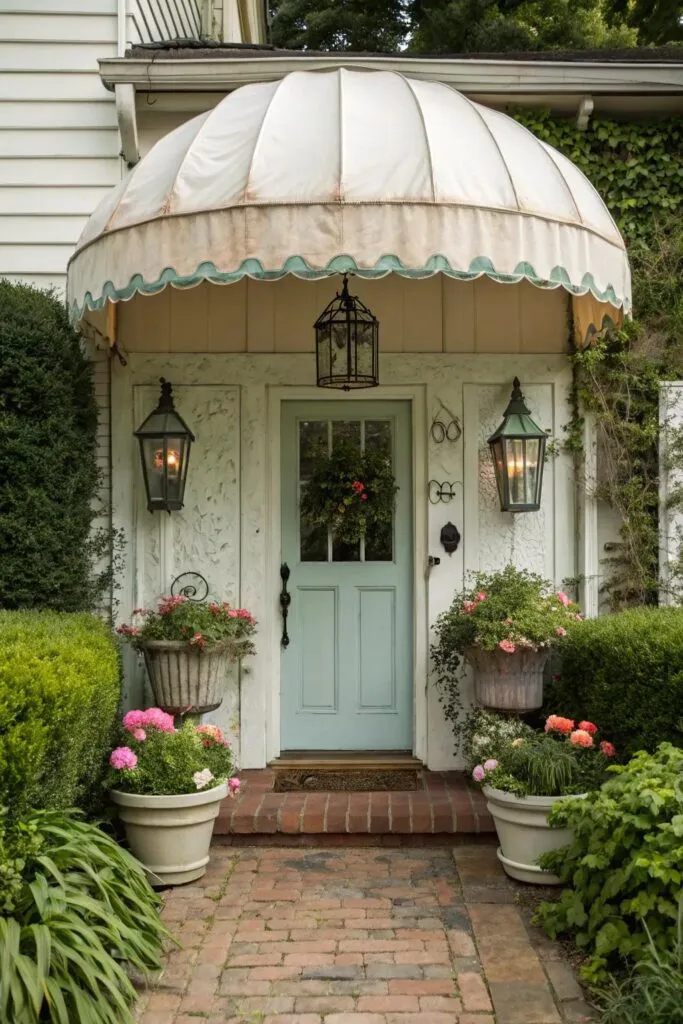
Geometric canopies can turn a simple entrance into a distinctive architectural feature. Angular frames, unusual shapes, and transparent or semi-transparent materials can give the doorway a modern artistic quality.
For an evening focal point, integrate subtle outdoor lighting into or around the structure to emphasize its geometric form.
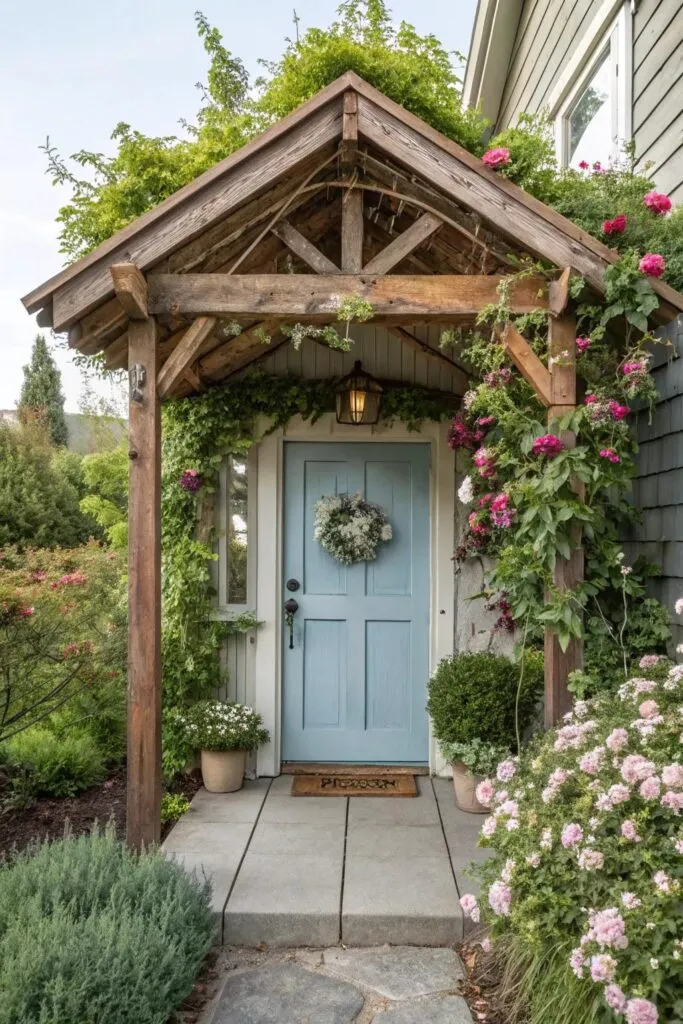
8. Add Warmth with a Rustic Wooden Canopy
A wooden canopy is ideal for creating a warm and inviting entrance. Natural wood works especially well with farmhouse, cottage, craftsman, and rustic architectural styles.
Choose a weather-resistant wood and apply an exterior stain or protective finish to help preserve its appearance. A simple timber structure can provide plenty of character without making the entrance feel overly elaborate.
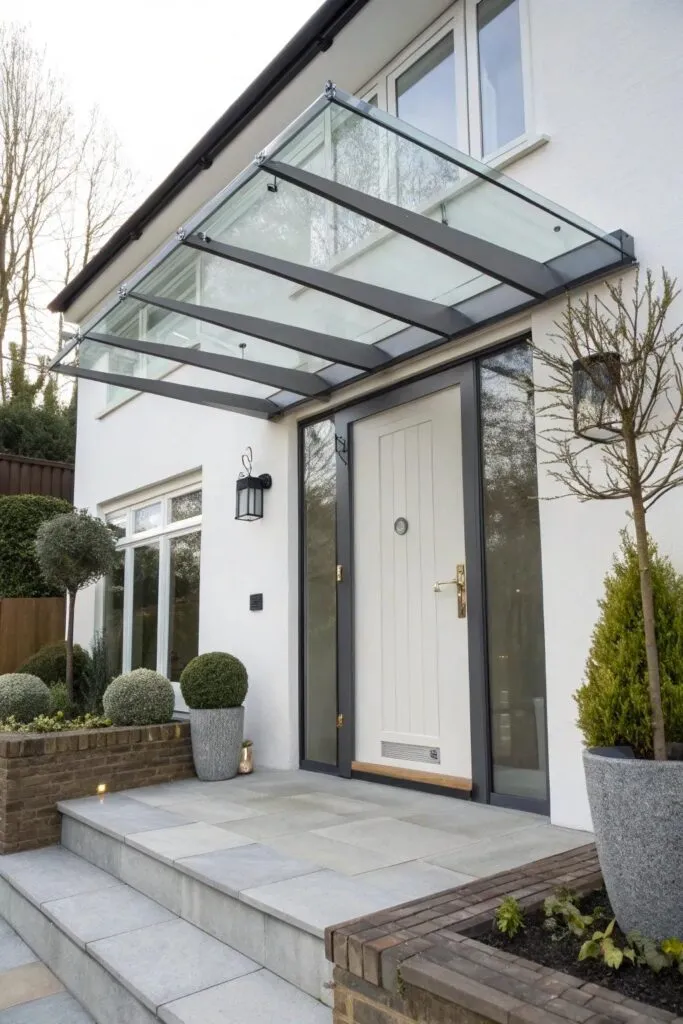
9. Keep It Bright with a Sleek Glass Canopy
A glass canopy creates shelter without visually closing in the entrance. Clear tempered glass allows sunlight to pass through, helping the doorway feel bright and open.
Pair the glass with a slim metal frame for a contemporary look. This option works particularly well when you want protection from the weather without blocking architectural details around the door.
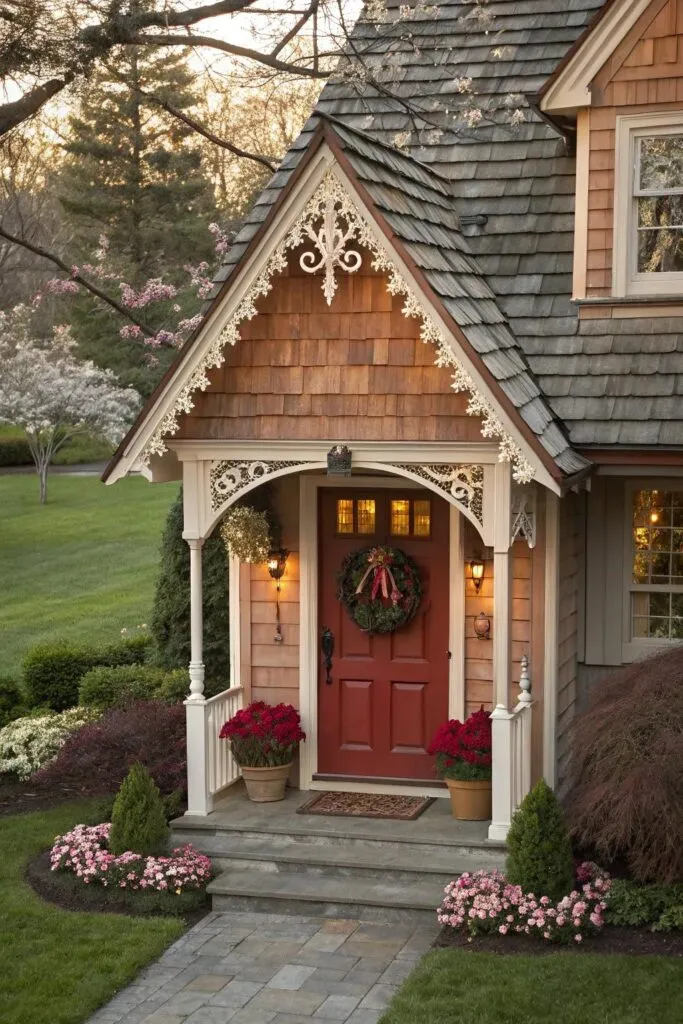
10. Choose a Traditional Gable Canopy
A gable-style canopy adds a classic architectural element above the front door. Its pitched shape can complement traditional homes while creating a clearly defined entrance.
Decorative trim, coordinated roofing materials, and classic exterior colors can make the canopy feel like a natural extension of the home’s existing architecture.
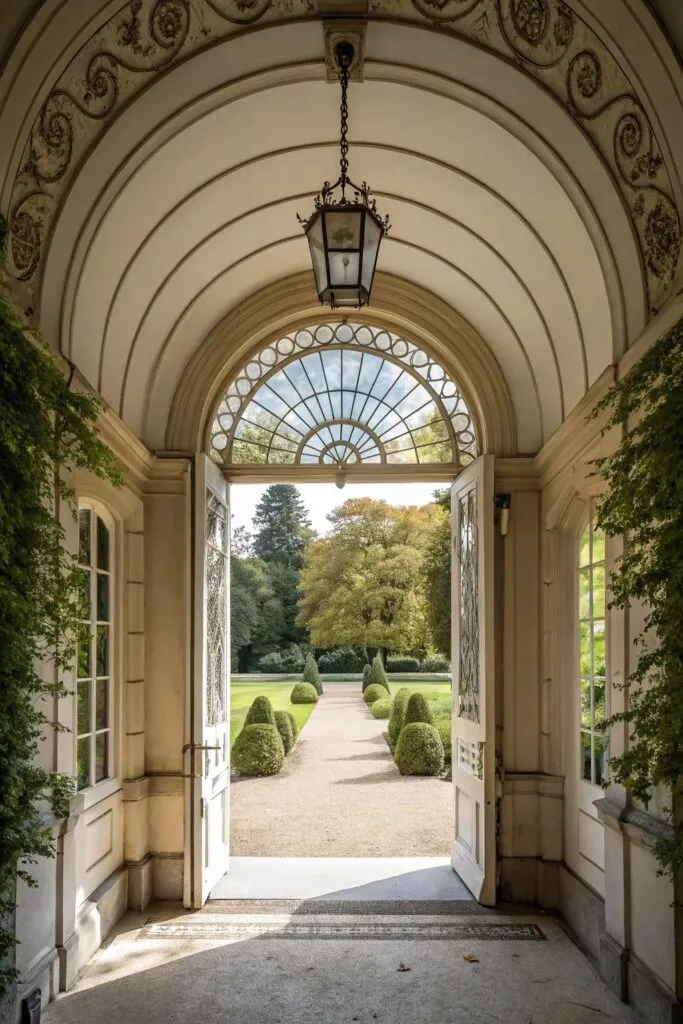
11. Add Elegance with an Arched Canopy
An arched canopy introduces softer curves to the facade. Its rounded shape can complement classical, traditional, and period-inspired homes particularly well.
For a more decorative appearance, combine the canopy with wrought iron details or an arched doorway. Keeping the proportions consistent with the home’s architecture will help the design feel intentional.
12. Use a Contemporary Flat-Roof Canopy
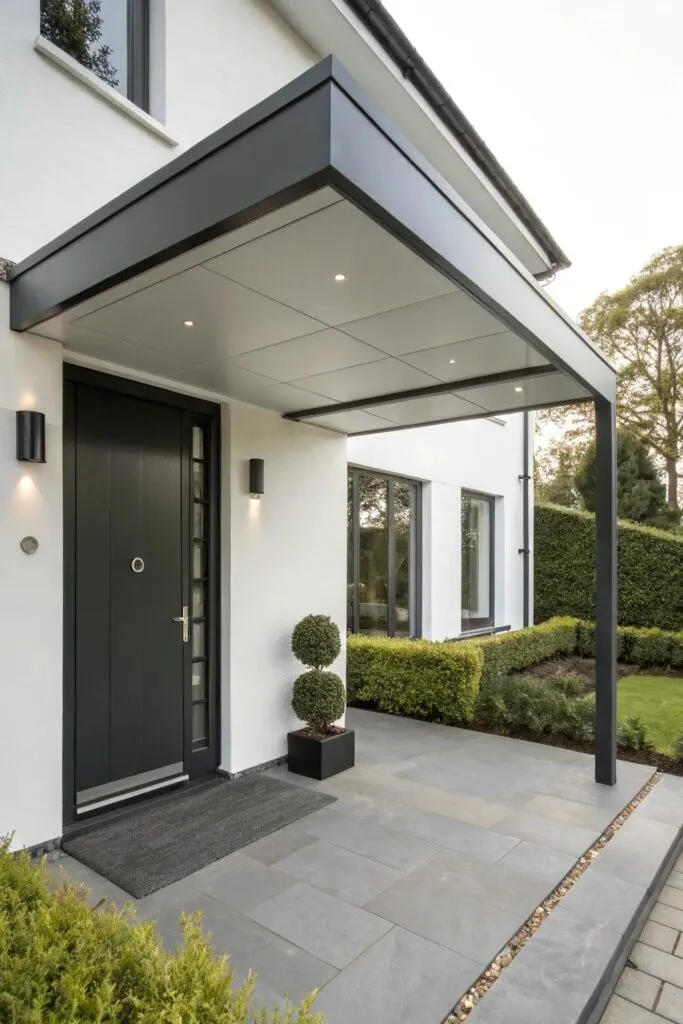
A flat-roof canopy is a strong choice for modern architecture. Its horizontal lines create a clean, understated appearance while providing practical shelter over the doorway.
Consider adding recessed or integrated lighting beneath the canopy to illuminate the entrance after dark. The result is a simple design that combines function with modern style.
13. Try a Pergola-Style Canopy
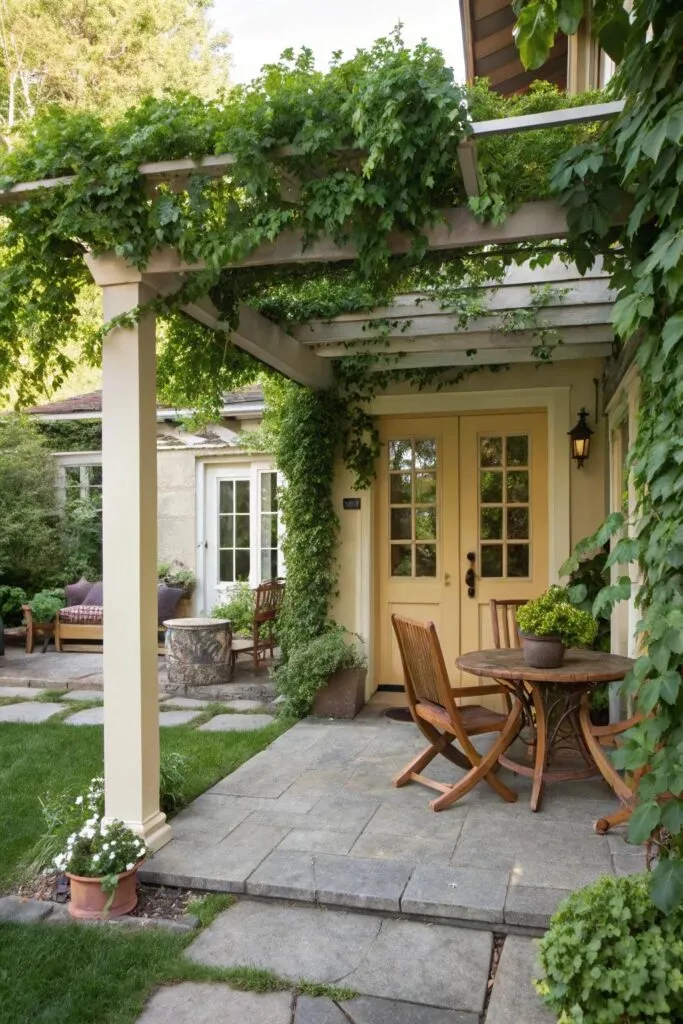
A pergola-style canopy creates a more open and decorative entrance. Its slatted structure can provide partial shade while adding architectural interest to the front of the home.
Climbing plants can be trained around the structure to create a softer, garden-inspired appearance. Choose plants that suit your local growing conditions and the amount of sunlight the entrance receives.
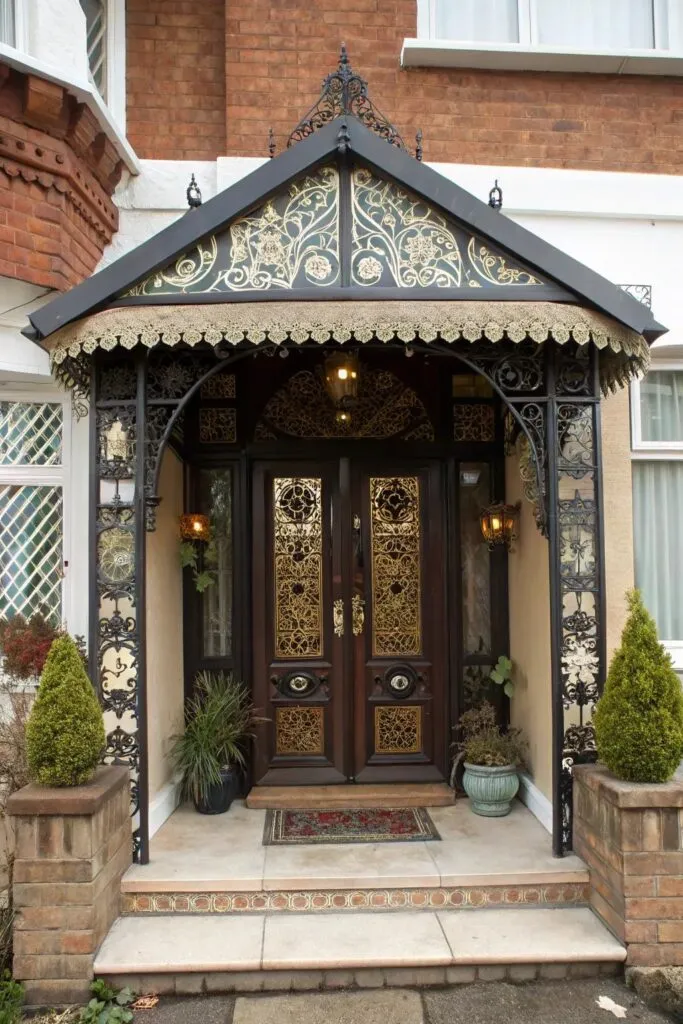
14. Add Character with Vintage Ironwork
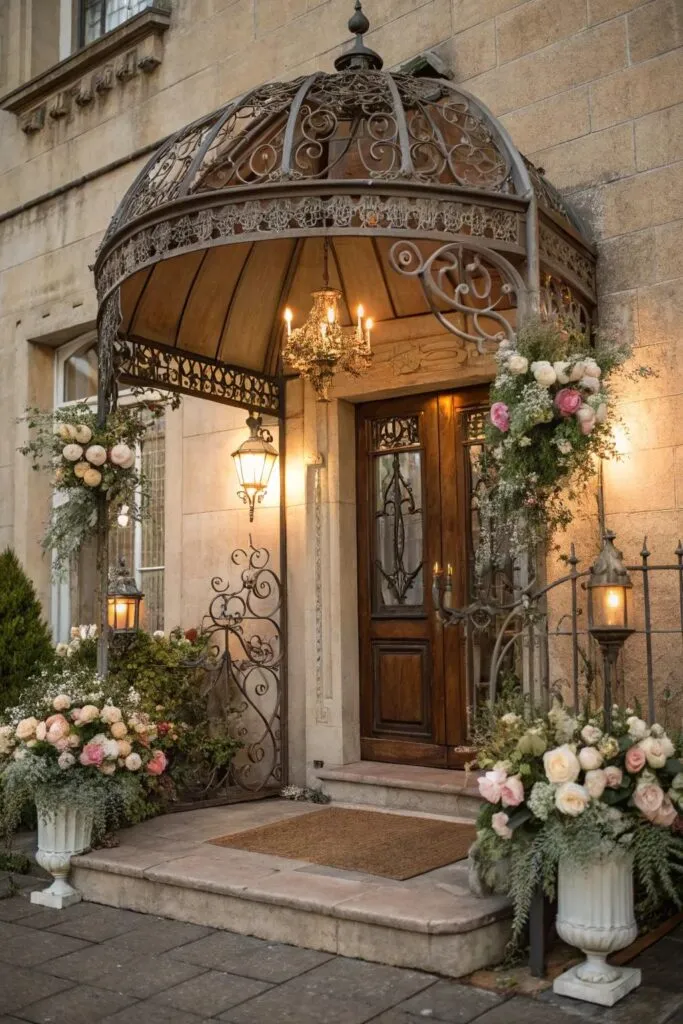
Vintage ironwork can give a front entrance a romantic and traditional appearance. Decorative curves, scrollwork, and detailed metalwork can complement historic homes and other classic architectural styles.
For an especially inviting look, combine the canopy with warm outdoor lighting and traditional door hardware. The result can feel elegant without requiring major changes to the rest of the facade.
15. Introduce Color with a Fabric Canopy
A colorful fabric canopy is an easy way to introduce personality to your entrance. Choose a weather-resistant fabric in a shade that complements your door, trim, landscaping, or other exterior details.
Neutral homes can benefit from a bold accent color, while patterned fabric can add visual interest to a more traditional exterior.

16. Incorporate Integrated Lighting
A canopy with integrated lighting can improve both the appearance and functionality of your entrance. Built-in lights can provide a soft glow around the doorway while making the area easier to navigate at night.
Warm-toned lighting generally creates a welcoming atmosphere. You can also combine integrated lighting with wall sconces or other exterior fixtures for layered illumination.
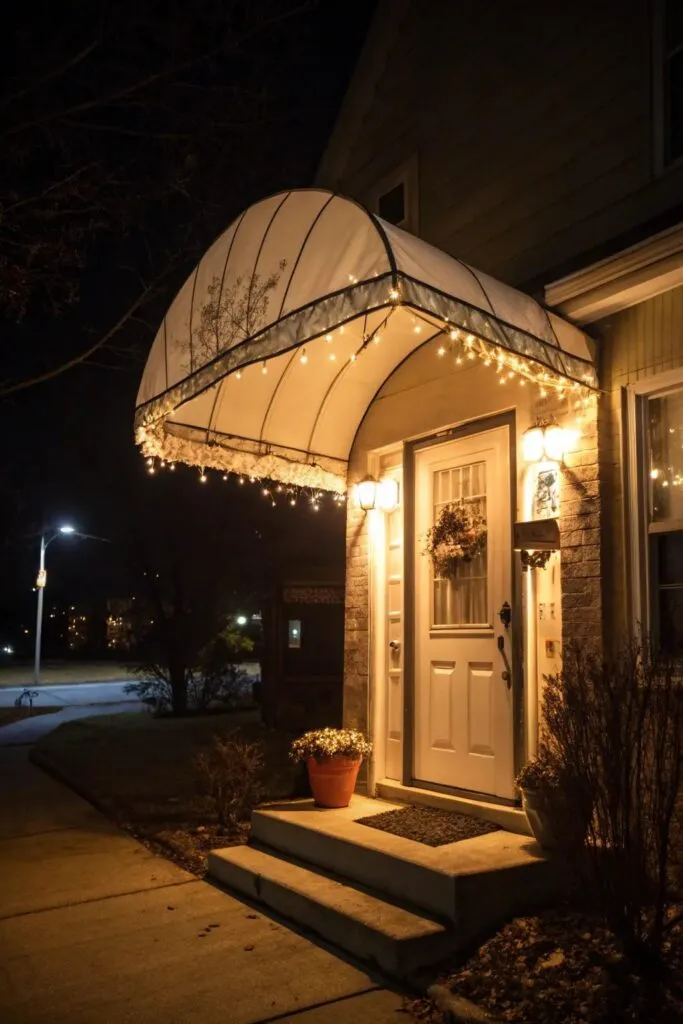
17. Create a Bespoke Custom Canopy
A custom canopy gives you the greatest flexibility when designing your entrance. You can tailor the size, shape, materials, colors, and decorative details to match your home’s architecture.
Custom designs are particularly useful when the doorway has unusual proportions or when you want the canopy to become a distinctive architectural feature. Decorative metalwork, wood details, glass panels, or integrated lighting can all be incorporated into the design.
Conclusion
The right front door canopy can improve both the appearance and functionality of your home’s entrance. Whether you prefer the clean lines of aluminum and glass, the warmth of natural wood, the character of copper and ironwork, or the flexibility of a custom design, the best choice should complement your home’s architecture.
When selecting a canopy, consider the size of your entrance, the amount of weather protection you need, the materials already used on your exterior, and how much maintenance the structure will require. With the right combination of form and function, a front door canopy can make your entrance more attractive, welcoming, and practical.