
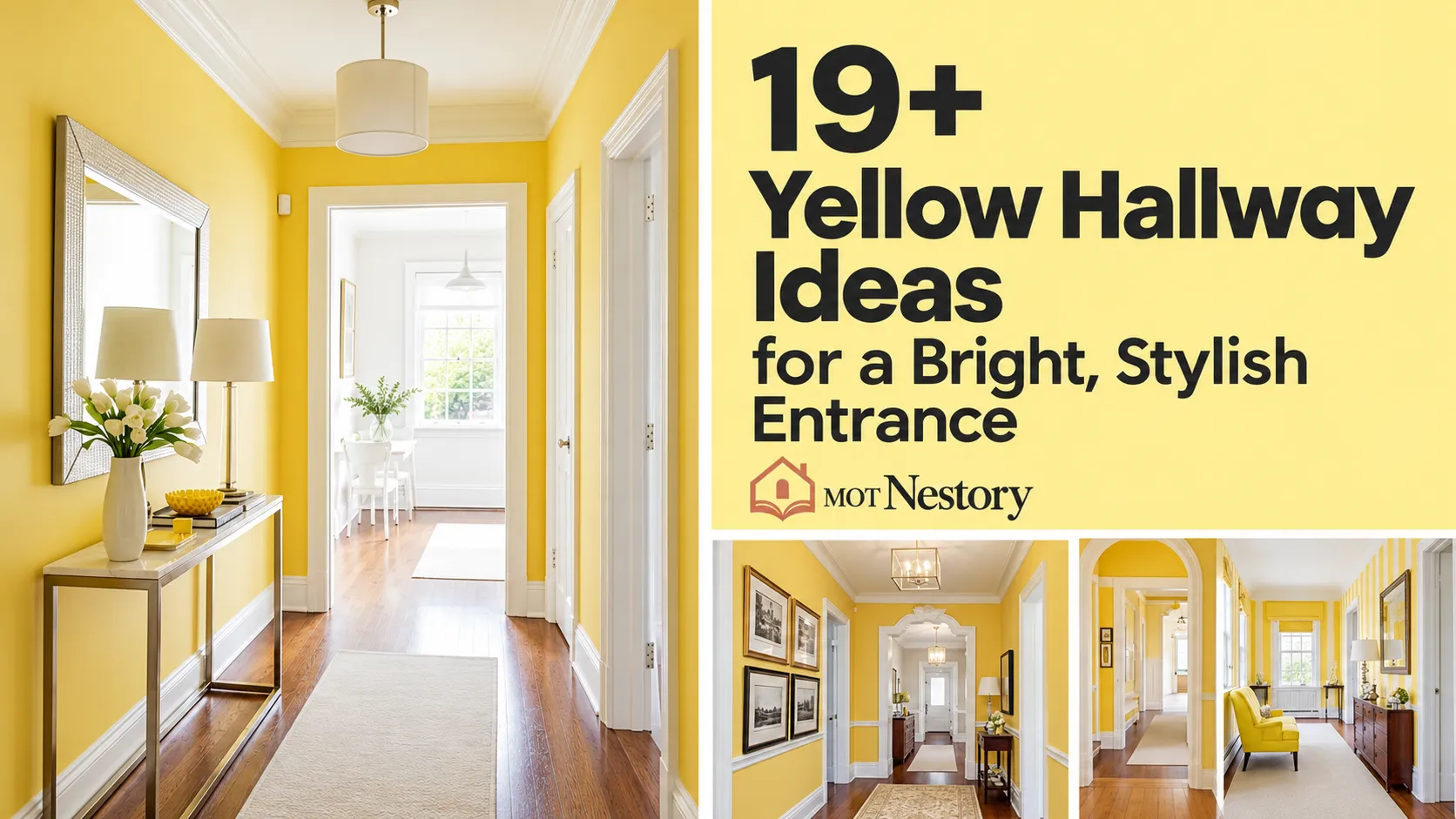
Yellow can bring warmth, energy, and personality to a hallway. From soft mustard tones to bright sunshine yellow, this versatile color can make an entrance feel more welcoming while giving an otherwise overlooked space a distinct character.
You can use yellow in many different ways without covering every wall. Paint, wallpaper, trim, artwork, textiles, furniture, flooring, and doors can all introduce the color at different levels of intensity. Whether your home has a modern, traditional, or eclectic style, these yellow hallway ideas can help you create a space that feels bright and inviting.
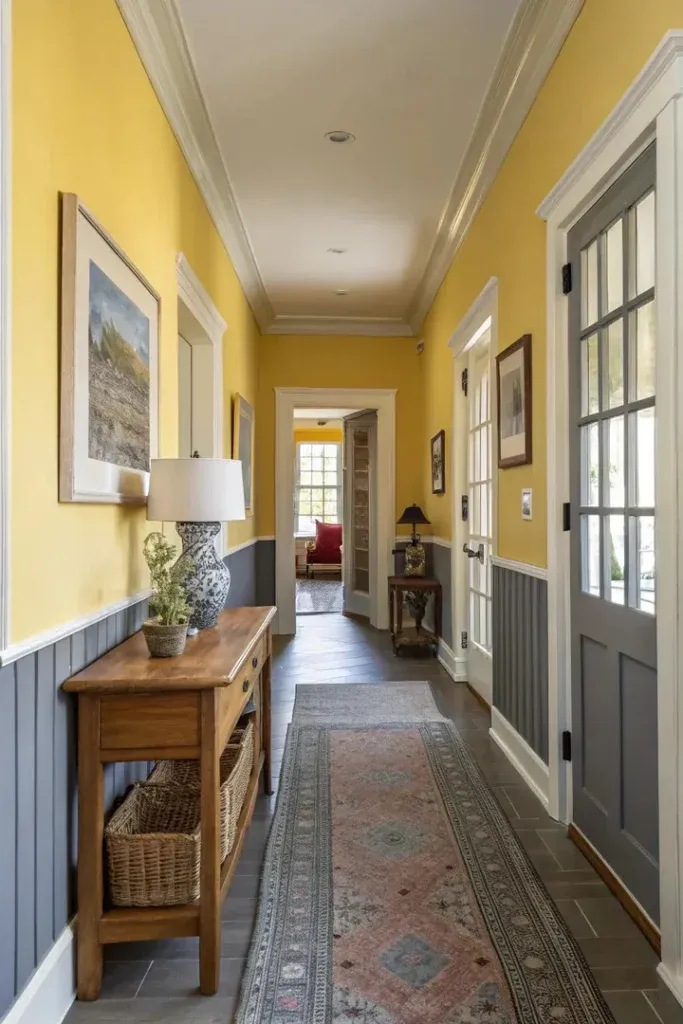
1. Balance Yellow with Gray
Yellow and gray create a balanced combination that works particularly well in modern hallways. The warmth of yellow prevents gray from feeling too cold, while gray provides a neutral backdrop that keeps the space sophisticated.
Try yellow walls with gray flooring or furniture, or introduce the colors through artwork, rugs, and accessories. For a more subtle look, use a muted yellow alongside soft gray rather than a highly saturated shade.
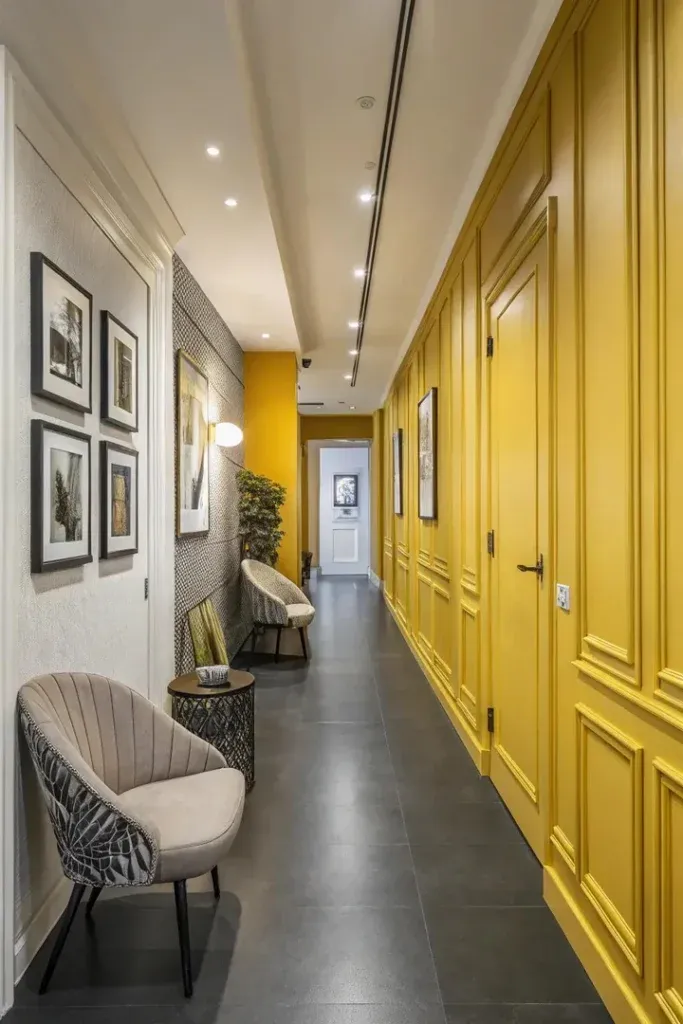
2. Add Yellow Paneling
Yellow wall paneling can bring both color and architectural detail to a hallway. Use panel molding or decorative wall panels to give the space additional depth while making the yellow feel more intentional.
A soft or muted yellow works well for a refined appearance, while a brighter shade can create a stronger focal point. Keep the rest of the hallway relatively simple so the paneling remains the main feature.
3. Highlight Trim and Moldings
If painting an entire hallway yellow feels too bold, use the color on trim and moldings instead. Yellow baseboards, door frames, chair rails, or other architectural details can introduce warmth without overwhelming the space.
This approach works especially well in narrow hallways, where small areas of color can create visual interest without making the corridor feel enclosed.
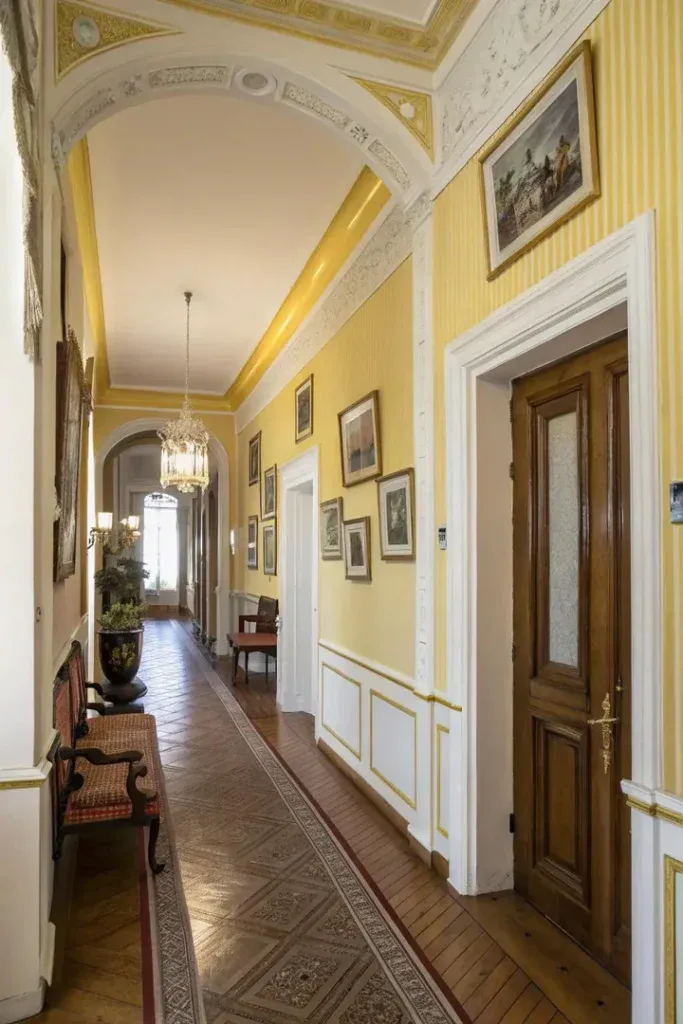
4. Try Subtle Mustard Hues
Mustard yellow offers a warmer and more understated alternative to bright yellow. Its deeper tone can give a hallway a cozy, sophisticated character.
Use mustard paint on the walls or introduce it through patterned wallpaper. Pair it with cream, beige, white, or natural wood to create a welcoming palette that works in both traditional and contemporary homes.
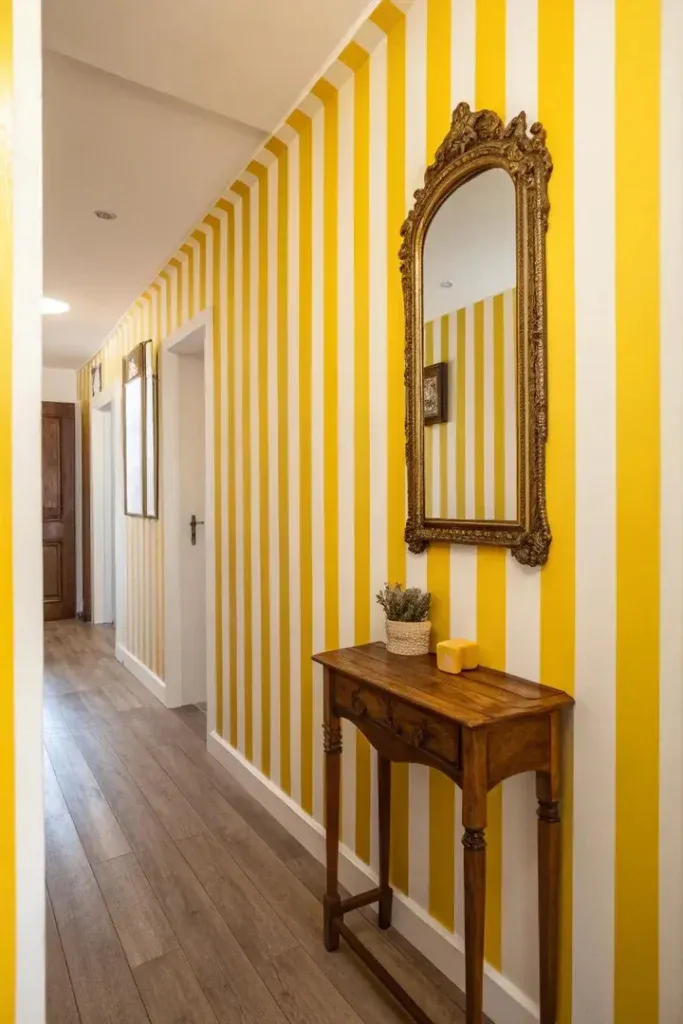
5. Create Yellow and White Harmony
Yellow and white make a hallway feel bright, fresh, and inviting. White can balance the intensity of yellow while helping the space feel more open.
This combination is particularly useful in narrow hallways. Try yellow walls with white trim, or use yellow-and-white wallpaper to add pattern without making the space feel visually heavy.
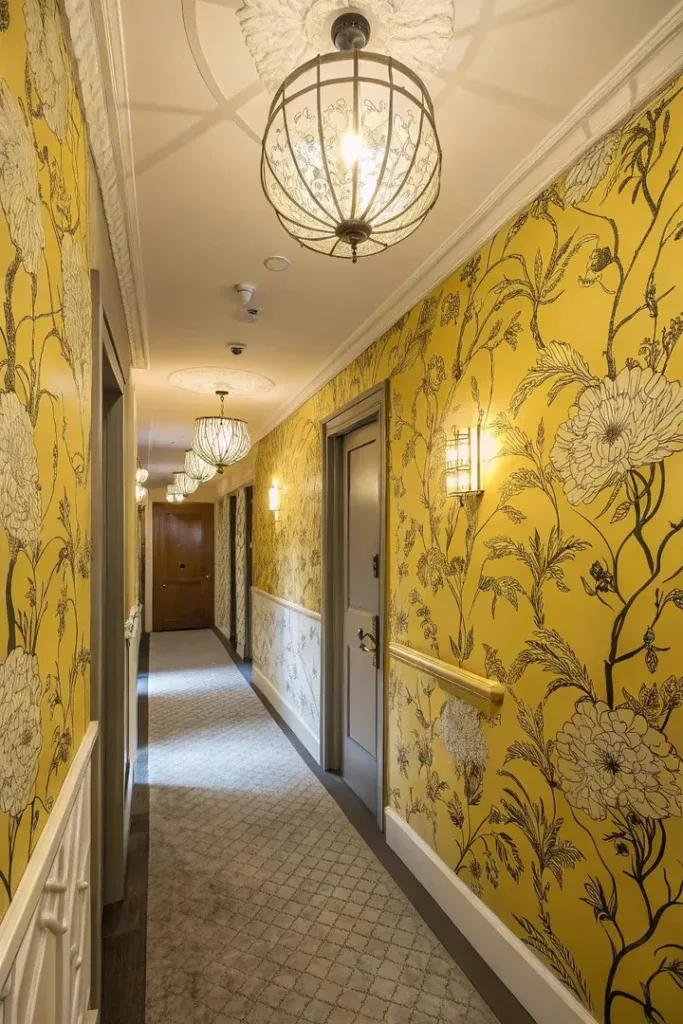
6. Make a Statement with Yellow Wallpaper
Yellow wallpaper can introduce both color and pattern to your hallway. Botanical prints, geometric designs, stripes, and subtle textured patterns can all work well depending on your decorating style.
For a small hallway, consider using wallpaper on one feature wall or a specific section rather than covering every surface. This keeps the design interesting without becoming overwhelming.
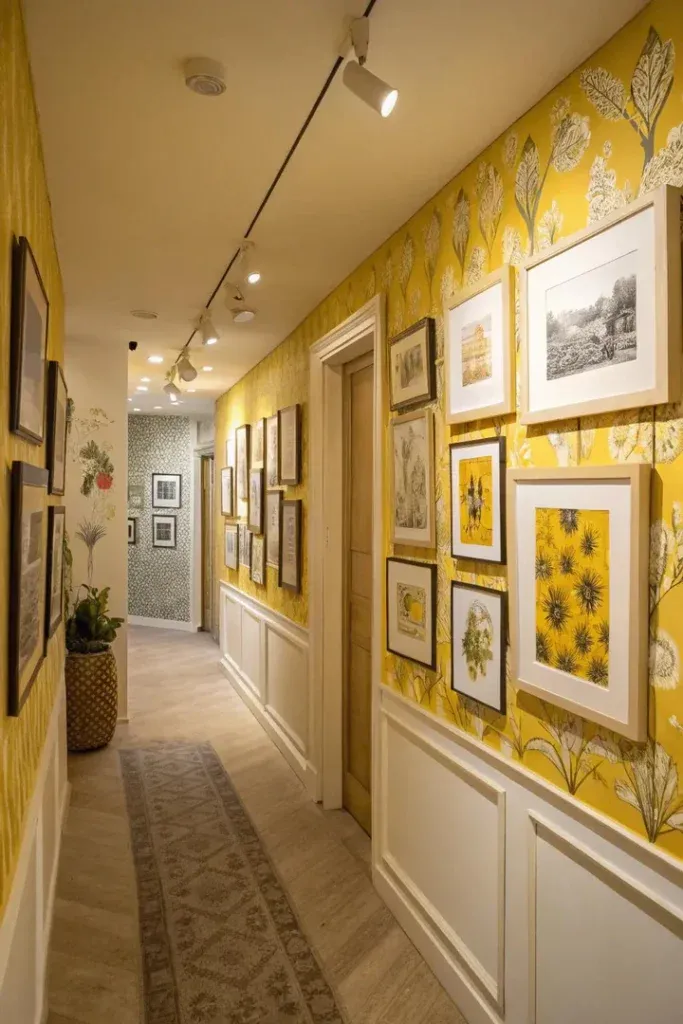
7. Add Yellow Artwork and Frames
Artwork is an easy way to bring yellow into a hallway without committing to permanent changes. Hang yellow-toned paintings, prints, photographs, or illustrations to create a colorful focal point.
You can also use yellow frames around artwork for a more coordinated appearance. A gallery wall with different shades of yellow can add personality while keeping the walls visually connected.
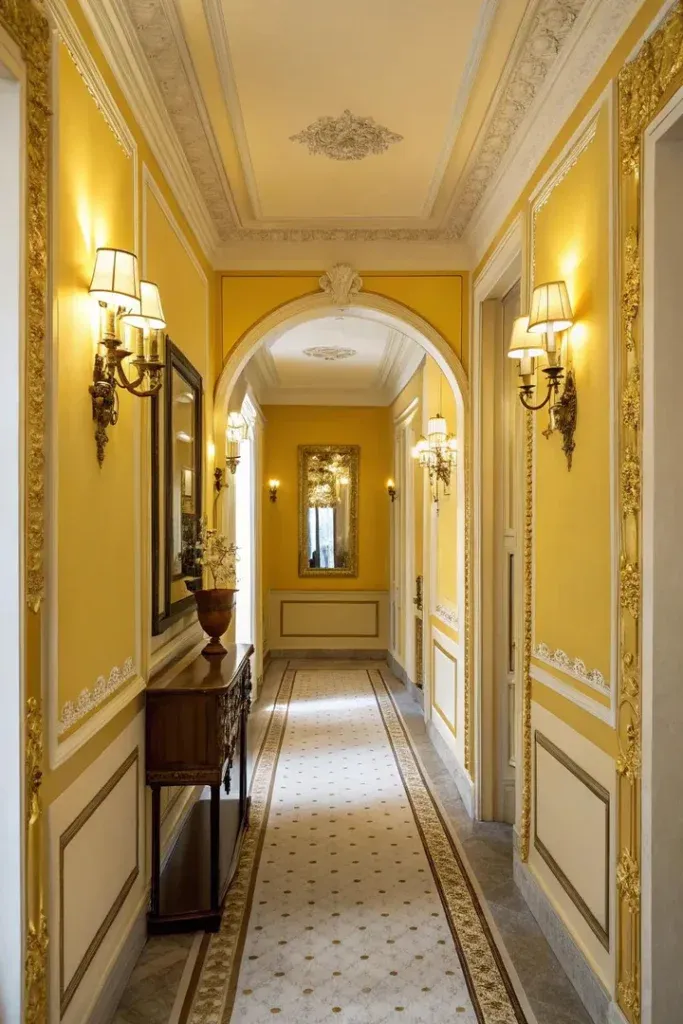
8. Pair Yellow with Metallic Accents
Gold and warm brass can complement yellow beautifully, creating a polished and elegant hallway. Use metallic finishes on lighting, mirrors, door hardware, picture frames, or decorative accessories.
The combination works especially well when the yellow is paired with neutral walls or furnishings. Keep metallic accents limited to a few carefully chosen details for a refined finish.
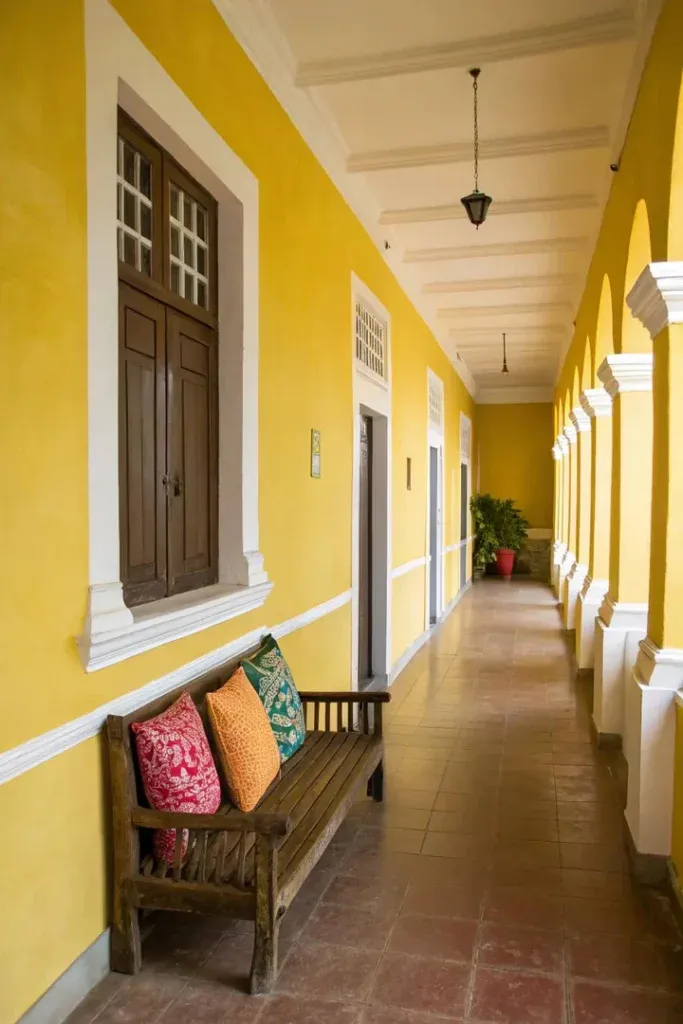
9. Paint the Walls Sunny Yellow
For a bold hallway, use a bright sunny yellow across the walls. This can make the entrance feel energetic and immediately draw attention.
Because bright yellow has a strong visual presence, balance it with white, cream, gray, or natural wood. Simple furniture and restrained accessories can prevent the color from overwhelming the space.
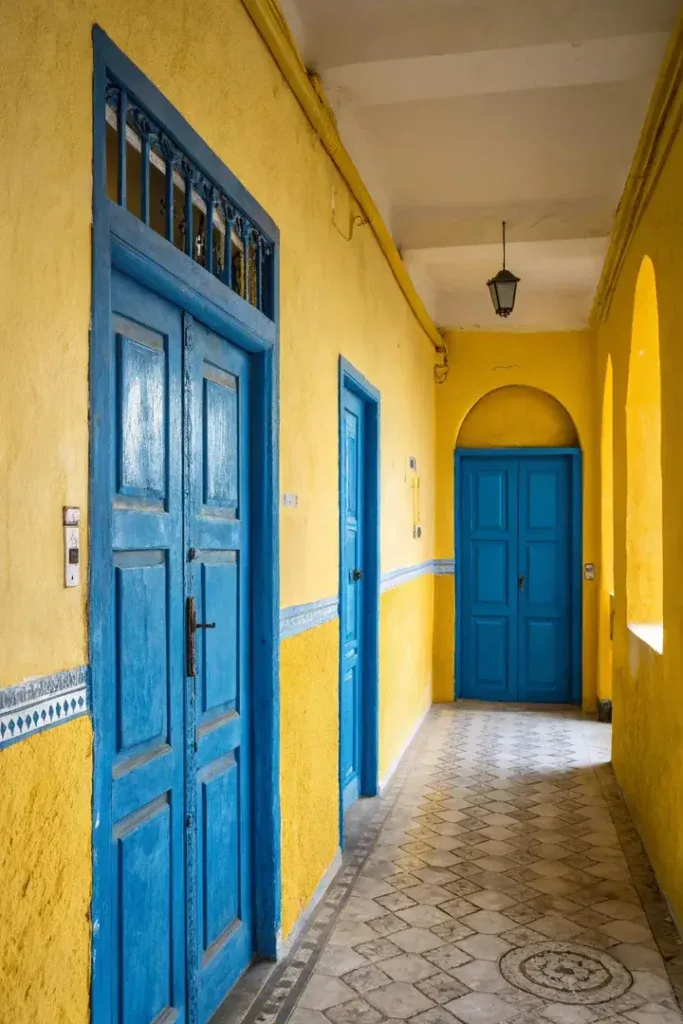
10. Create Contrast with Blue
Yellow and blue form a lively complementary combination. The two colors can add energy to a hallway while creating a clear visual contrast.
Use yellow as the dominant color and introduce blue through artwork, rugs, doors, or accessories. Alternatively, use a softer yellow with muted blue for a calmer and more balanced look.
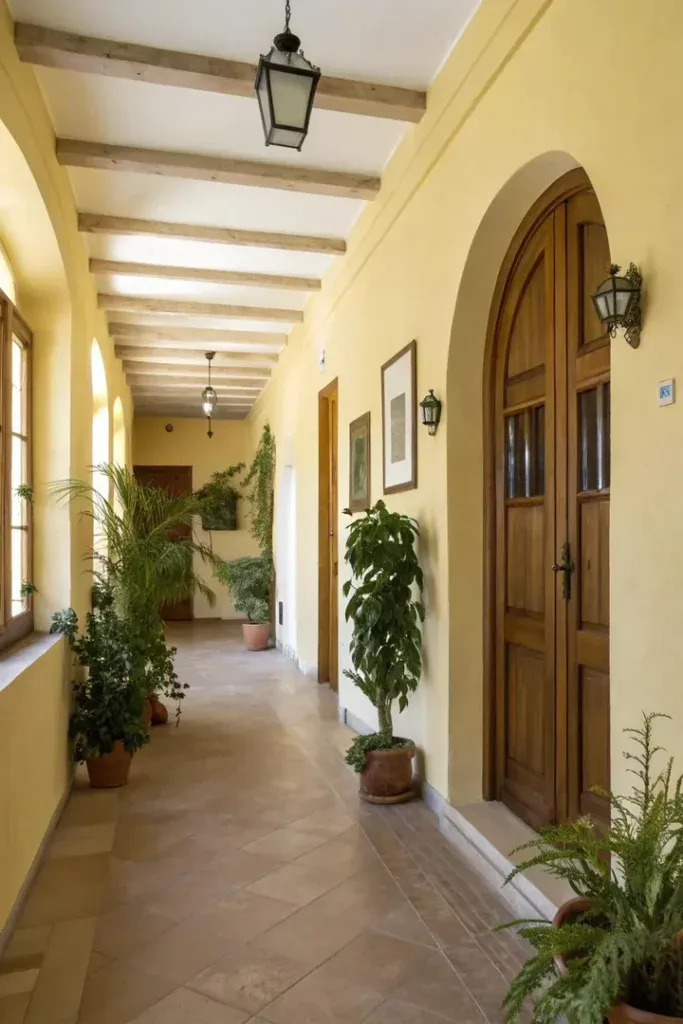
11. Use Natural Yellow Tones
Yellow inspired by natural elements can create a warm and relaxed hallway. Think soft ochre, sandy yellow, golden beige, or muted sunflower tones rather than highly saturated shades.
Pair these colors with wood, woven materials, greenery, and natural textures to create a welcoming atmosphere with an organic feel.
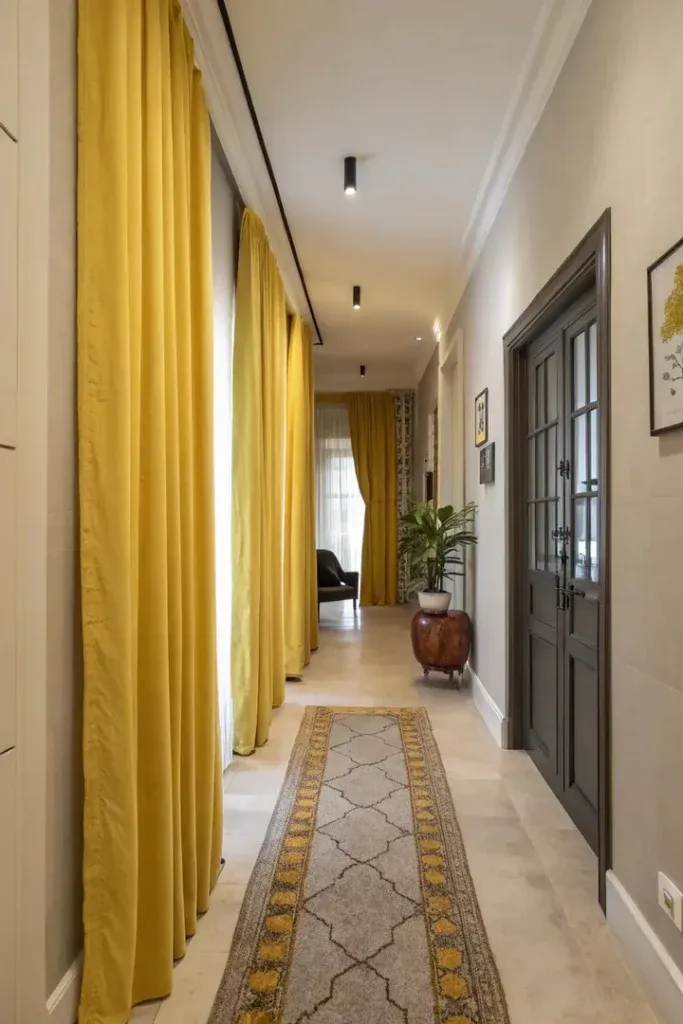
12. Introduce Yellow Through Textiles
Textiles offer an easy way to experiment with yellow. A runner rug, curtains, cushions, or fabric wall accents can introduce color without requiring a permanent change to the walls.
A yellow geometric runner can add a modern touch, while softer mustard or golden textiles work well in traditional interiors. Choose patterns and textures that complement the rest of your hallway.
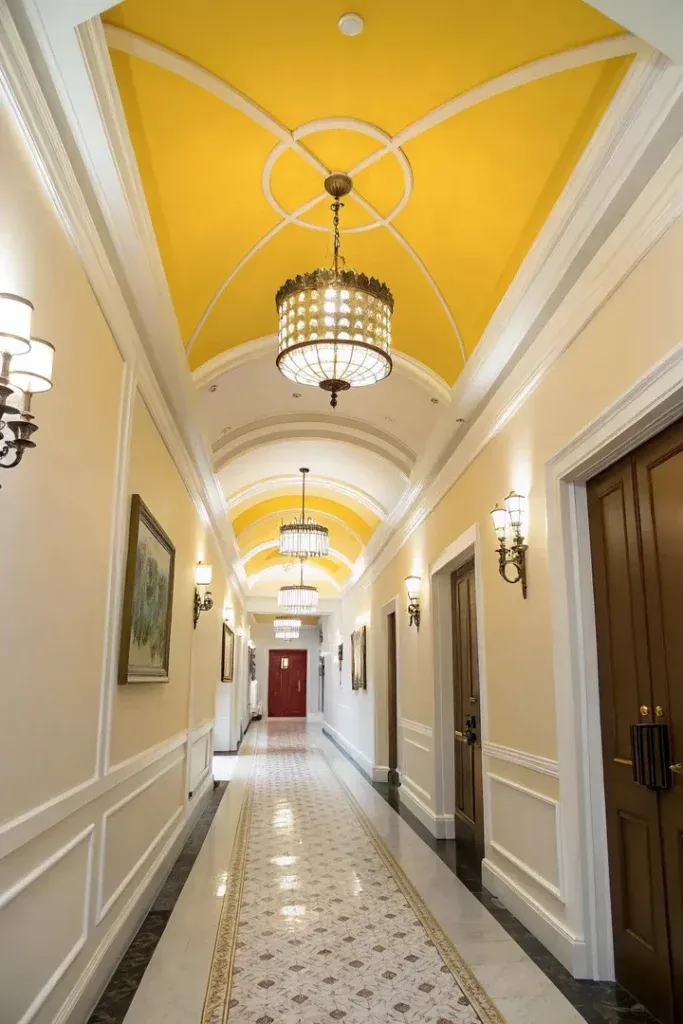
13. Paint the Ceiling Yellow
A yellow ceiling can create an unexpected focal point and draw attention upward. This is an effective way to use a bold color without covering the entire hallway in it.
Pair the yellow ceiling with neutral walls and a simple light fixture. A softer yellow is often easier to live with overhead, while a brighter shade can create a more dramatic effect.
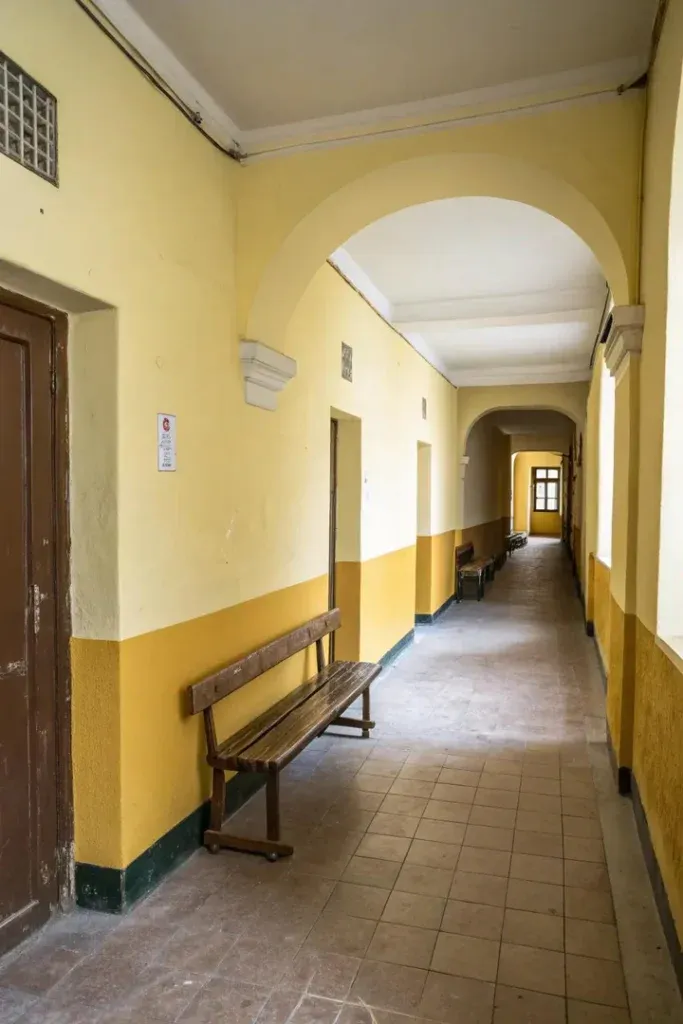
14. Use Two-Tone Yellow Walls
Using two shades of yellow can give a hallway more depth and definition. Try a lighter yellow on the upper portion of the wall with a deeper shade below, or use two complementary tones to create subtle contrast.
This technique can work particularly well with paneling or molding. Keep the transition clean and use simple furnishings to let the color combination stand out.
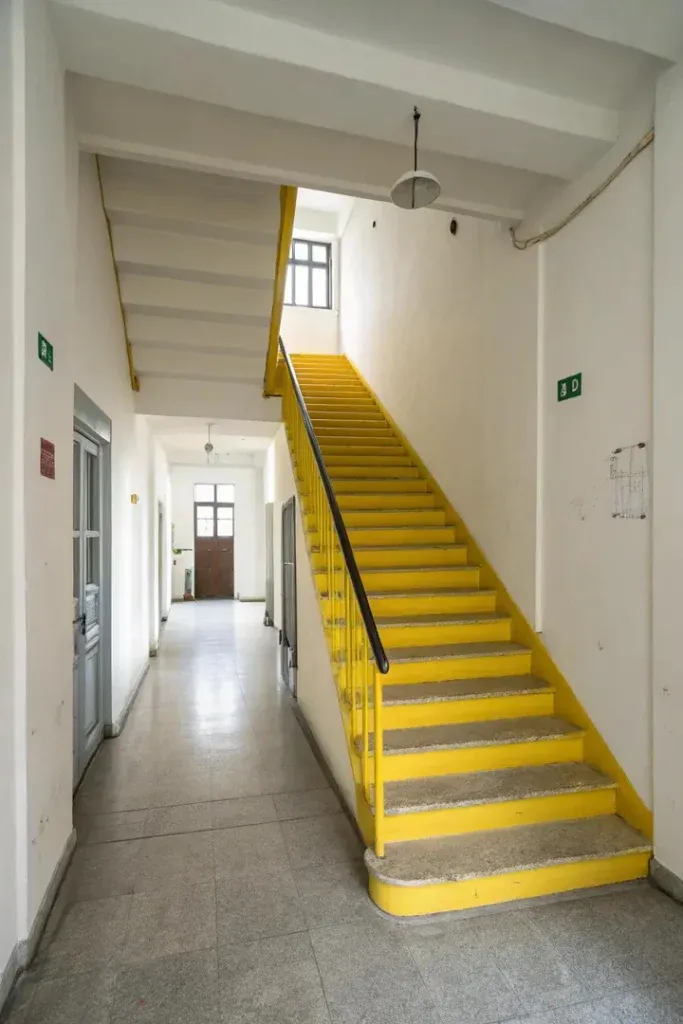
15. Highlight the Staircase in Yellow
If your hallway includes a staircase, use yellow to turn it into a standout architectural feature. Painting the stair risers, railing details, or surrounding wall can introduce color without requiring the entire staircase to be yellow.
For safety, make sure any painted walking surfaces remain slip-resistant and durable enough for regular use.
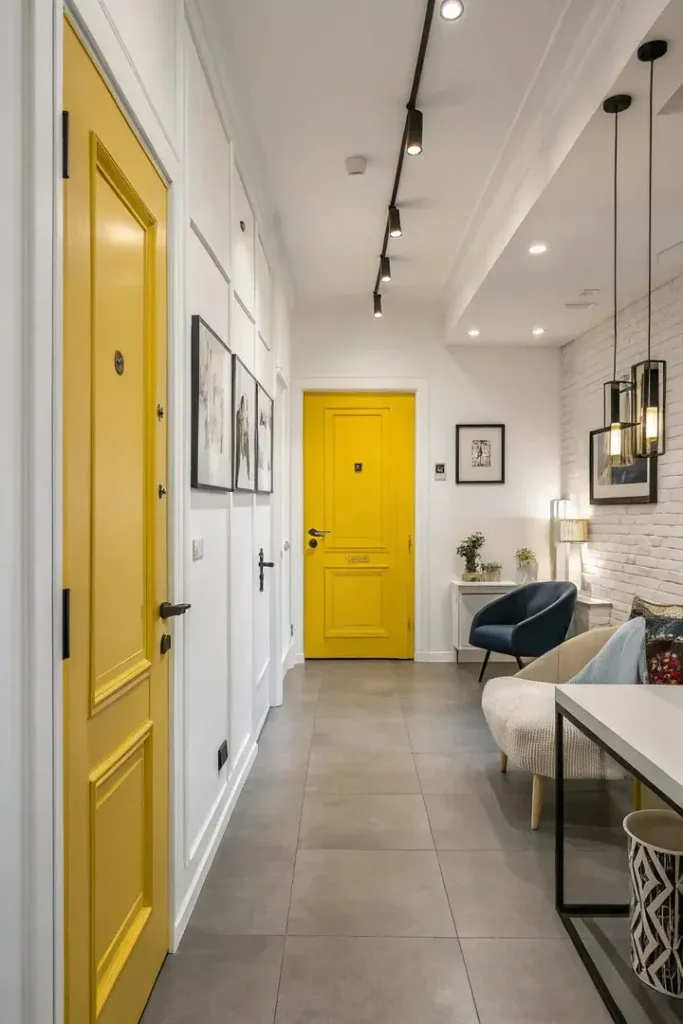
16. Use Yellow Doors as Accents
A yellow door can create a strong focal point in an otherwise neutral hallway. Paint an interior door in a cheerful yellow to add personality while keeping the surrounding walls understated.
This approach is especially useful if you want to experiment with yellow without making a major change to the entire hallway.
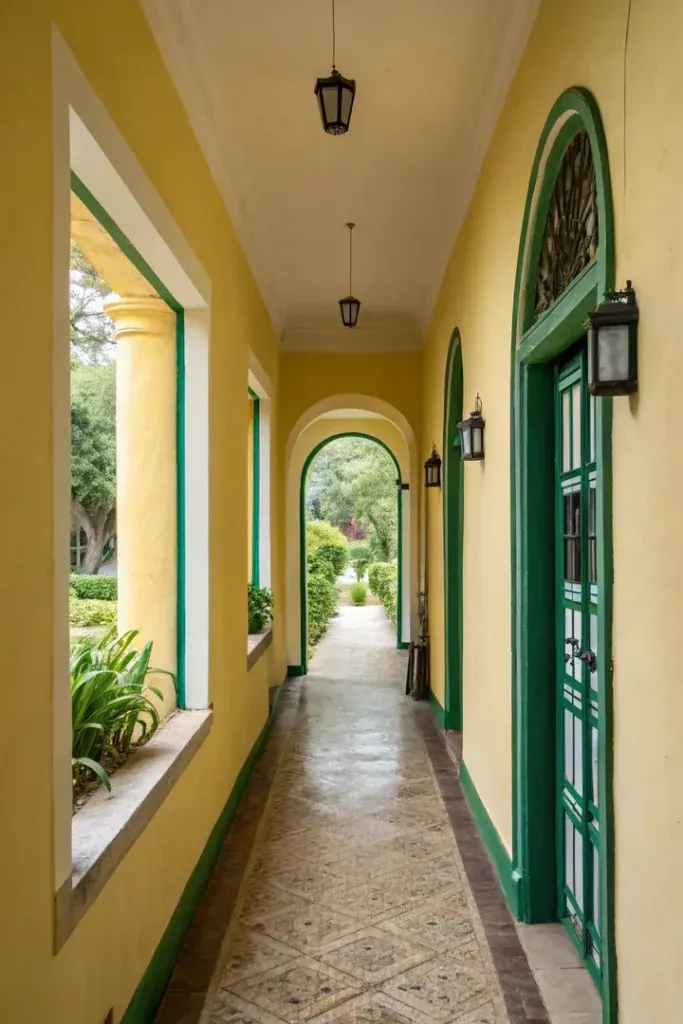
17. Combine Yellow and Green
Yellow and green create a fresh, nature-inspired color combination. The pairing works particularly well in hallways connected to gardens, patios, or other outdoor spaces.
Use yellow on the walls or doors and introduce green through plants, artwork, rugs, or accessories. Soft olive and sage greens can create a more subdued look, while brighter green provides greater contrast.
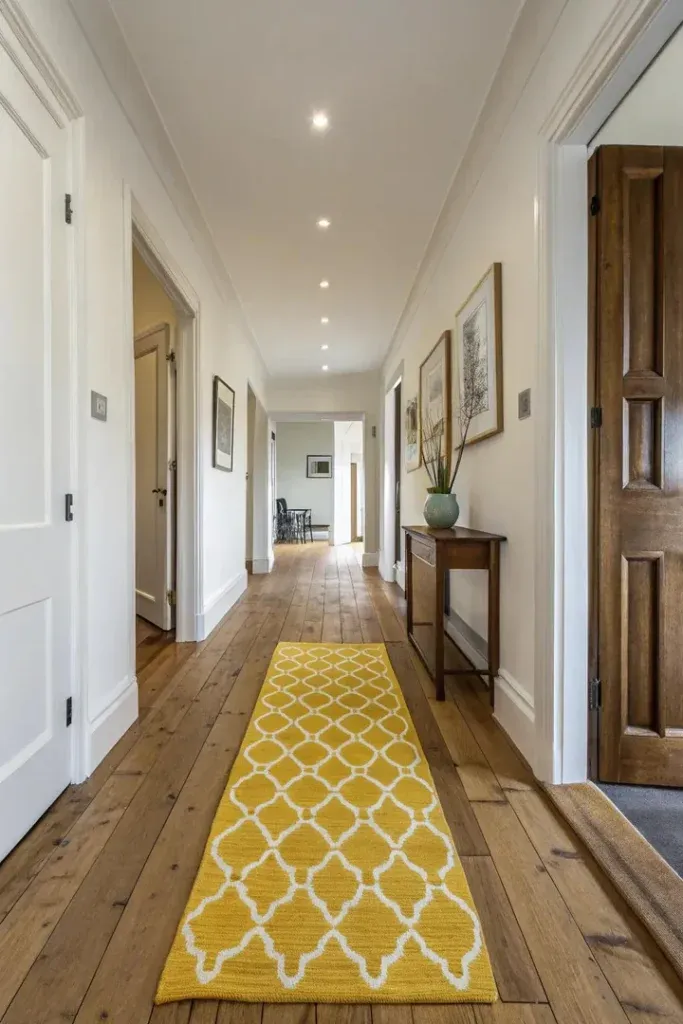
18. Add Yellow Floor Accents
Yellow doesn’t have to stay on the walls. Use a yellow runner, patterned tiles, painted flooring details, or other floor accents to bring the color into the lower part of the hallway.
A patterned runner can also help define a long or narrow corridor. Balance the flooring with simpler walls so the hallway does not feel visually crowded.
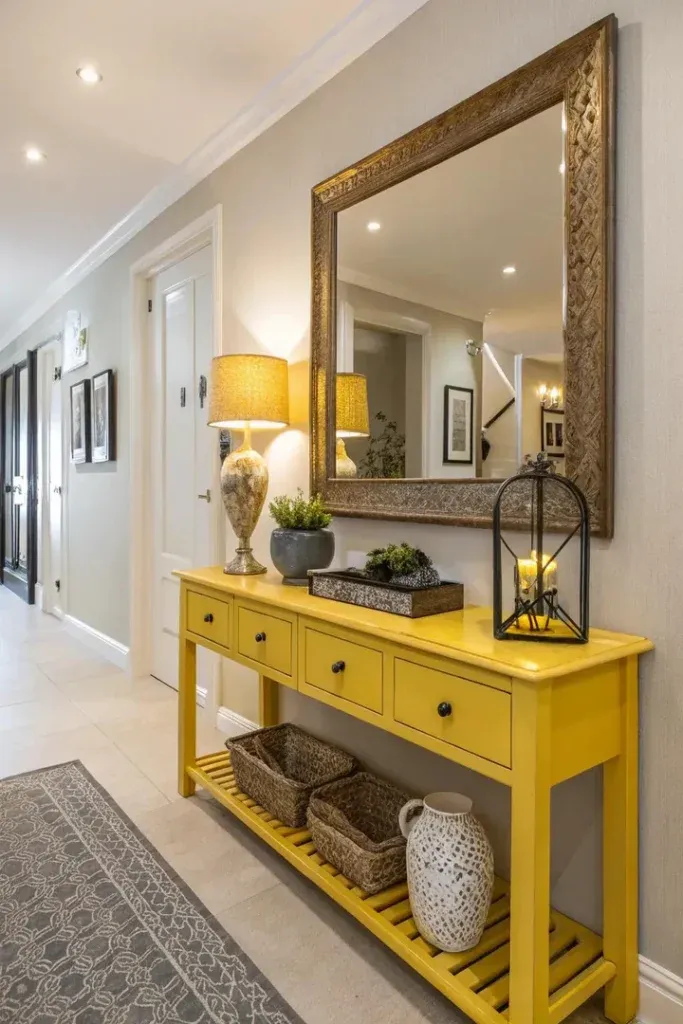
19. Accent the Hallway with Yellow Furniture
For a less permanent approach, introduce yellow through furniture. A yellow console table, bench, cabinet, or small storage piece can add a strong burst of color while remaining functional.
This option works especially well when the walls are neutral. It allows you to change the hallway’s color scheme more easily by replacing or repainting individual furniture pieces.
Conclusion
Yellow can transform a hallway from a simple passageway into a warm and memorable part of the home. Whether you choose bold yellow walls, subtle mustard tones, colorful artwork, a painted door, or small decorative accents, there are plenty of ways to use the color at different levels of intensity.
Consider the size of your hallway, the amount of natural light, and the colors already used throughout your home before choosing a shade. Lighter yellows can help create an airy feeling, while mustard and deeper golden tones can add warmth and depth.
The key is to find the right balance. Use yellow as a dominant feature or introduce it through smaller details, depending on the look you want to achieve. With thoughtful color combinations and well-placed accents, a yellow hallway can feel bright, welcoming, and connected to the overall style of your home.