
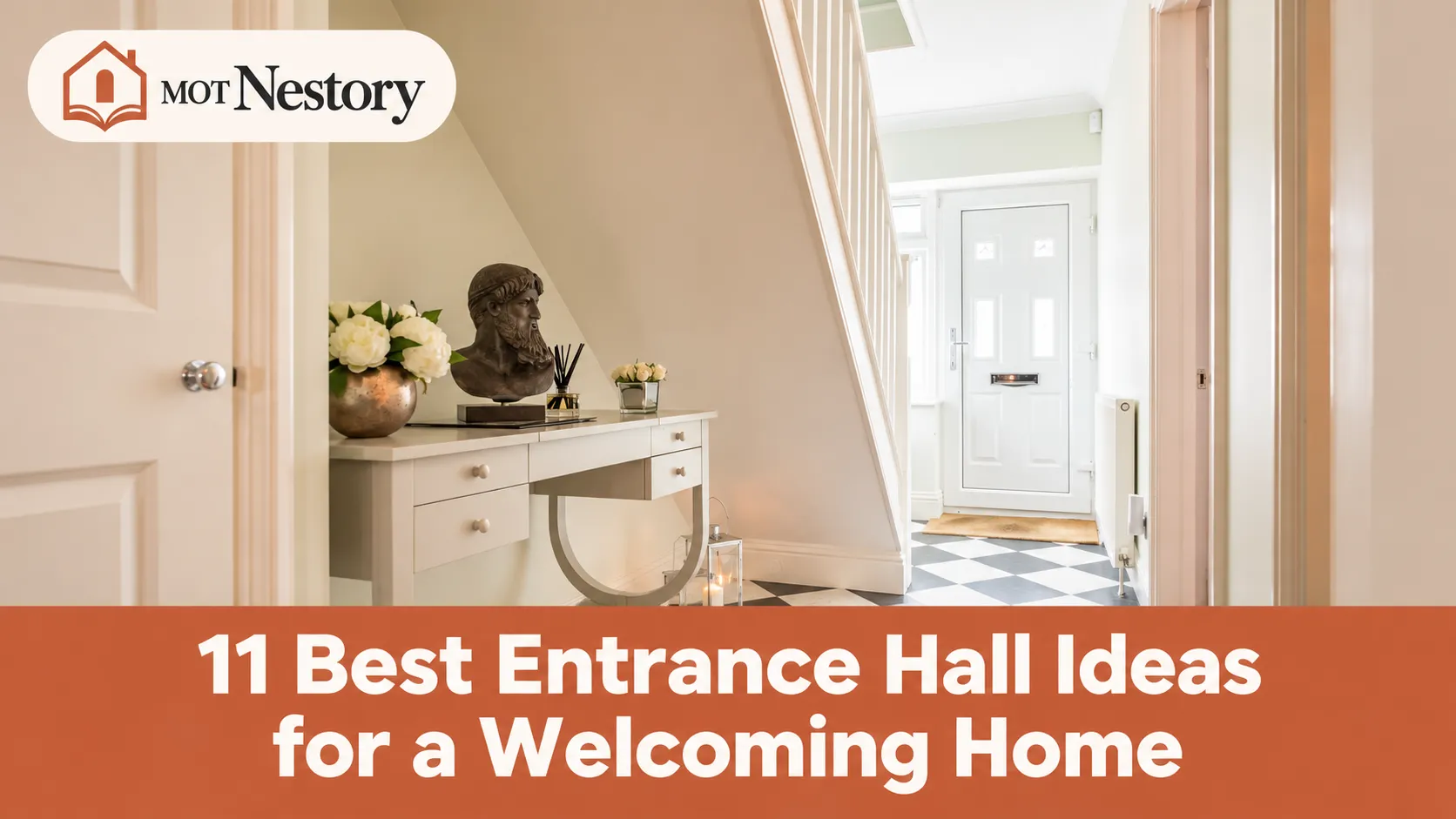
Your entrance hall is the first part of your home that guests see, so it deserves more attention than it often gets. A well-designed entryway can feel welcoming, organized, and stylish while still handling the everyday demands of a busy household.
The key is to combine practical furniture and storage with decorative details that reflect your personal style. From slim console tables and statement mirrors to gallery walls, greenery, and thoughtful lighting, even a narrow entrance can become an attractive and functional part of your home.
Smart Strategies for Designing Your Entrance Hall
Before choosing furniture or accessories, think about how your entrance hall is actually used. Because this is a high-traffic area, durable materials and easy-to-maintain surfaces can make a noticeable difference.
Color is another important consideration. Light neutrals can help a narrow hallway feel more open, while deeper shades can create a richer and more sophisticated atmosphere.
Lighting also influences how the space feels. Combining overhead lighting with warm wall or accent lights can create a more inviting atmosphere throughout the day.
Finally, keep organization in mind. Dedicated places for keys, mail, coats, shoes, and bags can prevent everyday clutter from spreading through the rest of your home.
1. Add a Narrow Console Table
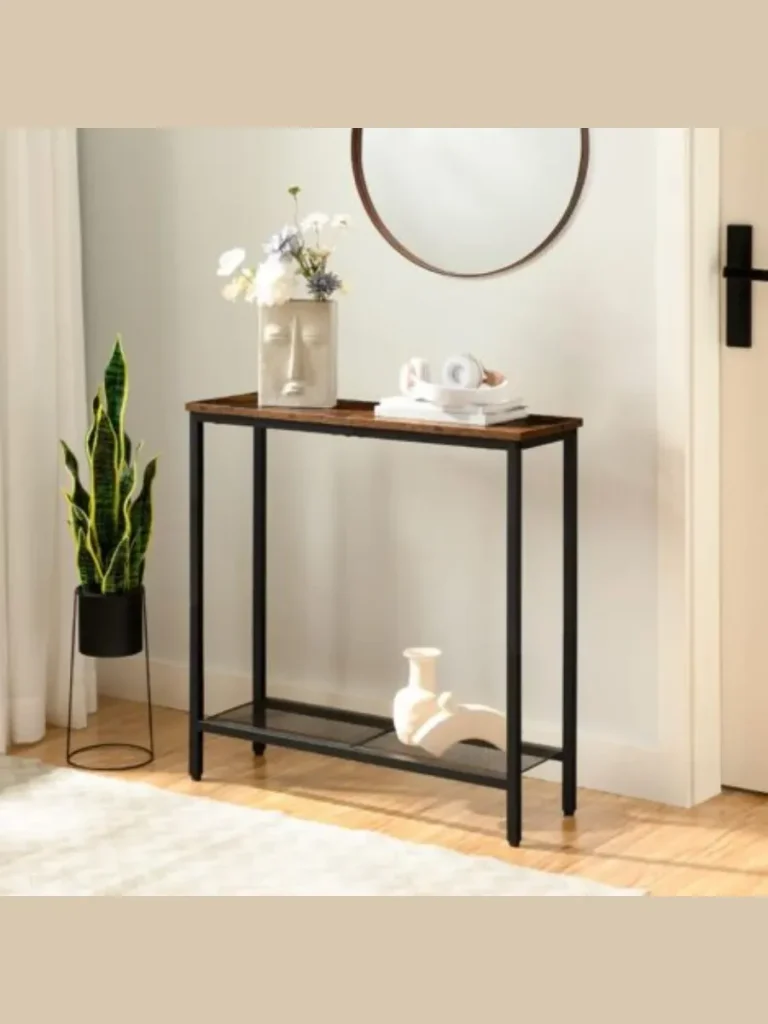
A slim console table is a practical choice for an entrance hall where floor space is limited. It gives you a surface for decorative accessories without taking up too much room or interfering with the walkway.
Look for a design with open legs or a lightweight frame to maintain an airy appearance. A small lamp, decorative tray, books, candle, or plant can add personality without overwhelming the space.
Wooden tops work well with traditional interiors, while metal frames can give the hallway a more contemporary appearance. Choose materials that can handle everyday wear, particularly if the table sits close to the front door.
2. Use a Large Statement Mirror
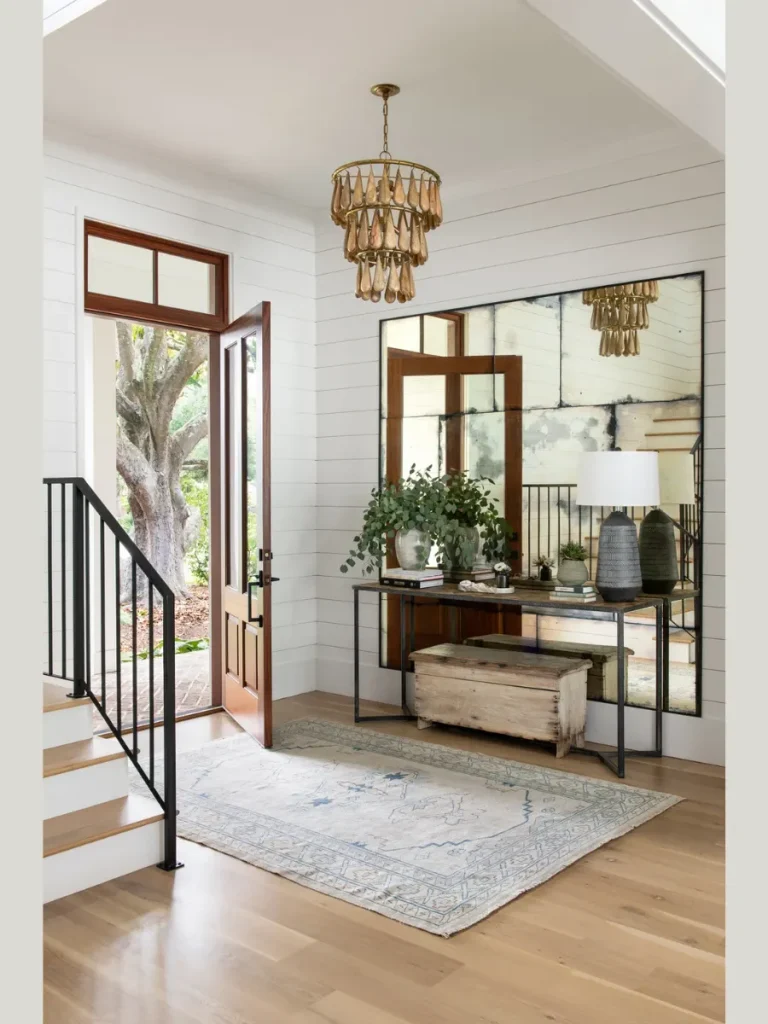
A large mirror can make a small entrance hall appear brighter and more spacious. Positioning it opposite a window or another source of natural light can help reflect light throughout the area.
The frame can also become an important decorative feature. Round mirrors can soften the straight lines commonly found in hallways, while square or rectangular designs create a more traditional appearance.
A mirror is useful for a quick appearance check before leaving home, but it can also highlight other features in the hallway, such as flooring, lighting, or architectural details.
For heavier mirrors, make sure they are securely mounted using appropriate wall anchors.
3. Install a Storage Bench
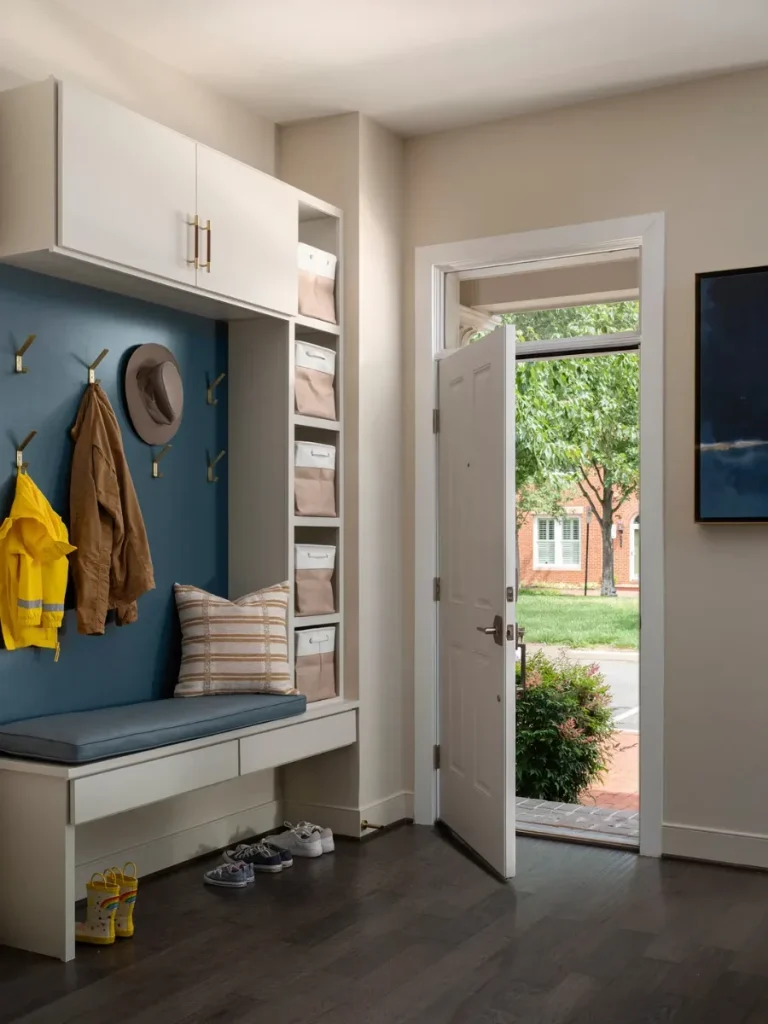
A storage bench combines seating and organization in one piece of furniture. It gives you a convenient place to sit while putting on or removing shoes while providing hidden storage for footwear and other everyday items.
Built-in cubbies or drawers can make it easier to organize different types of belongings. If children use the entrance regularly, lower compartments can give them an accessible place to store their shoes and outdoor items.
Choose durable upholstery that can withstand frequent use. Canvas and leather are practical options, while cushions and throw pillows can make the bench feel more comfortable and decorative.
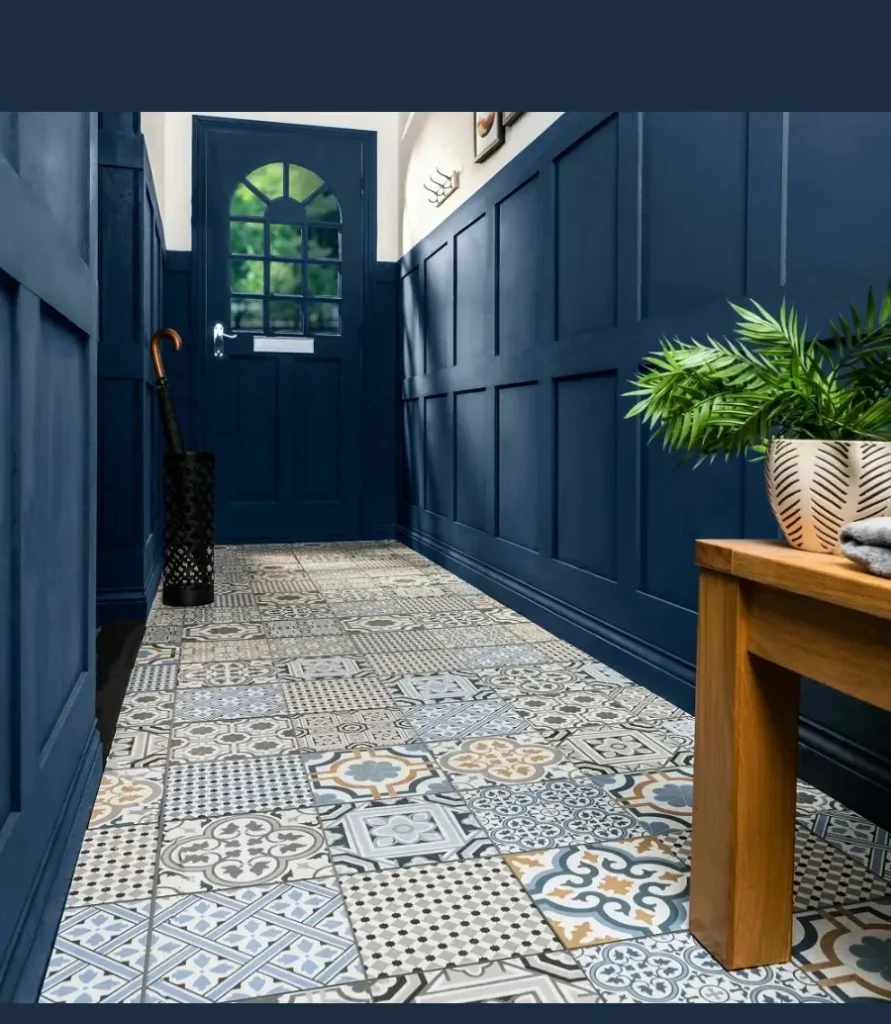
4. Choose Bold Patterned Floor Tiles
The entrance hall has to deal with muddy shoes, wet umbrellas, dirt, and constant foot traffic, making durable flooring especially important.
Patterned ceramic or porcelain tiles can provide both practicality and personality. Geometric designs can turn the floor into a decorative feature while creating a surface that is relatively easy to clean.
A darker grout can also be useful because it is less likely to show everyday dirt. If you are renting or don’t want to make permanent changes, patterned vinyl flooring or removable floor treatments can provide a similar visual effect.
5. Create a Personal Gallery Wall
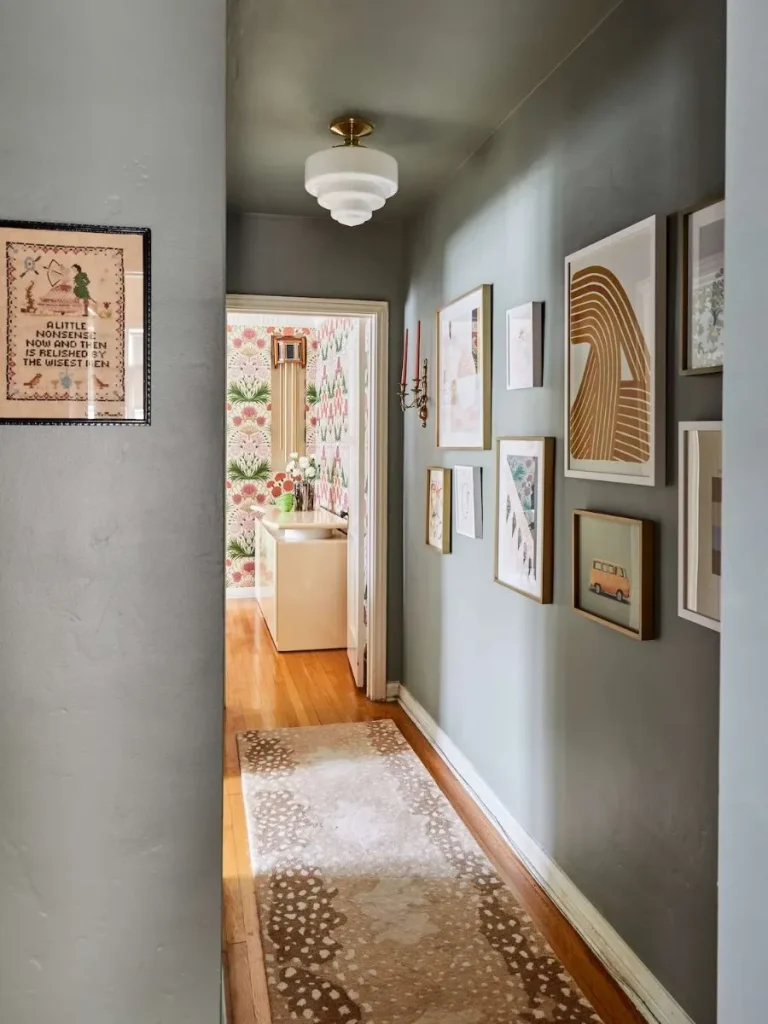
A gallery wall is an easy way to give your entrance hall a more personal feel. Family photographs, artwork, prints, and other meaningful pieces can make the space feel connected to the rest of your home.
For a coordinated appearance, use frames in the same finish or color. If you prefer a more relaxed look, combine different frame styles while maintaining consistent spacing.
Black-and-white photographs are particularly versatile and can work with a wide range of interior styles.
Before hanging everything, arrange the frames on the floor first. This allows you to experiment with the layout and spacing without creating unnecessary holes in the wall.
6. Add Decorative Wall Hooks
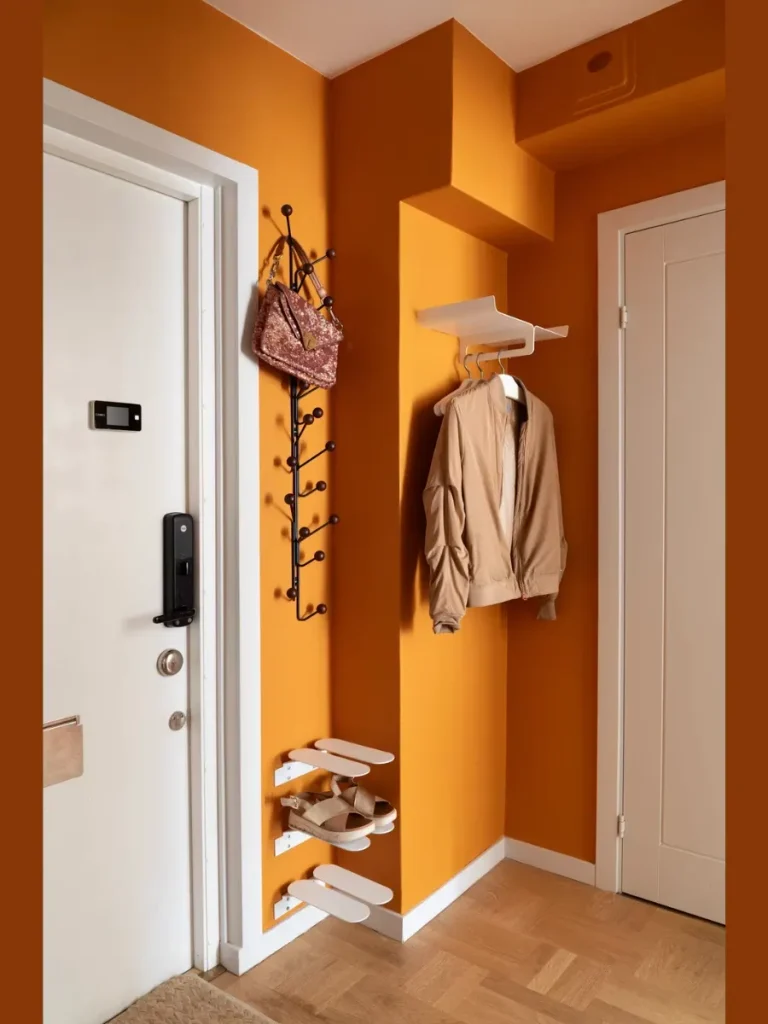
Wall hooks are one of the simplest ways to add storage without sacrificing valuable floor space. They provide convenient places for coats, bags, hats, umbrellas, and other items that might otherwise end up on the floor.
For a more interesting arrangement, install hooks at different heights. This can also make the storage more accessible for children.
Materials such as brass and matte black metal can provide a durable and timeless finish. If you need additional storage, add a narrow shelf above the hooks for hats, baskets, or decorative accessories.
The result is a practical storage zone that still looks intentional and stylish.
7. Bring in a Natural Jute Runner
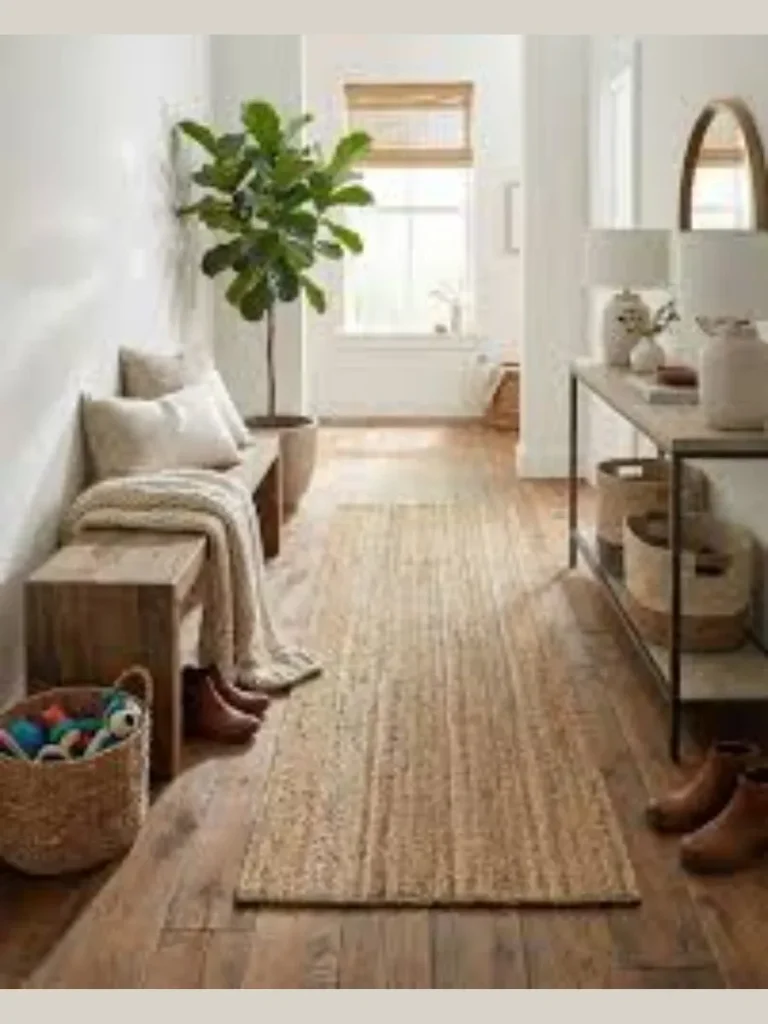
A long runner can protect your hallway flooring while adding warmth and texture. Natural materials such as jute and seagrass bring an organic quality to the space and work especially well with neutral interiors.
Their earthy tones can complement both wood and tile floors without competing with other decorative elements.
Always use a suitable non-slip rug pad underneath the runner to prevent it from shifting or bunching as people walk through the hallway.
Jute runners are also relatively easy to maintain. Regular vacuuming and occasional shaking can help remove everyday dirt and debris.
8. Install Statement Pendant Lighting
A statement pendant can become a focal point in an entrance hall while drawing attention upward. This is particularly useful in spaces where you want to emphasize ceiling height.
Choose a fixture that suits the proportions of the hallway. Glass lanterns can complement traditional interiors, while simple exposed-bulb designs may work better in industrial or contemporary spaces.
A dimmer switch gives you additional flexibility, allowing you to create brighter lighting during the day and softer illumination in the evening.
When installing a pendant, make sure it is positioned high enough to allow comfortable movement underneath it.
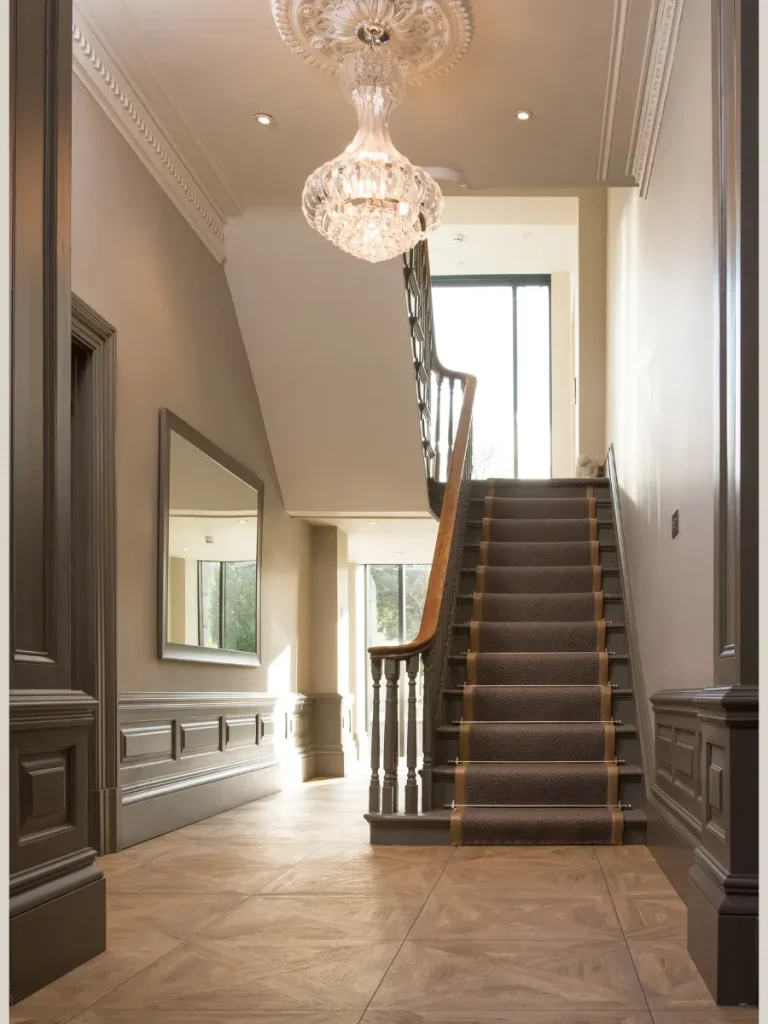
9. Create an Accent Wall With Wallpaper
Wallpaper can transform an otherwise plain entrance hall without requiring every wall to be redecorated. A bold pattern on one wall can introduce color, texture, and visual interest.
Peel-and-stick wallpaper is a useful option if you want to experiment with a pattern before making a permanent commitment. Floral, geometric, and other distinctive prints can give a hallway more character.
For an architectural look, consider framing the wallpapered section with decorative molding. This can make the wall resemble a custom-designed feature rather than simply a decorated surface.
Choose at least one color that connects with the rooms beyond the hallway. This helps create a smoother transition between spaces.
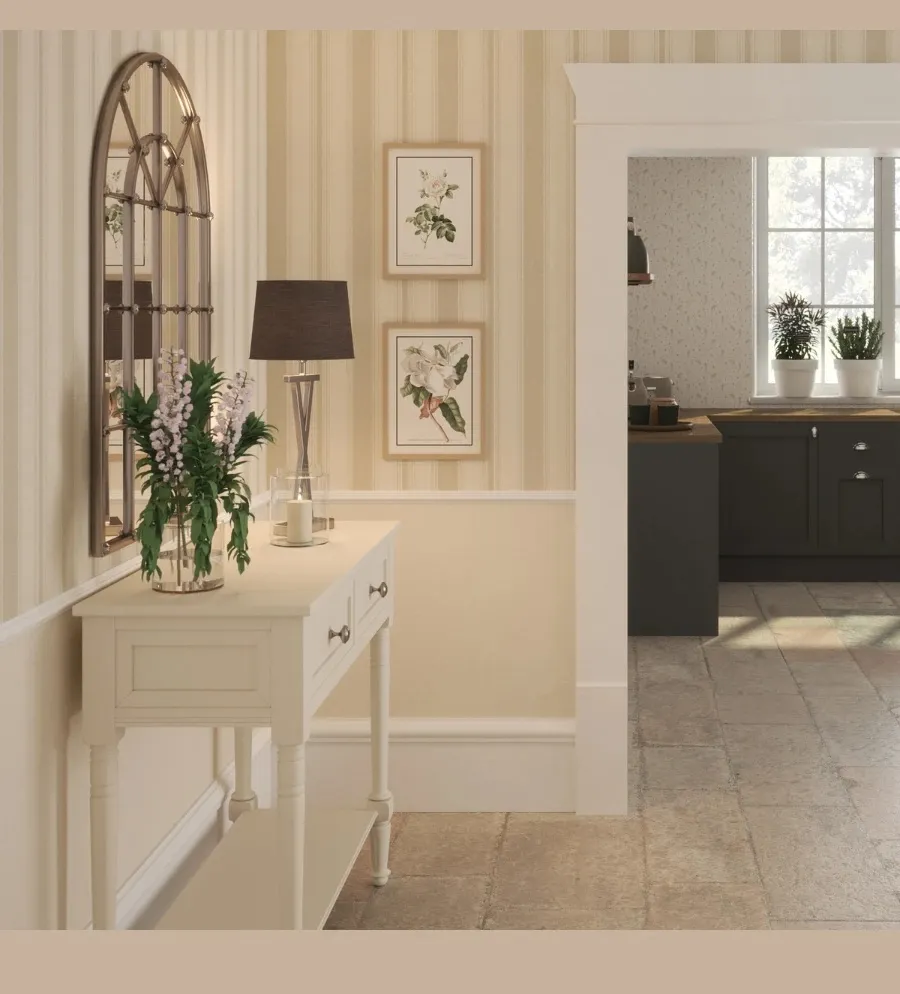
10. Add Large Potted Plants
Plants can bring natural color and texture into an entrance hall. A tall snake plant, fiddle-leaf fig, or another suitable indoor plant can fill an empty corner and make the space feel more lively.
If your entrance receives little natural light, choose varieties that can tolerate lower-light conditions. Snake plants and ZZ plants are examples of options that can work well in darker areas.
The planter itself can also contribute to the design. Ceramic, terracotta, or other decorative pots can introduce another layer of color and texture.
If maintaining live plants is difficult, realistic artificial plants can provide a similar decorative effect with minimal maintenance.
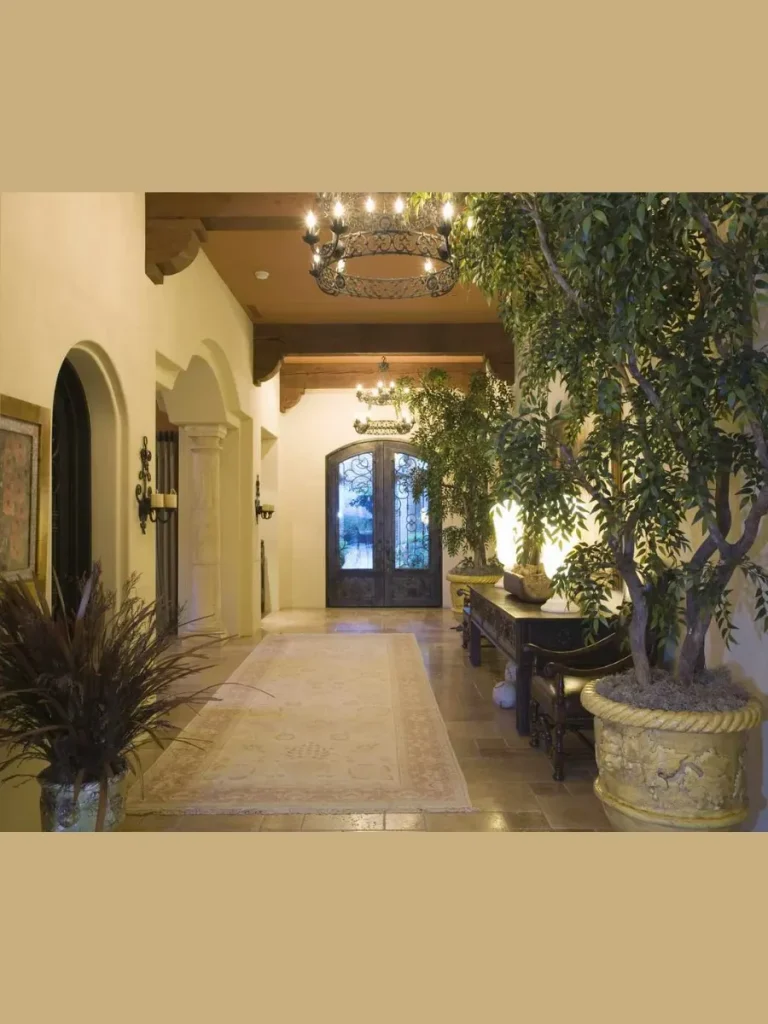
11. Install Floating Shelves
Floating shelves are useful when you want additional display space without taking up valuable floor area. They can hold framed photographs, small plants, sculptures, candles, or other decorative objects.
Installing several shelves vertically can make good use of a narrow section of wall between doors or corners.
For a cohesive appearance, choose shelves that complement existing materials in the hallway, such as the flooring or console table.
Keep the styling relatively simple. Combining objects of different heights and textures can create visual interest without making the shelves look overcrowded.
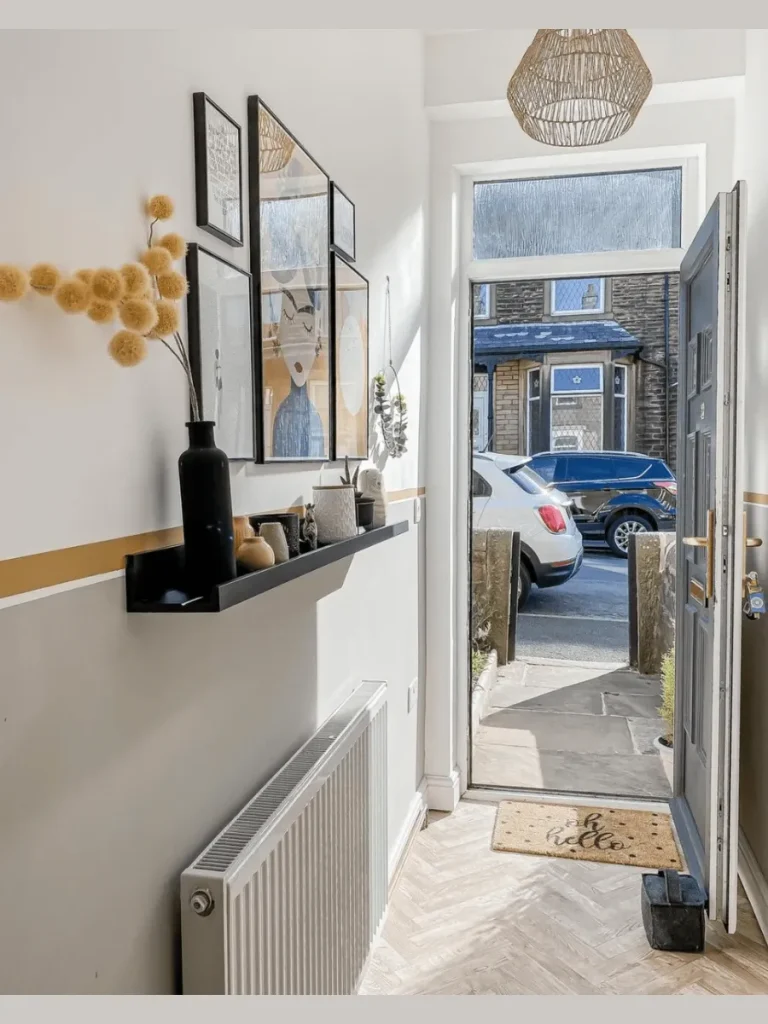
How to Choose the Right Entrance Hall Elements
The best entrance hall design should work with your household’s daily routine. A family with children may benefit from additional hooks, accessible storage, and a bench, while a smaller household may prefer a minimalist console and a few carefully selected decorative pieces.
Traffic flow is equally important. Leave enough open space for people to enter and leave comfortably, especially when several people are using the entrance at once.
Before committing to a new paint color, look at samples under different lighting conditions. A shade that appears warm in a store can look considerably different under the lighting in your home.
Don’t overlook small details, either. Hardware such as door handles, hinges, and hooks can influence the overall appearance of the hallway and provide an easy way to refresh an older space.
Final Thoughts
A welcoming entrance hall doesn’t require a large budget or a complete renovation. Small changes can make a noticeable difference, particularly when they combine style with everyday functionality.
A narrow console can provide useful surface space, a mirror can reflect light, and a storage bench can help control clutter. Meanwhile, rugs, artwork, wallpaper, plants, and statement lighting can give the hallway a more personal character.
Start with the area that causes the biggest problem in your current entrance hall, whether that’s clutter, poor lighting, limited storage, or a lack of personality. Then add decorative elements that make the space feel like a natural introduction to the rest of your home.
With the right balance of organization and design, your entrance hall can become more than just a passageway. It can be a welcoming first impression that feels practical, comfortable, and distinctly yours.