
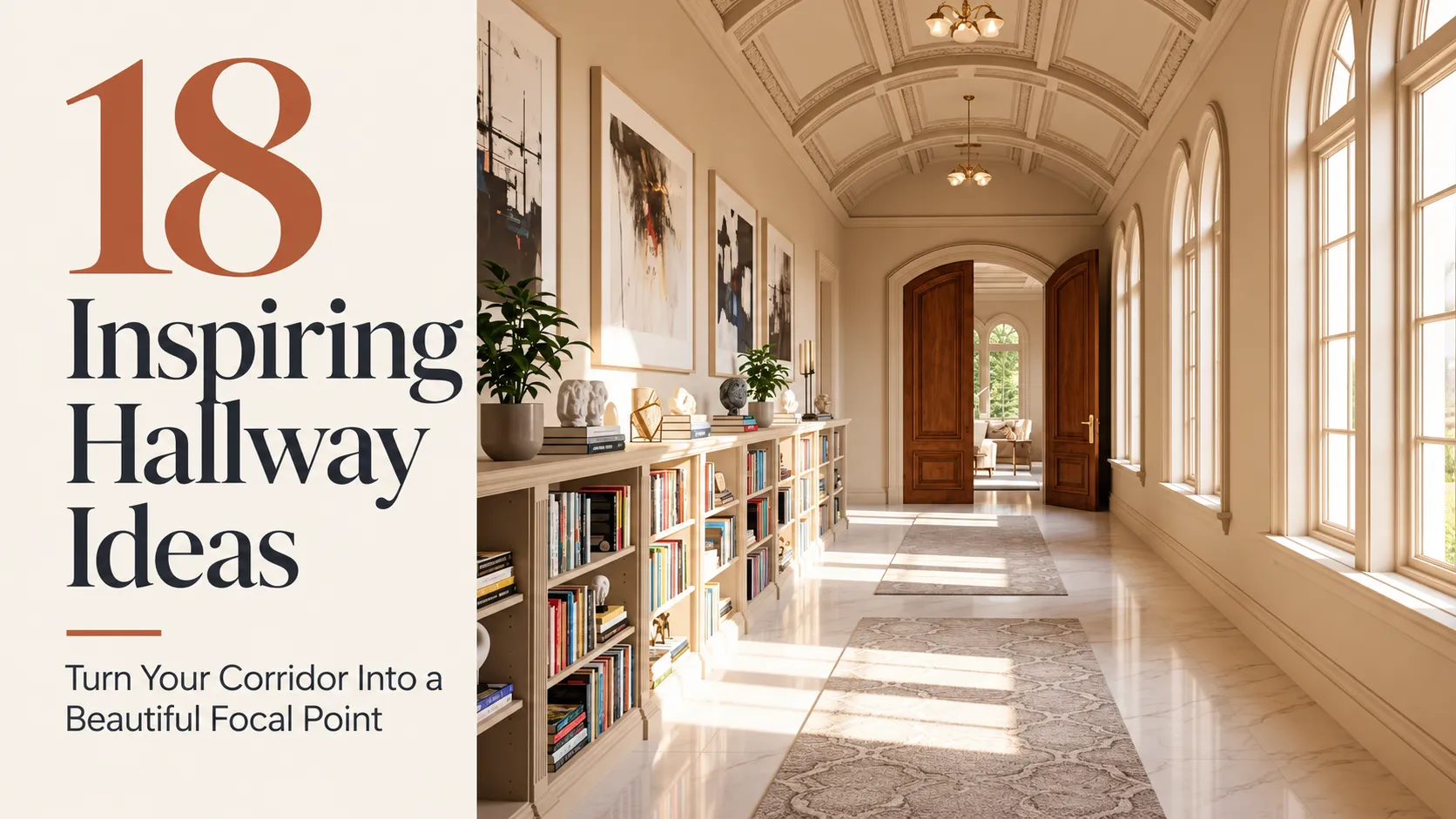
Hallways are often treated as simple passageways, but they can play a much bigger role in your home’s design. Because they connect different rooms, hallways are an opportunity to introduce color, texture, artwork, lighting, and decorative details that make the entire home feel more cohesive.
Even a narrow or overlooked corridor can become an attractive part of your interior with a few thoughtful changes. From adding a stylish runner and gallery wall to making better use of vertical space and highlighting architectural details, there are plenty of ways to give your hallway more personality.
Here are 18 hallway ideas to help transform an ordinary corridor into a welcoming and memorable part of your home.
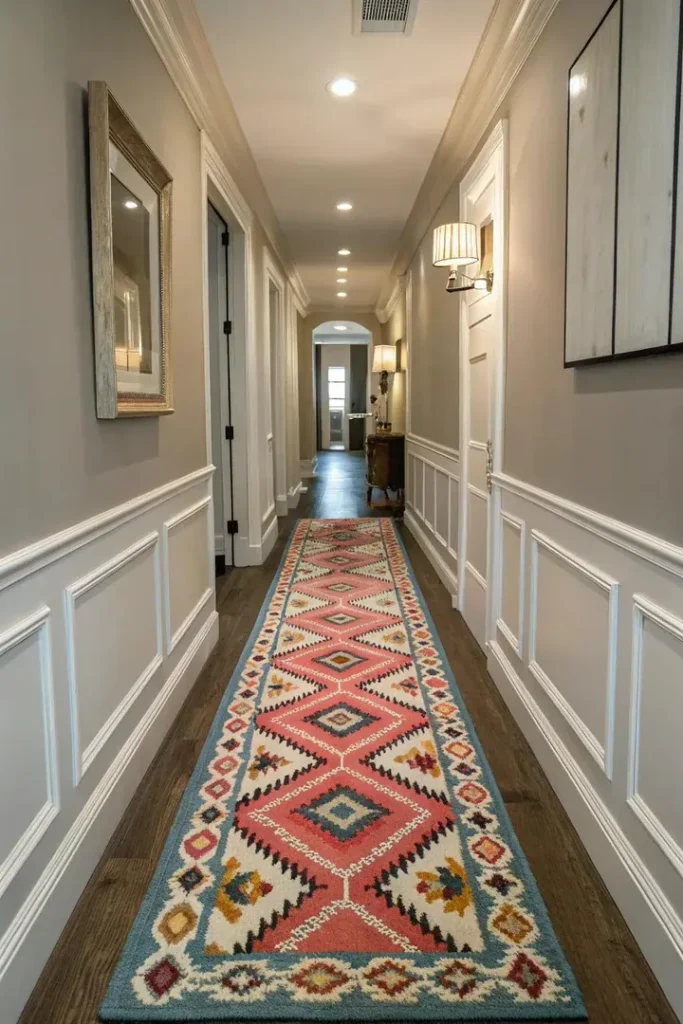
1. Set Up a Personalized Runner
A hallway runner can instantly make a corridor feel warmer, more comfortable, and more finished. Choose a pattern or color that complements the design of the surrounding rooms.
For a traditional interior, consider classic patterns and muted colors. Modern homes may benefit from simple geometric designs, while eclectic spaces can handle something more expressive.
Besides adding visual interest, a runner also provides a softer surface underfoot and creates a welcoming transition between rooms.
2. Add Sculptural Elements
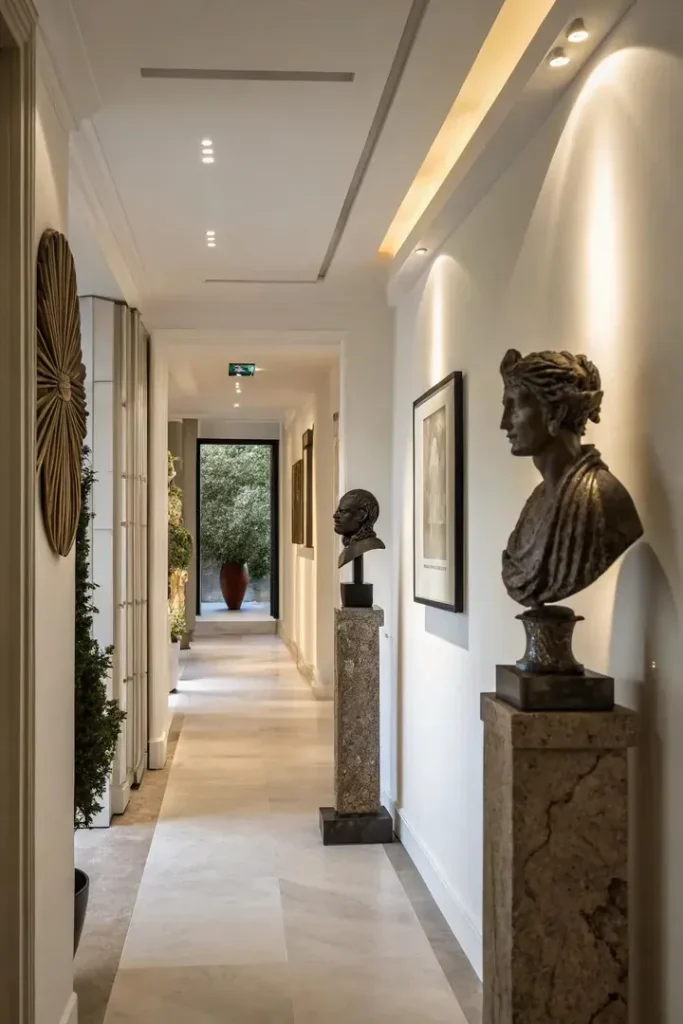
Sculptural decor can turn an otherwise plain hallway into an eye-catching display. A carefully selected sculpture provides a focal point without requiring a lot of furniture or decoration.
For a contemporary hallway, consider sleek and minimalist pieces. More traditional spaces may work well with decorative objects that have distinctive shapes or craftsmanship.
The key is to choose pieces that complement the rest of the interior rather than making the hallway feel crowded.
3. Bring in Vintage Finds
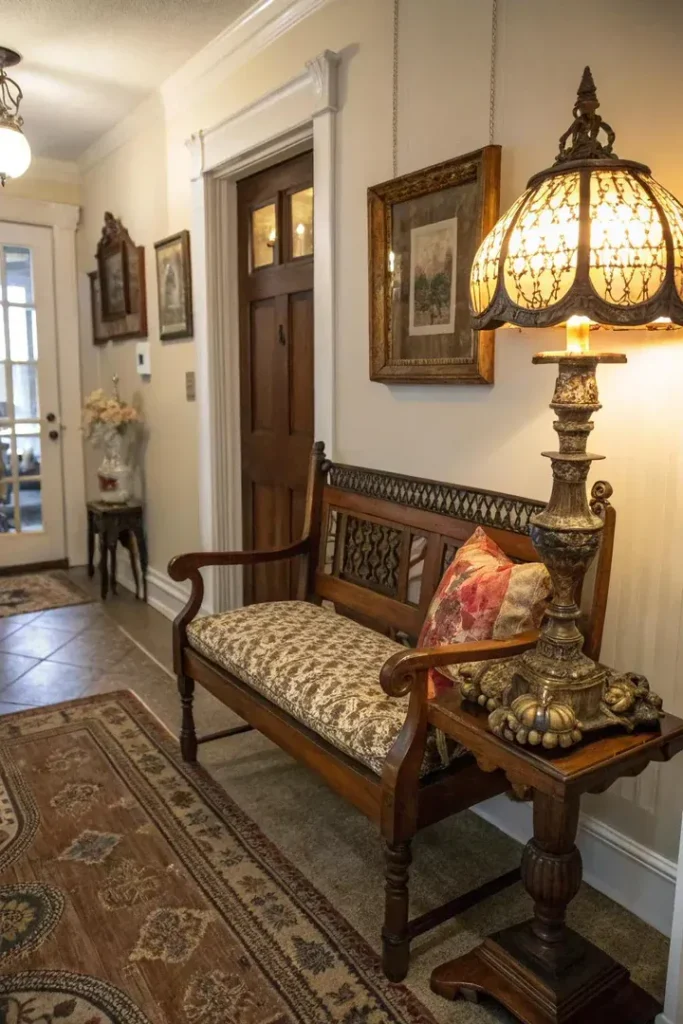
Vintage furniture and accessories can give a hallway a sense of character and history. An antique bench, for example, can provide useful seating while also becoming an attractive focal point.
Pairing a vintage bench with an old-fashioned lamp or other decorative accent can create a warm and inviting atmosphere. These pieces can also become conversation starters, particularly when they have an interesting story or distinctive craftsmanship.
Mixing old and new elements is another effective way to create a hallway that feels personal rather than overly coordinated.
4. Choose a Complementary Color Palette
Color can make a major difference in how a hallway connects with the rest of your home. Instead of choosing a shade in isolation, consider the colors already used in nearby rooms.
Complementary tones can create a smooth transition from one area to another. For example, a warm beige hallway could work beautifully alongside soft blue accents in an adjoining room.
Pay attention to undertones as well. Coordinating warm and cool shades thoughtfully can help the hallway feel like a natural continuation of the overall interior.
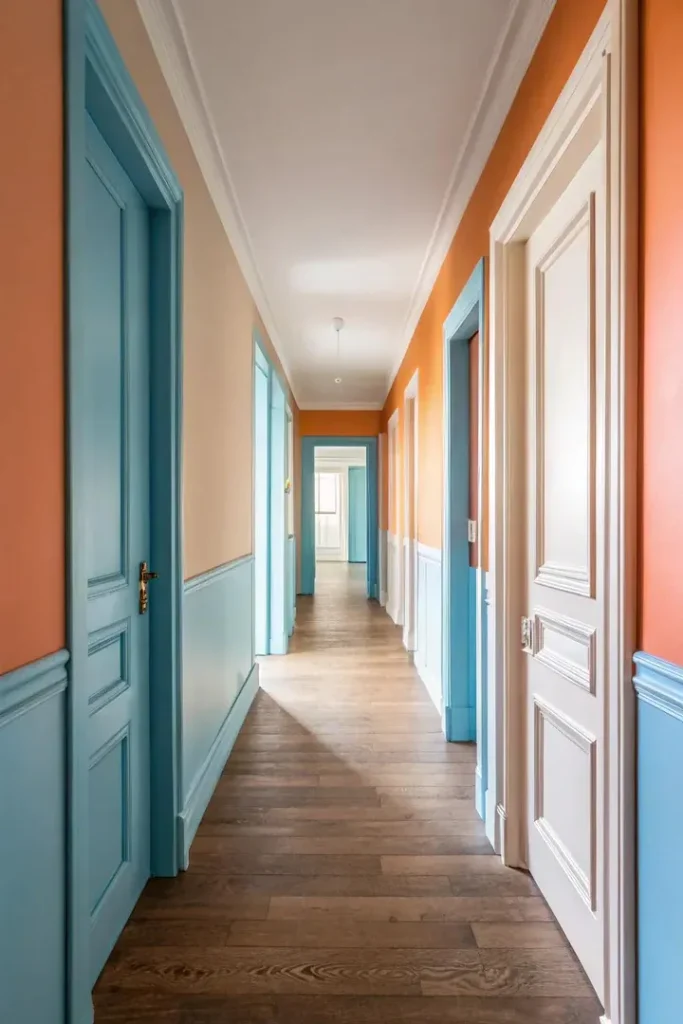
5. Create Balance With Symmetry
Symmetry can bring a sense of order and calm to a hallway, particularly in long or narrow spaces.
Try arranging matching sconces, artwork, plants, or decorative accessories on opposite sides of the corridor. Repeating similar elements creates visual balance and can make the space feel more intentional.
You do not have to make every detail identical. Even subtle repetition can create a more cohesive and organized appearance.
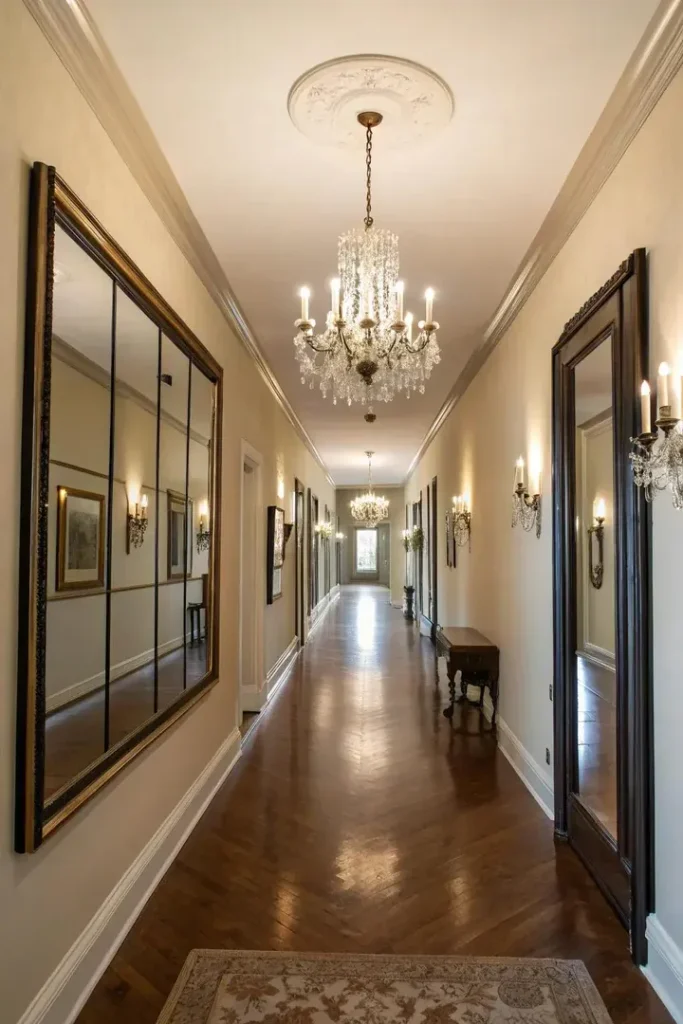
6. Introduce a Statement Piece
A statement piece can give your hallway an immediate focal point. This could be a large piece of artwork, an unusual mirror, a distinctive piece of furniture, or another decorative feature that reflects your personal style.
Because hallways are often relatively simple spaces, one bold element can have a significant impact without overwhelming the area.
Choose something that feels connected to your personality and the overall character of your home. A meaningful statement piece can make the hallway feel much more personal.
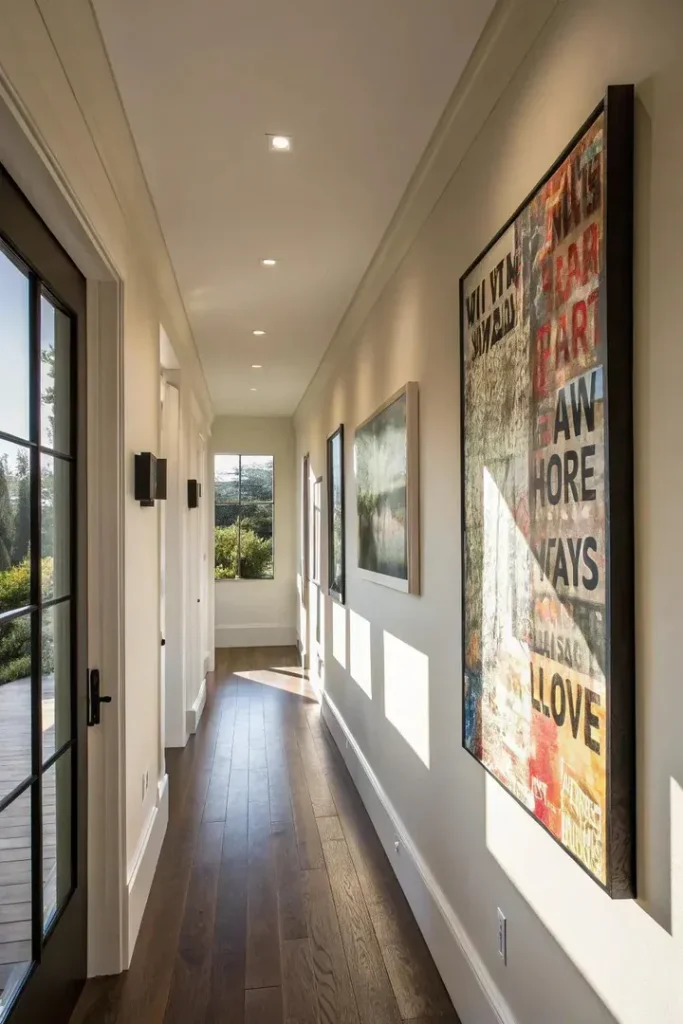
7. Create a Gallery Wall
A gallery wall can transform an empty hallway into a personal art display. Combine family photographs, artwork, prints, or other meaningful pieces to create a collection that tells a story.
For a more cohesive appearance, use frames with a consistent finish or style. If you prefer a more relaxed look, mix different frame designs while keeping the artwork connected through a common color palette or theme.
A gallery wall is especially useful in hallways because it takes advantage of wall space without taking up valuable floor area.
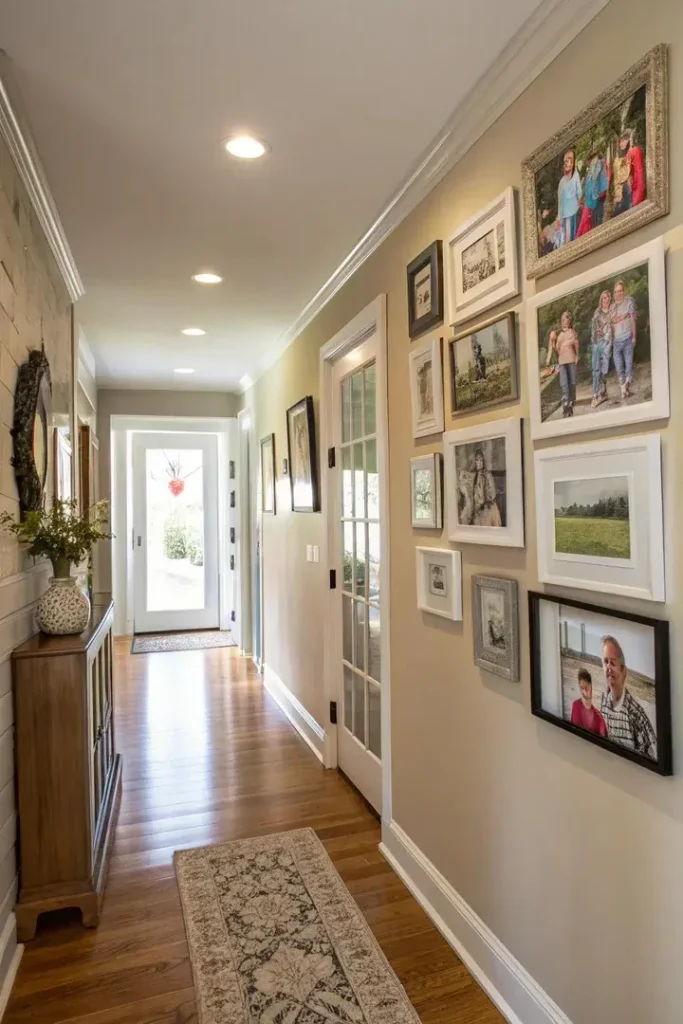
8. Add an Unexpected Element
A hallway can become much more memorable when it contains an unexpected feature.
For example, a hidden bookshelf or concealed storage area can turn an ordinary corridor into a small destination. A secret reading nook or cleverly integrated feature can provide both visual interest and practical value.
The element does not need to be elaborate. Even a surprising piece of furniture, unusual artwork, or creative storage solution can give the hallway a sense of discovery.
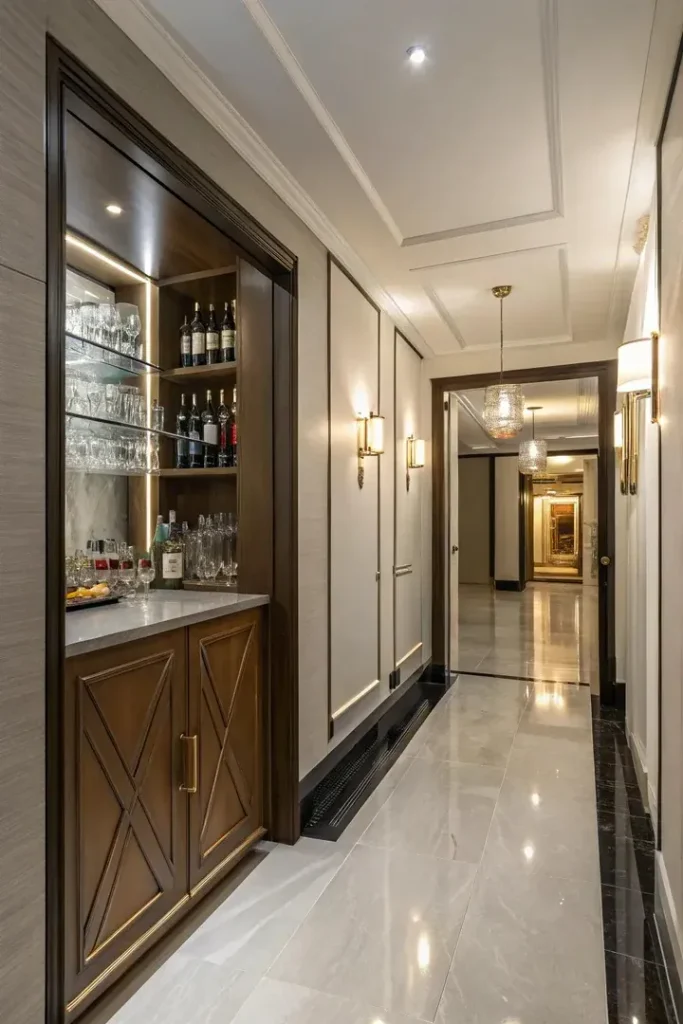
9. Highlight Architectural Features
Architectural details such as archways, molding, niches, and other structural elements can become attractive design features when properly emphasized.
One simple approach is to use contrasting paint colors. For example, a soft white archway against a deeper wall color can make the shape stand out and add depth to the hallway.
Instead of treating architectural features as background details, use them as opportunities to give the corridor more character.
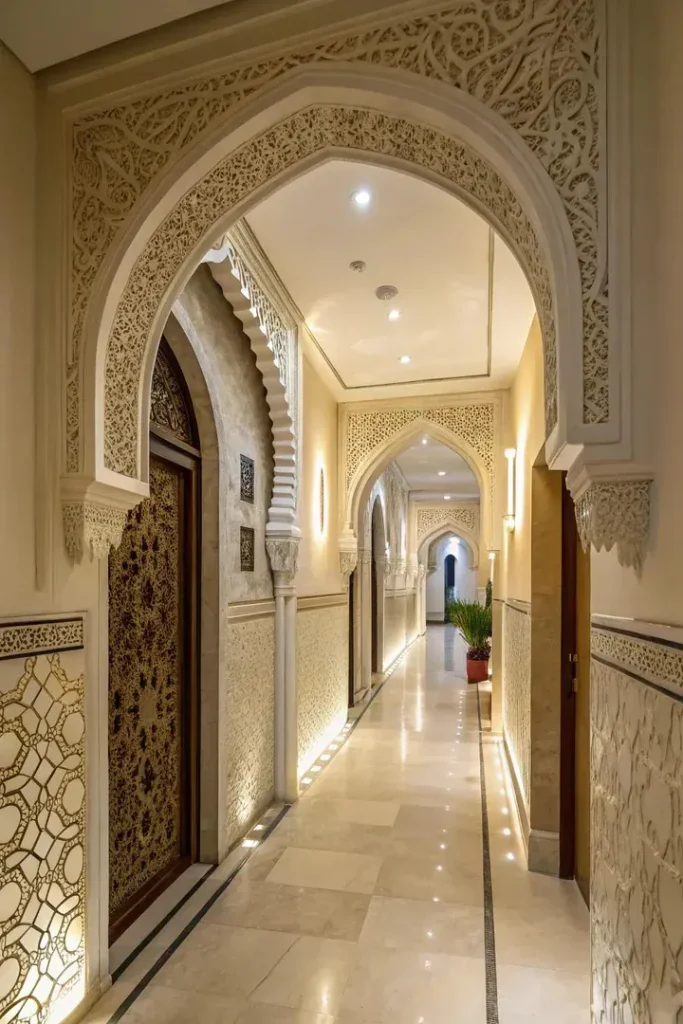
10. Use Smart Storage Solutions
A hallway can be both attractive and functional when storage is incorporated thoughtfully.
Built-in shelves, wall-mounted hooks, and other compact storage options can help keep everyday essentials organized without taking up too much floor space.
Consider what your household actually needs to store. Dedicated places for keys, bags, books, or other frequently used items can make the hallway easier to use while keeping clutter under control.
Custom storage can also be designed to match the style of your home, allowing practical features to become part of the overall decor.
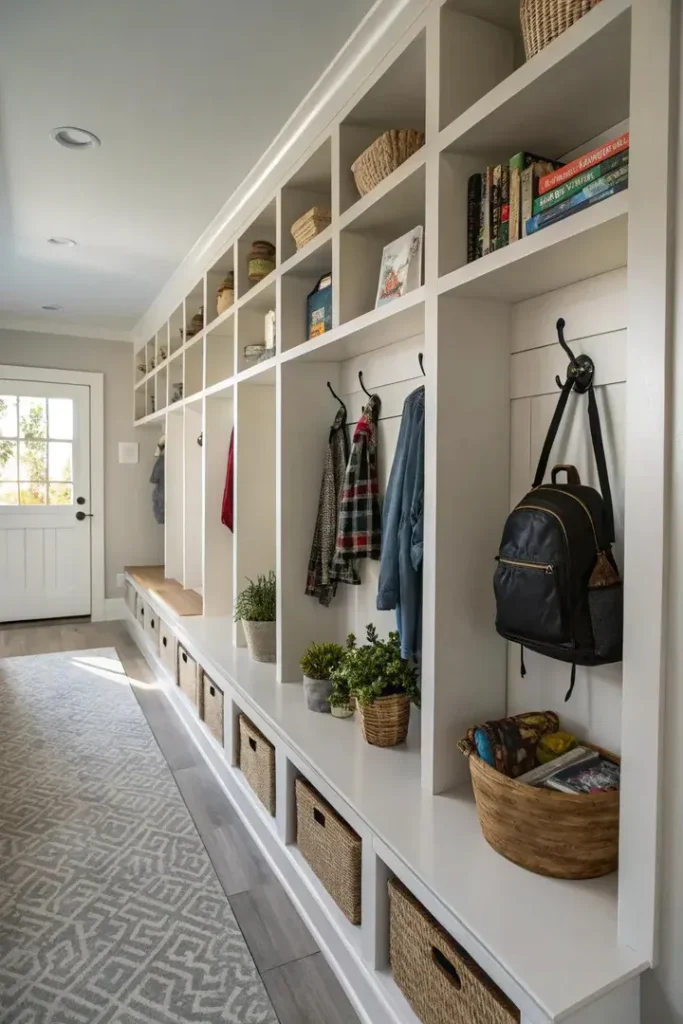
11. Experiment With Bold Colors
If your hallway feels plain, a bold color can completely change its character.
A deep teal, for example, can add warmth, depth, and personality to an otherwise overlooked corridor. Other rich shades can create a similar effect when used thoughtfully.
You do not necessarily need to paint every surface. A feature wall, colorful trim, or carefully selected accent can provide enough contrast to make the hallway stand out.
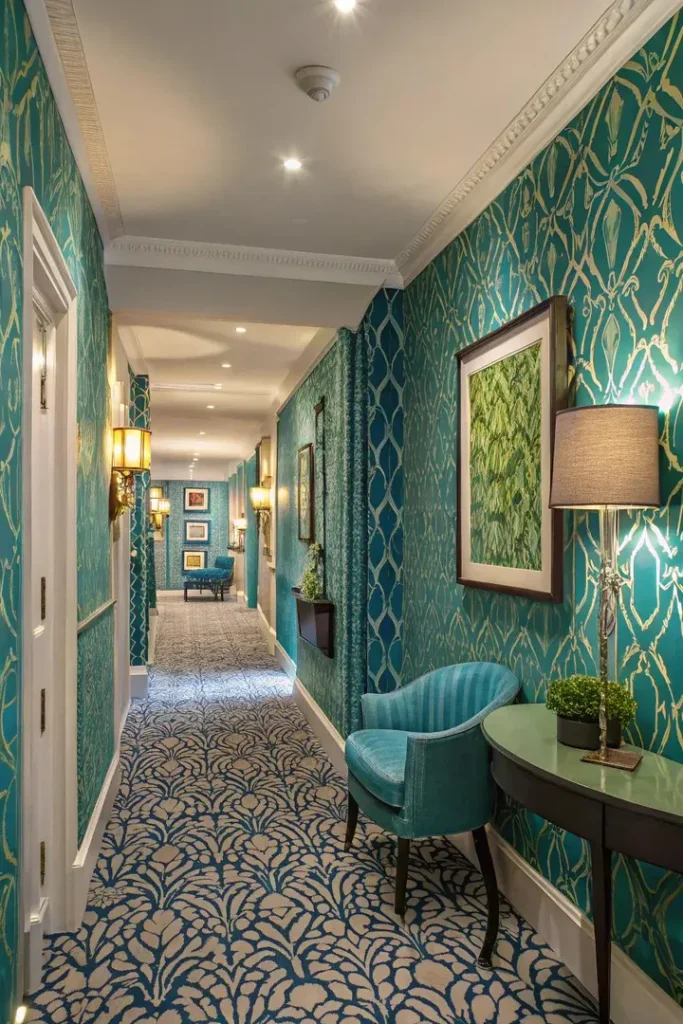
12. Experiment With Different Textures
Combining different textures can make a hallway feel more layered and visually interesting.
Consider pairing a soft runner with smooth flooring or combining textured wall treatments with structured furniture. The contrast between soft and hard materials can create depth without relying entirely on color.
Curtains, rugs, wall finishes, wood, and decorative objects can all contribute to the overall texture of the space.
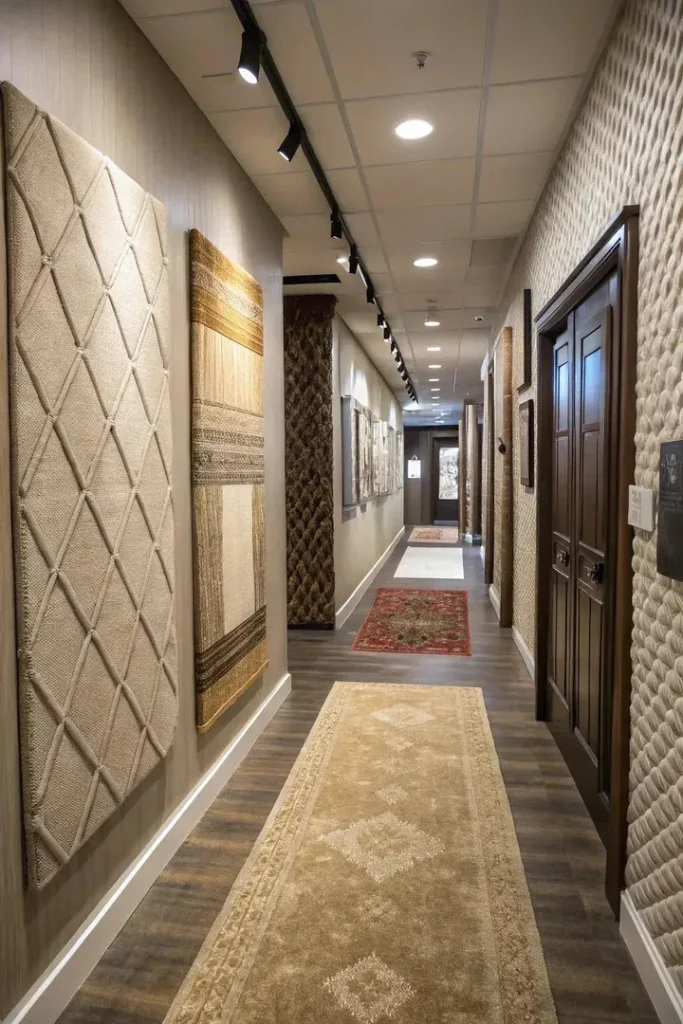
13. Add a Seating Area
If your hallway has enough space, consider adding a small seating area. A simple bench or pair of compact chairs can turn an unused section of the corridor into a practical and inviting spot.
A small side table can make the area even more useful while adding another decorative surface.
The goal is not to fill the hallway with furniture. Instead, choose pieces that fit comfortably within the available space and allow the corridor to remain easy to navigate.
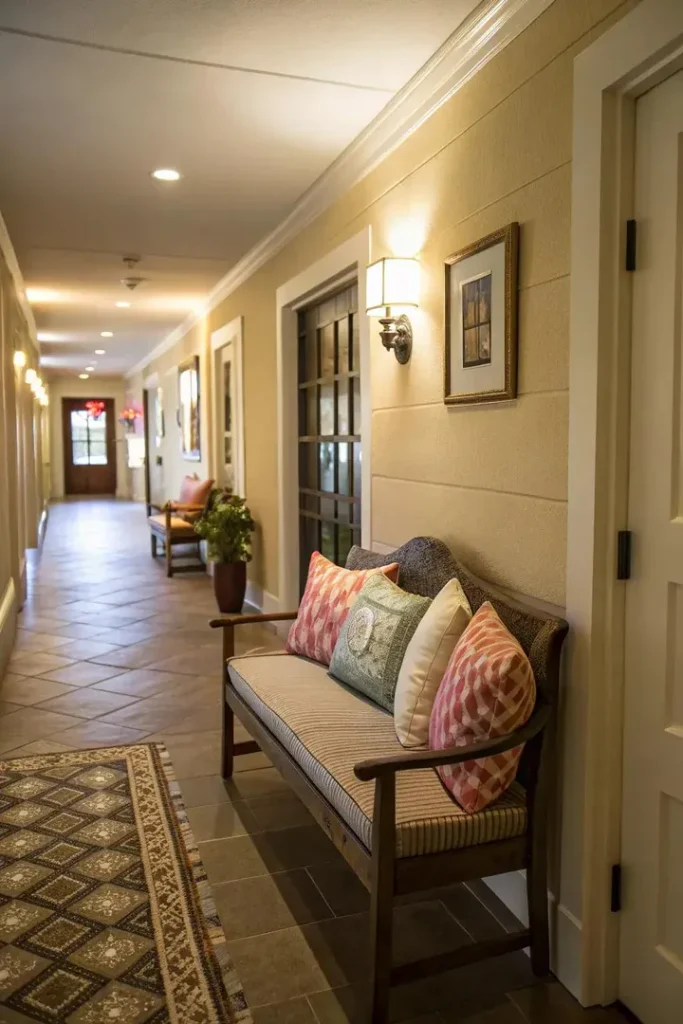
14. Play With Light and Shadows
Lighting can dramatically influence the atmosphere of a hallway.
Instead of relying on a single overhead fixture, consider combining different sources of light. Wall sconces, pendant lights, and other fixtures can create layers of illumination while adding decorative interest.
The interaction between light and shadow can also emphasize artwork, architectural details, textures, and other features, making the hallway feel more dimensional.
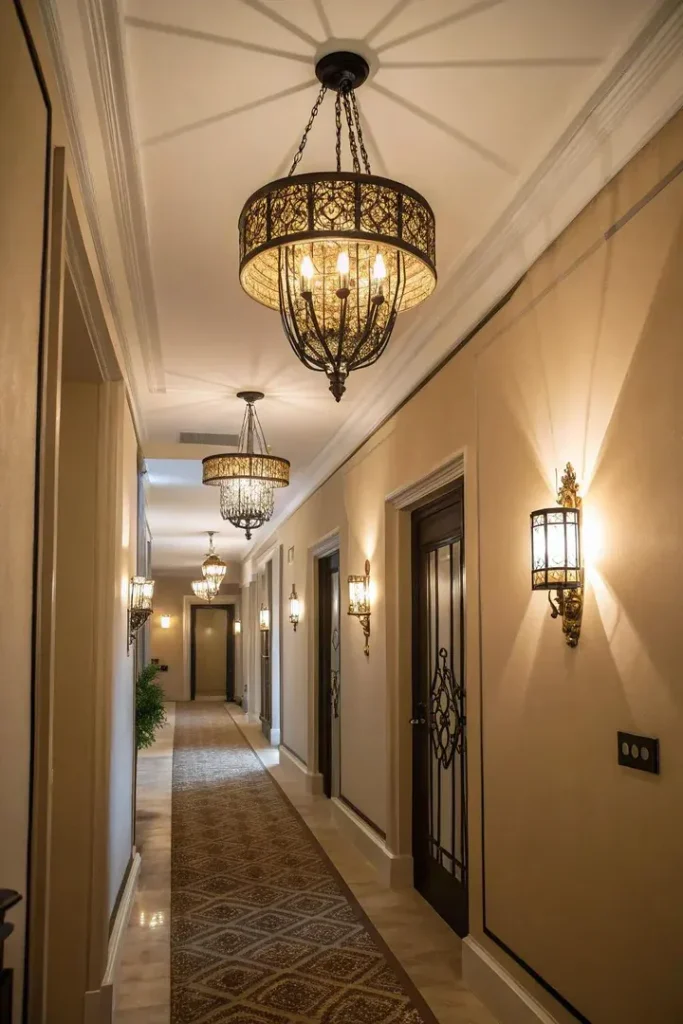
15. Make Use of Vertical Space
When floor space is limited, look upward.
Tall shelving, vertical artwork, and other wall-mounted features can make better use of the hallway’s height without making the floor feel crowded.
Tall shelves can display books, plants, and decorative objects while also drawing the eye upward. Vertical artwork can create a similar effect and give a narrow corridor a stronger sense of proportion.
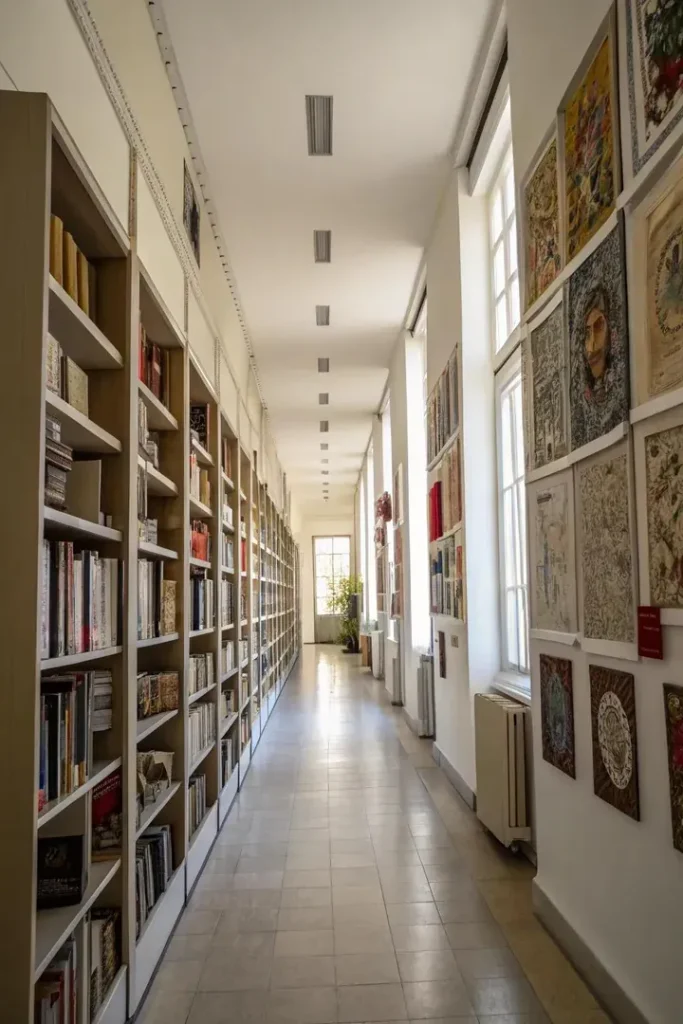
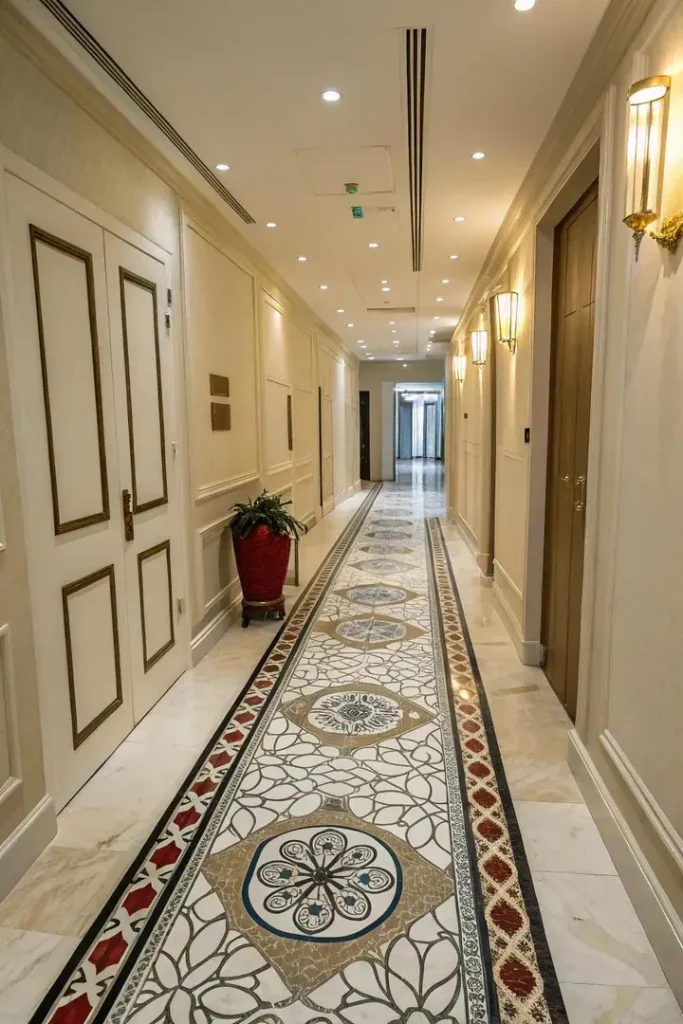
16. Give the Flooring More Attention
Flooring can become one of the defining features of a hallway.
A patterned runner can introduce color and movement, while distinctive tiles can create a more permanent design statement. Geometric patterns are particularly useful when you want to give a modern hallway additional visual energy.
Because the floor extends through the length of the corridor, even a relatively simple pattern can have a noticeable impact on the overall design.
17. Incorporate Natural Elements
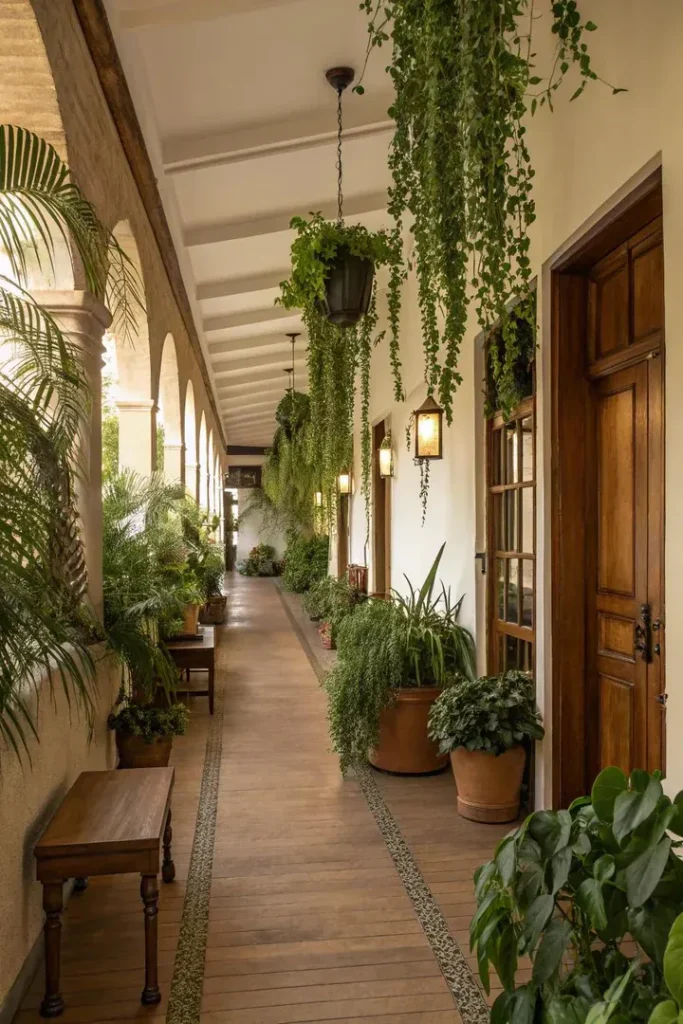
Natural materials and greenery can make a hallway feel warmer and more connected to the outdoors.
Plants are an easy way to introduce life and color, while wooden accents can add warmth and texture. Depending on the available space and lighting, you can use small potted plants, larger decorative greenery, or other natural materials.
Even a few carefully chosen elements can soften a hallway and make it feel more welcoming.
18. Decorate the Ceiling
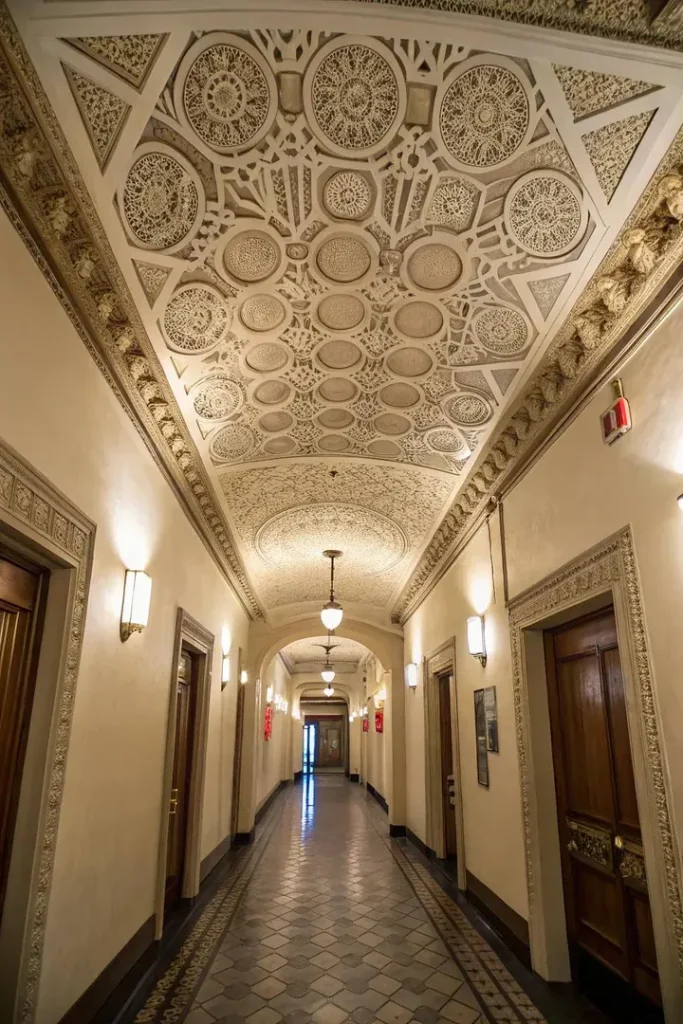
The ceiling is often one of the most overlooked surfaces in hallway design, but it can provide another opportunity to add character.
Textured paint, decorative molding, or other ceiling treatments can draw attention upward and create a more distinctive visual experience.
A decorative ceiling can work particularly well when the walls and floor are kept relatively simple. This allows the ceiling detail to become an unexpected focal point without making the hallway feel visually cluttered.
Final Thoughts
A hallway does not have to remain a plain passage between rooms. With thoughtful choices in color, lighting, flooring, artwork, storage, and decorative details, even a narrow corridor can become an attractive and useful part of your home.
Whether you prefer a bold statement wall, a carefully arranged gallery, vintage furniture, natural accents, or simple architectural details, the most effective approach is to choose ideas that complement your home’s existing style.
Start with one or two changes rather than trying to transform everything at once. A new runner, improved lighting, a gallery wall, or a well-placed statement piece may be enough to give your hallway an entirely new character.